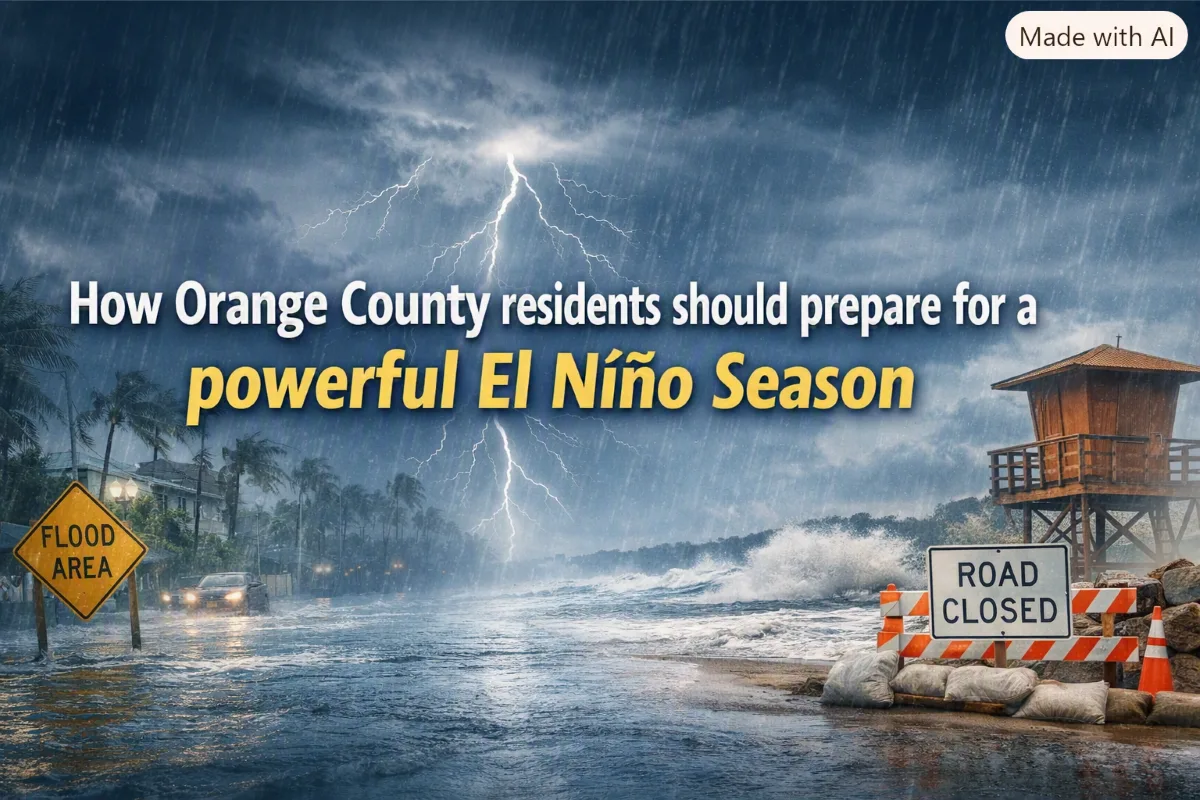
A very strong El Niño is forecast to hit California this year, and Orange County — including Santa Ana — is expected to face heavy rain, strong winds, coastal flooding, power outages, and travel disruptions.

Local agencies across the county are urging residents and businesses to prepare now, before storms intensify. This guide blends county‑wide best practices with emergency‑management principles to help protect families, homes, and workplaces.
What El Niño Could Bring to Orange County
Periods of intense rainfall may overwhelm storm drains, causing street flooding in Santa Ana, Garden Grove, Anaheim, and other inland cities. Coastal communities like Huntington Beach, Newport Beach, and Seal Beach may see higher tides, beach erosion, and dangerous surf. Strong winds could topple trees and damage power lines, increasing the risk of extended outages. These impacts align with the emergency‑management phases of mitigation, preparedness, response, and recovery — and residents have responsibilities in each.
How Orange County Residents and Businesses Should Prepare
Mitigation and Prevention
Reducing long‑term risk helps minimize damage when storms arrive.
- Home hardening — Fix roof leaks, seal windows and doors, clean gutters, trim trees, and secure outdoor furniture.
- Business risk reduction — Store chemicals safely, secure equipment, and review flood‑insurance coverage.
Preparedness
This is the phase where families and businesses take action before a disaster.
- Create emergency kits for home, car, and workplace.
- Build a seven‑day supply of essentials — food, water, medications, hygiene items, batteries, and tools.
- Store important documents in waterproof containers.
- Charge backup batteries and keep vehicles fueled.
- Make a communication plan with meeting points inside and outside your neighborhood.
- Learn your children’s school evacuation procedures.
- Include pets in all planning.
Response
During an emergency, actions must focus on saving lives and protecting property.
- Learn CPR and first aid.
- Know how to turn off utilities such as gas, water, and electricity.
- Follow instructions from emergency officials and avoid flooded roadways, downed power lines, and high‑surf areas.
Recovery
After storms pass, communities work to restore normal operations.
- Keep insurance coverage current.
- Document damage for claims.
- Follow your emergency plan to stabilize home or business operations.
Build a Seven‑Day Emergency Kit
Orange County emergency managers often ask: Can you say “I’ve got seven” and mean it? Here’s what your kit should include:
- Non‑perishable food and a manual can opener
- Water — one gallon per person or pet per day
- First aid kit and manual
- Prescription and non‑prescription medications
- Battery‑powered flashlight and radio
- Personal hygiene supplies
- Copies of important documents
- Pet food, leashes, carriers
- Infant supplies
- Tools, duct tape, rope
- Cash in small bills
- A‑B‑C fire extinguisher
- Protective goggles, gloves, masks, hard hat
- Whistle
- Clothing and sturdy shoes
- Doctor and pharmacy contact information
- Camp stove or charcoal grill with fuel
Store everything in a sturdy, easy‑to‑carry container.
Make a Family or Business Emergency Plan
- Identify two meeting locations — one nearby and one outside your neighborhood.
- Practice your plan twice a year.
- Ensure every adult knows how to shut off utilities.
- Share out‑of‑state contact information with all family members.
- Include pets in evacuation and shelter‑in‑place plans.
- Businesses should create continuity plans to maintain operations during disruptions.
Stay Informed During El Niño
Orange County has multiple alert systems to keep residents updated:
- AlertOC — Countywide emergency notifications to phones and email.
- Nixle (local.nixle.com in Bing) — Local police and city alerts; text your ZIP code to 888777.
- Emergency Alert System (EAS) — Broadcast alerts on radio and TV.
- Mobile emergency vehicles — Sirens and loudspeakers may provide instructions.
- Local cable channels — Cities can interrupt programming for emergency updates.
- ReadyOC — Countywide preparedness education and resources.
- National Weather Service — Monitor storm forecasts and warnings.
Why Local Preparedness Matters
All disasters begin and end at the local level. Santa Ana, Seal Beach, Huntington Beach, Irvine, and other Orange County cities are the first to respond — and often the most affected. When emergency services are overwhelmed, residents may need to survive seven days or more without outside assistance. Preparing now ensures families and businesses can weather the strongest El Niño impacts safely.