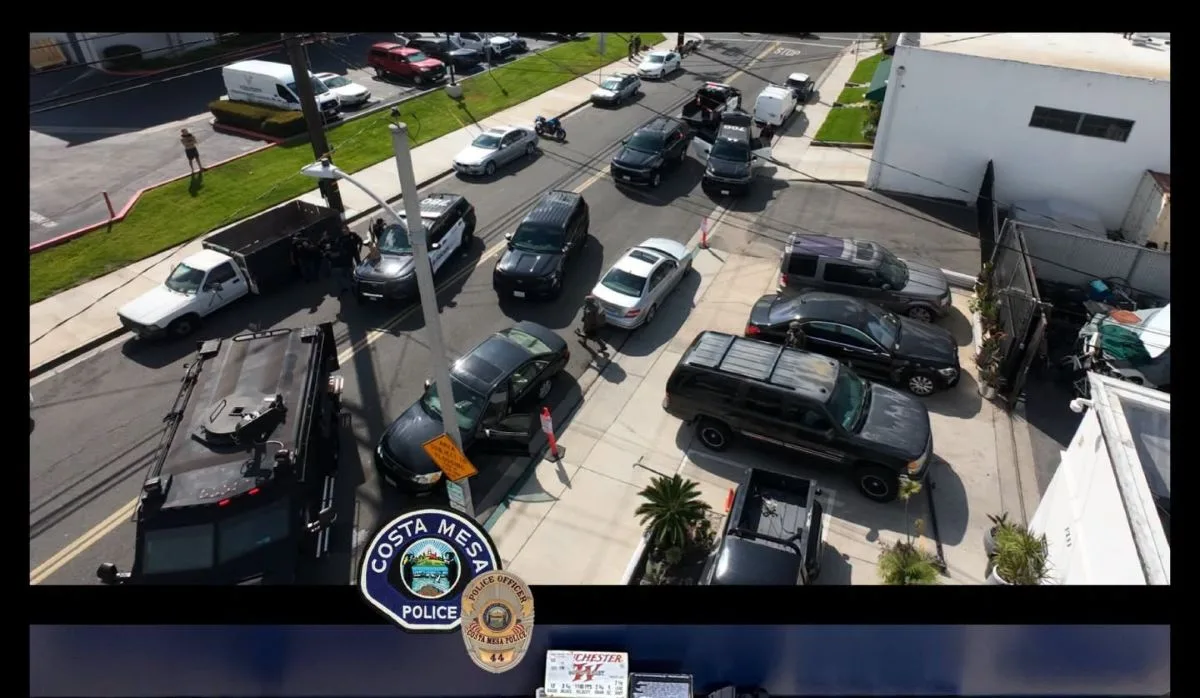
Early this morning, Costa Mesa Police Department detectives served a narcotics‑related search warrant at a residence in the 1700 block of Pomona Avenue. Inside the home, officers located multiple firearms along with quantities of illegal narcotics.

Ten individuals were arrested for a range of narcotics and firearm violations. CMPD reports the investigation remains active, with additional details pending.
Criminal Charges the Suspects Are Likely to Face
Based on the firearms and narcotics recovered, the suspects could face multiple felony counts under California law, including:
- Possession of controlled substances for sale — Methamphetamine, heroin, fentanyl, cocaine, or other narcotics found in a residence typically trigger felony sales charges carrying 2–4 years in state prison.
- Possession of firearms by prohibited persons — If any suspect is a felon or otherwise barred from owning firearms, penalties include up to 3 years in prison.
- Possession of an unregistered or illegal firearm — Ghost guns, short‑barreled rifles, or unregistered weapons can add additional felony counts.
- Possession of narcotics while armed — A sentencing enhancement that can add 1–5 years.
- Maintaining a drug house — Operating or allowing a residence to be used for drug storage or sales is a felony.
- Conspiracy to distribute narcotics — Multiple suspects acting together can trigger conspiracy charges with penalties equal to the underlying drug‑sales offense.

Sentencing Exposure
Depending on criminal history, firearm type, drug quantity, and whether sales activity can be proven, sentencing could include:
- 3–9 years for combined narcotics‑sales felonies
- 1–5 years for firearm enhancements
- Additional time for maintaining a drug house or conspiracy
- Mandatory fines ranging from $1,000 to $20,000
- Probation restrictions, mandatory drug counseling, and search conditions
If any suspect has prior strikes, firearm‑related drug crimes can trigger California’s sentencing enhancements, significantly increasing prison exposure.
Impact on Home Ownership or Rental Agreements
Because this incident occurred at a residence, the legal fallout can extend beyond criminal charges:
- Lease termination: Most rental agreements include clauses allowing immediate eviction for criminal activity, drug sales, or firearm violations on the property.
- Loss of housing subsidies: If any resident receives Section 8 or similar assistance, drug‑related felonies can result in permanent disqualification.
- Property forfeiture risk: If the home was used to store or sell narcotics, prosecutors can pursue asset forfeiture, especially if firearms and drugs indicate organized sales.
- HOA violations: If the residence is part of an HOA, criminal activity can trigger fines or civil action.
Impact on Insurance
Insurance carriers may take action when a residence is used for criminal activity:
- Policy cancellation: Insurers can cancel or refuse renewal if the home is deemed a site for illegal drug activity or weapons violations.
- Denial of future coverage: Drug‑related felonies can classify residents as high‑risk, making future homeowner or renter insurance more expensive or difficult to obtain.
- Liability exposure: If firearms or narcotics contributed to injuries or community harm, civil liability claims may arise.
Drug Arrest Trends in Orange County
Orange County continues to see significant narcotics enforcement activity. Recent regional crime data shows:
- More than 2,300 drug‑related arrests countywide in the most recent reporting year.
- A steady increase in fentanyl‑related cases, with overdose deaths rising sharply.
- Costa Mesa, Santa Ana, Anaheim, and Huntington Beach accounting for the largest share of narcotics arrests.
These numbers reflect ongoing challenges as fentanyl, methamphetamine, and heroin remain the most commonly seized substances during residential search warrants.
Community Impact of Narcotics
The drugs typically found in residential narcotics operations cause severe harm across Orange County:
- Methamphetamine drives violent behavior, property crime, and long‑term neurological damage.
- Heroin and fentanyl remain the leading cause of fatal overdoses in the county.
- Drug houses destabilize neighborhoods, attract weapons, and increase the risk of violent encounters.
- Children living near drug‑related residences face increased exposure to addiction, trauma, and unsafe conditions.
CMPD’s action today removed firearms and narcotics from circulation and disrupted a location contributing to community risk.