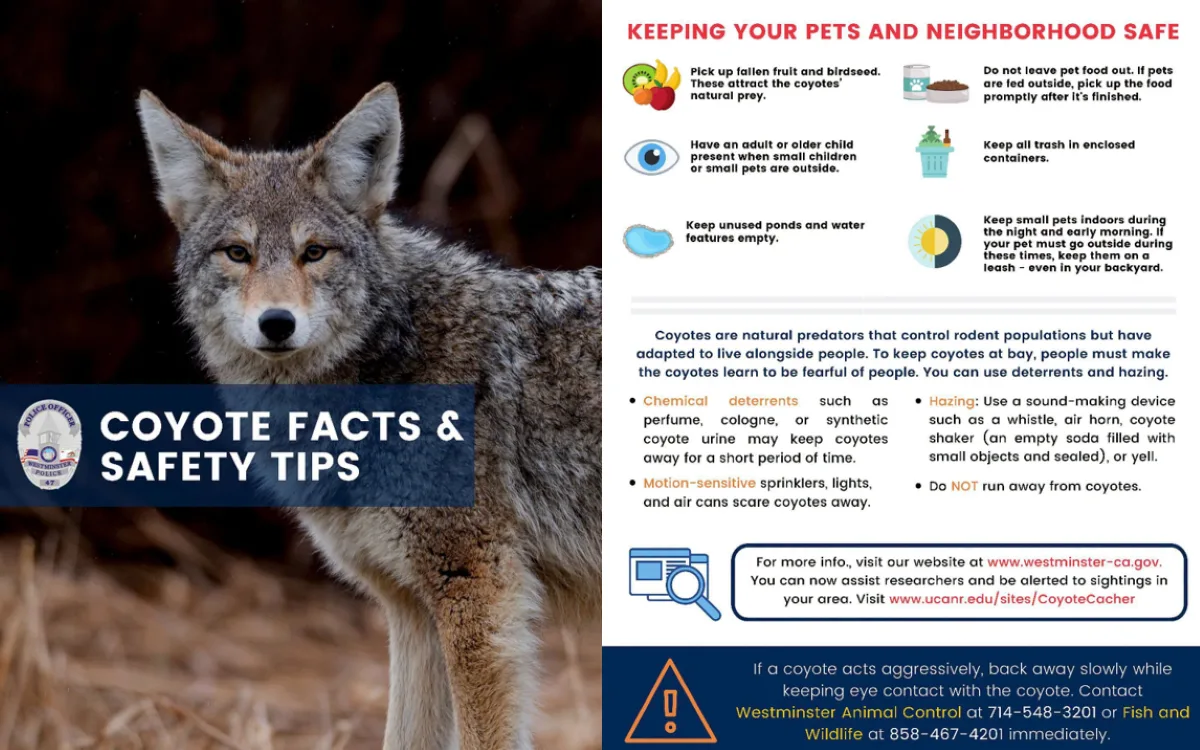
Coyote sightings are increasing across Central Orange County as young pups disperse from their dens and establish new territories. The Westminster Police issued a public safety reminder yesterday urging residents to secure food sources, protect pets, and report concerning behavior.

Coyote Presence and Diet Trends in Orange County
Multiple studies show that coyotes thrive in urbanized environments, especially where food sources are abundant. Research from California State University, Fullerton found that coyotes frequently consume domestic cats. A CSUF master’s thesis analyzing 311 coyotes from Los Angeles and Orange counties (2015–2018) determined that approximately 35% of coyotes consumed domestic cats, a significantly higher rate than previously reported.
A separate study of 115 scat samples in Long Beach found domestic cats in 14% of samples, confirming that cat predation is a consistent part of the urban coyote diet.
These findings align with local reports: cat and small‑pet losses are among the most discussed concerns in OC neighborhoods.
Aggressive Coyote Incidents in Southern California (Past 5 Years)
Southern California has seen several high‑profile aggressive encounters:
- Woodland Hills (2022): A coyote grabbed a young girl on her front lawn before her father intervened.
- Carson (2025–2026): Multiple attacks on children, including a 4‑year‑old boy dragged in a driveway. DNA linked the same coyote to multiple incidents; the animal was later euthanized.
- Santa Monica (2025): After the Palisades Fire displaced wildlife, coyotes charged cyclists and approached residents.
- Whittier & Huntington Beach (2026): Residents reported increasingly bold coyotes entering yards, rooftops, and apartment buildings.
California also recorded 142 coyote bites on humans between 2015 and 2022, averaging 20 per year statewide.
Do Coyotes Carry Diseases?
Coyotes can carry several communicable diseases and parasites that pose risks to pets and, in rare cases, humans:
- Rabies (rare but possible)
- Canine distemper
- Canine adenovirus
- Mange mites
- Ticks and fleas (vectors for Lyme disease and other illnesses)
- Intestinal parasites (roundworms, hookworms, tapeworms)
A 2022 study also found coyotes in Orange County infected with Babesia conradae and Babesia vogeli, blood‑borne parasites that can spread to dogs through aggressive encounters.
Safety Tips: What Westminster Police Posted — and What Else Residents Should Know
Below is the combined guidance from Westminster Police and additional best‑practice recommendations from wildlife experts.
Prevent Attracting Coyotes
- Secure trash with tight‑fitting lids.
- Keep pet food indoors.
- Clean up fallen fruit and birdseed.
- Remove outdoor water sources and unused ponds.
- Seal crawl spaces and yard structures that could become shelter.
Protect Pets
- Supervise pets outdoors at all times.
- Keep pets on a leash, even in fenced yards.
- Bring small pets indoors at night and early morning.
- Avoid letting cats roam outdoors — they are a primary prey item.
If You Encounter a Coyote
- Make loud noises, wave your arms, or use hazing tools (whistles, air horns, shaker cans).
- Do not run — it can trigger pursuit.
- Maintain eye contact and back away slowly.
- Use motion‑activated lights or sprinklers as deterrents.
Additional Tips Police Did Not Mention
- Walk with a flashlight at dawn/dusk; coyotes avoid bright light.
- Carry a small air horn or dog‑repellent spray when walking pets.
- Avoid areas with known den sites during pup season (spring–summer).
- Report unsecured trash or outdoor feeding in your neighborhood — these attract coyotes.
Who to Call About Coyotes in Central Orange County
Below are the primary animal‑control contacts for cities in the central OC region:
- Westminster: Animal Control 714‑548‑3201 (aggressive or injured coyotes)
- Santa Ana: OC Animal Care 714‑935‑6848 (aggressive behavior) or 714‑259‑1122 (after hours)
- Garden Grove: OC Animal Care 714‑935‑6848
- Fountain Valley: OC Animal Care 714‑935‑6848
- Orange: Orange Police Department non‑emergency line (varies by district) + OC Animal Care
- Anaheim (Central District): Anaheim Animal Care & Control (through OC Animal Care)
- Tustin: Tustin Police Department Animal Services
- Costa Mesa: Costa Mesa Animal Services (via city police)
Residents can also report sightings and track local activity through Coyote Cacher, a statewide research platform operated by UC Agriculture & Natural Resources.
Why Coyote Sightings Are Increasing
Urban coyotes are expanding their range due to:
- Habitat loss from wildfires and development (e.g., Palisades Fire displacement).
- Abundant food sources in residential areas.
- Seasonal mating and pup dispersal cycles.
- Reduced fear of humans in neighborhoods where feeding or unsecured trash is common.
Key Takeaways for Central OC Residents
- Coyotes are active year‑round in Orange County.
- Domestic cats are a significant part of the urban coyote diet.
- Aggressive incidents, while rare, have increased in some SoCal neighborhoods.
- Coyotes can carry diseases that threaten pets.
- Hazing, securing attractants, and reporting bold behavior are essential for safety.
Would nimbys oppose e bike infrastructure for homeless coyote drug addicts?