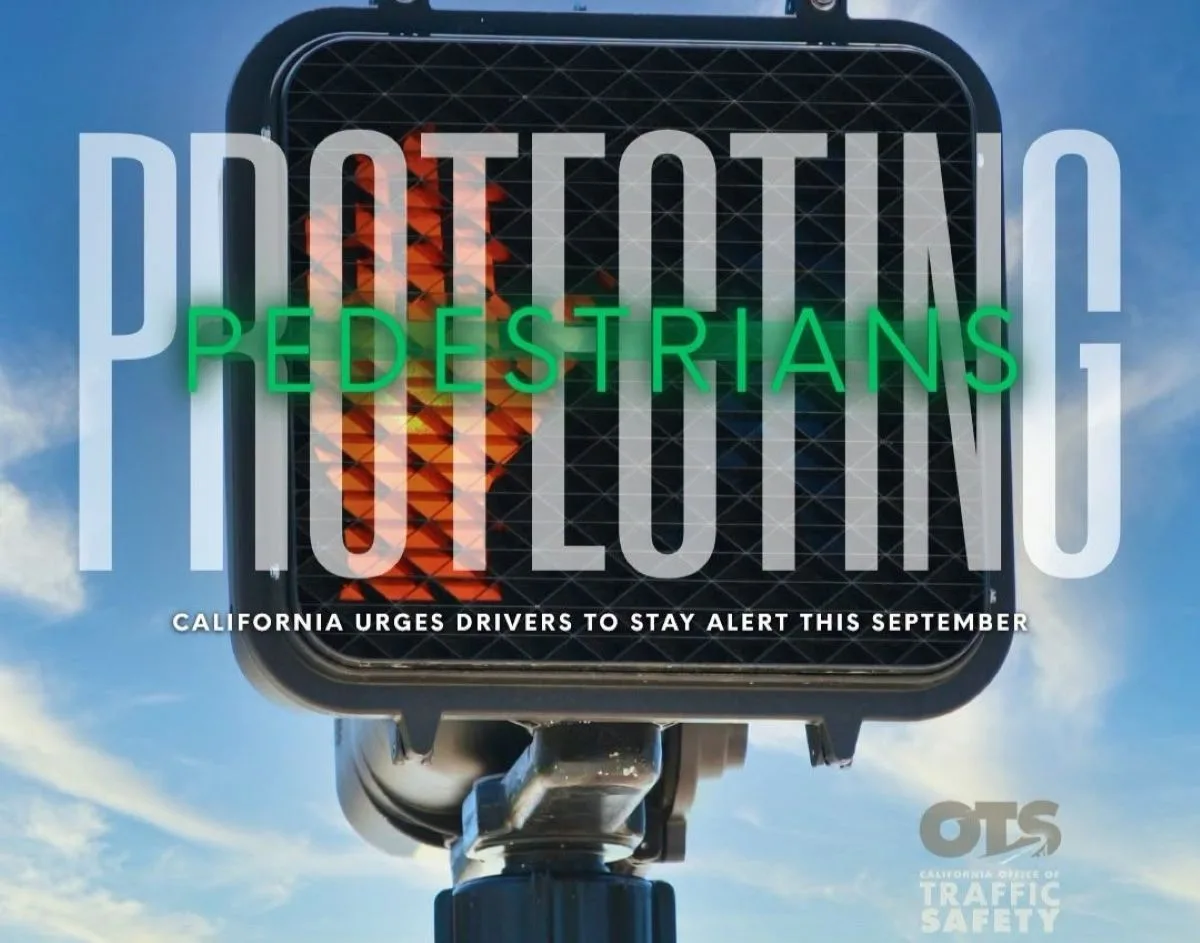
The Santa Ana Police Department released new pedestrian‑safety materials today, urging drivers to slow down, stay alert, and recognize the heightened risks on city streets as September’s statewide Pedestrian Safety Month begins.

With 1,090 pedestrians killed in California in 2024—28% of all traffic fatalities—the department is emphasizing enforcement against speeding, illegal turns, failing to yield, and red‑light violations throughout September.
The advisory comes as Santa Ana continues to face elevated pedestrian‑injury rates driven by dense traffic corridors, vulnerable populations, and a growing transient crisis.
Criminal Charges for Striking a Pedestrian With a Vehicle
A driver who hits a pedestrian in California may face severe criminal exposure depending on the circumstances:
- Vehicular manslaughter — If the pedestrian dies and the driver acted negligently, prosecutors may file misdemeanor or felony vehicular manslaughter. Felony exposure ranges from 2–6 years in state prison.
- Gross vehicular manslaughter — If the conduct involved gross negligence, penalties increase to 4–10 years.
- DUI causing injury or death — If impairment is involved, charges escalate dramatically, including potential 10‑year enhancements for each victim.
- Hit‑and‑run — Leaving the scene is a felony when injury or death occurs, carrying 2–4 years in prison plus fines and mandatory restitution.
- Reckless driving causing injury — Even without impairment, reckless behavior can lead to misdemeanor or felony filing.
Convictions often include restitution orders, license suspension or revocation, mandatory driving programs, and long‑term criminal‑record consequences.
Sentencing Exposure
Drivers convicted in fatal pedestrian collisions routinely face:
- State‑prison terms ranging from 2–10 years depending on charges
- Additional enhancements for DUI, speed, or prior convictions
- Lifetime designation as a habitual traffic offender in severe cases
- Multi‑year license revocation and mandatory ignition‑interlock installation
Impact on Auto Insurance and Employment
A pedestrian‑injury collision—especially one involving death—triggers major financial and professional consequences:
- Insurance premiums often double or triple, and many carriers drop the driver entirely.
- SR‑22 requirements may last 3–10 years depending on the conviction.
- Civil lawsuits for wrongful death or catastrophic injury can exceed $1 million.
- Employment consequences include termination for workers who drive for their job, loss of commercial‑driver eligibility, and background‑check failures for roles requiring clean records.
Pedestrian‑Injury Trends in Santa Ana and Orange County
Orange County consistently reports high pedestrian‑injury rates, with Santa Ana among the cities most affected due to its dense urban layout. Recent statewide data shows pedestrian fatalities rising, with Santa Ana contributing a disproportionate share of serious injury collisions. Key patterns include:
- High‑speed corridors such as Bristol Street, Harbor Boulevard, and Main Street
- Nighttime collisions involving impaired or distracted drivers
- Mid‑block crossings in areas lacking adequate lighting or marked crosswalks
Why Santa Ana Faces Elevated Pedestrian Risk
Santa Ana’s pedestrian‑injury problem is intensified by several local factors:
- Large transient population — Drug‑affected individuals frequently wander into traffic, cross unpredictably, or remain in roadway medians.
- Older residents — Santa Ana has a significant senior population, many of whom walk for errands and are more vulnerable to injury.
- School‑zone congestion — Thousands of students walk to and from campuses daily, increasing exposure during morning and afternoon peaks.
- Dense housing and limited parking — Residents often walk across busy arterials to reach stores, transit stops, or schools.
- High traffic volume — Major commuter routes run directly through residential neighborhoods.
- Distracted driving — Mobile‑device use remains a leading contributor to near‑misses and collisions.
Driver Safety Tips
- Know the speed limit and reduce speed in high‑risk zones.
- Slow down at intersections and prepare to stop for pedestrians at marked and unmarked crosswalks.
- Never drive impaired by alcohol, drugs, or medication.
- Avoid distractions such as phones, eating, or deep conversations.
- Use extra caution at night or in poor weather.
Pedestrian Safety Tips
- Use marked crosswalks whenever available.
- Walk on sidewalks; if none exist, walk facing traffic.
- Make eye contact with drivers before crossing.
- Wear bright or reflective clothing at night.
- Avoid headphones or phone use while crossing.
Community Call for Information
Santa Ana PD encourages residents to report dangerous driving, near‑misses, or pedestrian‑collision details to help improve enforcement and safety planning. Increased visibility, caution, and shared responsibility remain essential as the city works to reduce pedestrian injuries and fatalities.
Of course pedestrians deaths are rising in CA, that’s because those Dems legalized jaywalking so the homeless, & other poorly educated people from the ghettos have the audacity to cross the street like no tomorrow at the last second risking themselves with vehicle traffic……. In the meantime, the city should install fences on the deciders to prevent un-needed jaywalkings & have police issue citations yo unruly pedestrians….. It’s not just the drivers that have to be careful, it’s also the pedestrians.
Orange County’s car-centric suburban design is financially and environmentally unsustainable in the long term, and the existing local tax basis will likely be insufficient to cover full infrastructure replacement costs as they fail.
Yeah… how about warning pedestrians that safety is a two-way street.