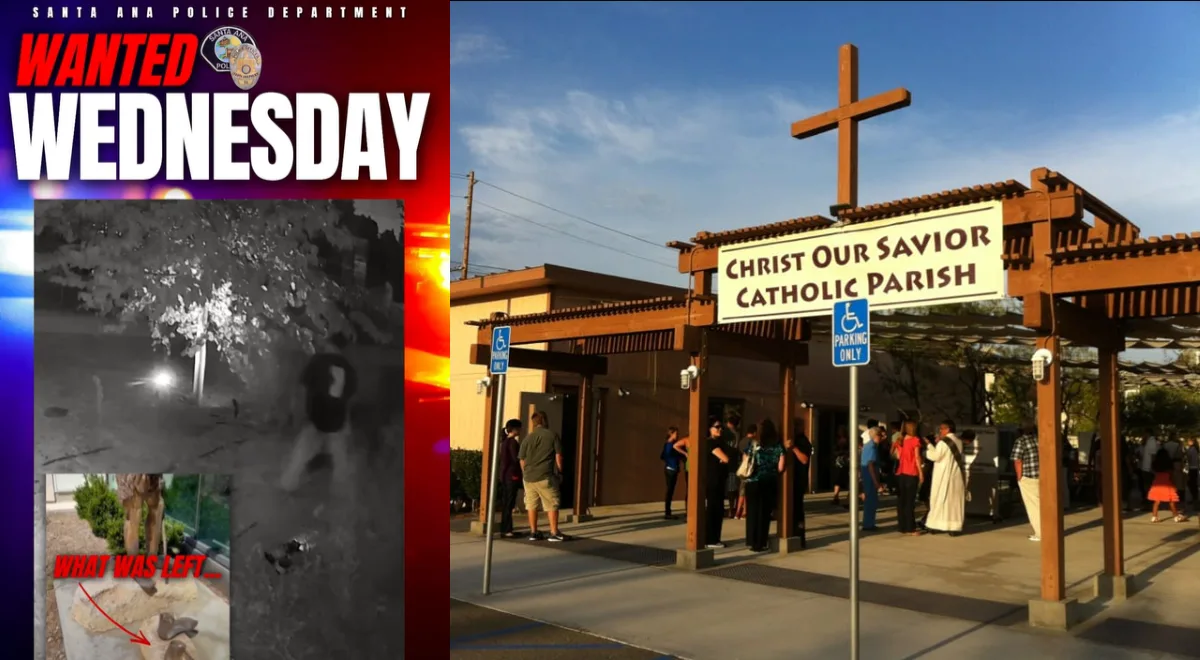
On Sunday, August 30, at approximately 2 a.m., two male suspects wearing dark clothing entered Christ Our Savior Catholic Church at 2000 W. Alton Ave. in Santa Ana.

Carrying a bag, one suspect retrieved an electric cutting tool and both began cutting a $50,000 bronze statue of Jesus from its base. They then dragged the statue across the property toward Segerstrom High School, where a waiting vehicle is believed to have been parked.
The suspects loaded the statue into the vehicle and drove away.
Santa Ana Police are asking anyone with information to contact Detective R. Wilson at (714) 245-8551 or RashadWilson@santa-ana.org.
The real motives behind bronze statue thefts
- Scrap‑metal resale Bronze is a copper‑based alloy. Copper prices have been high for years, and scrap yards pay cash — no questions asked if the seller claims it came from “construction debris.” A $50,000 statue won’t fetch anywhere near that at a recycler, but thieves don’t care about artistic value. They care about weight. A large bronze statue can bring hundreds to a couple thousand dollars depending on weight and purity.
- Drug‑driven theft Orange County law enforcement consistently reports that a large percentage of metal‑theft suspects are struggling with methamphetamine or fentanyl addiction. These offenders steal items that can be converted to cash within hours to buy drugs. The pattern matches what SAPD, OCSD, and HBPD have documented:
- Late‑night or early‑morning thefts
- Quick cutting tools
- Immediate transport to a vehicle
- Rapid liquidation at scrap yards or street buyers
- Organized metal‑theft crews Some crews specialize in bronze plaques, cemetery vases, religious statues, and public‑art installations. These groups often:
- Case locations in advance
- Use power tools
- Work in pairs
- Have a waiting vehicle
- Hit multiple cities in the same week OCDA has prosecuted several multi‑city bronze‑theft crews in recent years.
- Resale to private buyers Less common, but it happens: religious art can be sold through informal networks, flea markets, or online listings. Thieves sometimes remove identifying features or cut statues into pieces to avoid detection.
Why this specific church keeps getting hit
This is not the first time Christ Our Savior Catholic Church has been targeted. In a prior incident, suspects damaged wooden fence panels to gain access to the same church and used a cutting tool to remove portions of a bronze statue, causing damage in the thousands of dollars.
That matters because:
- Thieves often return to locations where they previously succeeded or saw vulnerabilities.
- Churches are typically unoccupied overnight, making them easy targets.
- Religious statues are high‑value bronze, mounted outdoors, and often not secured with anti‑theft hardware.
- Offenders assume churches will be slow to upgrade security after the first incident.
This is exactly the pattern seen in OC bronze thefts at churches, cemeteries, and historic sites.
Likely criminal charges in the Santa Ana bronze statue theft
- Grand theft (Penal Code 487)
- Property value far exceeds the $950 felony threshold.
- A $50,000 bronze statue qualifies as felony grand theft.
- Penalties include 16 months, 2 years, or 3 years in custody, fines up to $10,000, and full restitution.
- Felony vandalism (Penal Code 594)
- Damage clearly exceeds the $400 felony threshold.
- Cutting the statue from its base and damaging church property supports felony filing.
- Exposure includes up to 3 years in custody and fines up to $10,000–$50,000 depending on damage totals.
- Vandalism of a place of worship (Penal Code 594.3)
- Applies specifically to churches and religious facilities.
- Can be charged as a misdemeanor or felony.
- If prosecutors argue intent to interfere with religious practice, hate‑crime enhancements may apply.
- Burglary (Penal Code 459)
- Entering church property with intent to commit theft or vandalism supports burglary charges.
- Bringing tools and coordinating a getaway vehicle strengthens the burglary allegation.
- Conspiracy (Penal Code 182)
- Two suspects acting together, using tools, and staging a vehicle allows prosecutors to allege conspiracy to commit grand theft and vandalism.
- Conspiracy penalties mirror the underlying felony.
Bronze and metal theft trends in Orange County, California
Orange County has seen a notable pattern of bronze and metal thefts targeting churches, historic venues, and public spaces.
- Serial bronze plaque thefts across multiple cities:
- In early 2026, detectives linked a Long Beach suspect to multiple bronze plaque thefts in Huntington Beach, Santa Ana, Tustin, and the City of Orange.
- The suspect was charged with ten felony counts of grand theft and ten felony counts of vandalism, underscoring how prosecutors stack charges when multiple locations are hit.
- Historic venue thefts in Santa Ana:
- Metal thieves stole valuable bronze plaques from the historic Ebell Club in Santa Ana, again prompting a public appeal from Detective Wilson for help identifying suspects.
- Church‑specific incidents:
- Christ Our Savior Catholic Church has now been victimized at least twice—first by partial statue theft and fence damage, and now by the complete removal of a $50,000 bronze statue of Jesus.
- Common characteristics of Orange County bronze thefts:
- High‑value targets: Bronze statues, plaques, and religious art with scrap or resale value.
- Late‑night or early‑morning timing: Offenders strike when properties are empty and visibility is low.
- Use of tools: Electric cutting tools, saws, and pry bars to remove mounted metal.
- Quick getaway: Suspects often use bicycles or vehicles staged nearby to leave the area within minutes.
Security recommendations for churches to prevent theft and vandalism
Given the repeat targeting of Christ Our Savior Catholic Church and similar incidents across Orange County, churches can take practical steps to harden their properties against metal theft and vandalism.
- Enhance physical security around statues and religious art:
- Secure mounting: Use tamper‑resistant bolts, reinforced bases, and internal anchoring systems that require specialized tools and significant time to remove.
- Protective barriers: Install low decorative fencing, bollards, or landscaping that makes dragging or lifting large statues more difficult without fully blocking public view.
- Relocation of high‑value items: Consider moving the most valuable bronze or metal pieces closer to the main building, within gated courtyards, or indoors during overnight hours.
- Upgrade lighting and surveillance:
- Motion‑activated lighting: Bright, well‑placed lights around statues, entrances, and parking lots can deter offenders and improve video quality.
- High‑resolution cameras: Deploy cameras with night vision and wide coverage of statues, fences, and access points, with recording stored offsite or in the cloud.
- Camera signage: Post clear signs indicating video surveillance and prosecution of trespassers to discourage opportunistic theft.
- Control access and perimeter security:
- Reinforced fencing and gates: Replace or reinforce wooden fence panels with more durable materials, and ensure gates are locked after hours.
- Limited vehicle access: Use bollards or locked gates to prevent vehicles from driving directly up to statues or outdoor shrines.
- Regular patrols: Coordinate with private security or volunteers to conduct periodic checks, especially after evening services and before dawn.
- Community and law‑enforcement partnership:
- Neighborhood watch around the church: Encourage parishioners and nearby residents to report suspicious activity, especially people loitering with tools or vehicles parked late at night.
- Direct liaison with local police: Maintain a contact—such as Detective R. Wilson in Santa Ana—for quick reporting, crime‑prevention walkthroughs, and updates on local theft trends.
- Share incident information: When thefts occur, promptly share photos, descriptions, and timelines with law enforcement and neighboring churches to identify patterns.
- Risk assessment and insurance:
- Professional security assessment: Invite security consultants or police crime‑prevention officers to review the property and recommend specific improvements.
- Document and appraise valuables: Keep updated photos, appraisals, and serial numbers for statues, plaques, and other high‑value items to support investigations and insurance claims.
- Adequate coverage: Confirm that insurance policies cover vandalism, theft of outdoor religious art, and the cost of replacement or restoration.