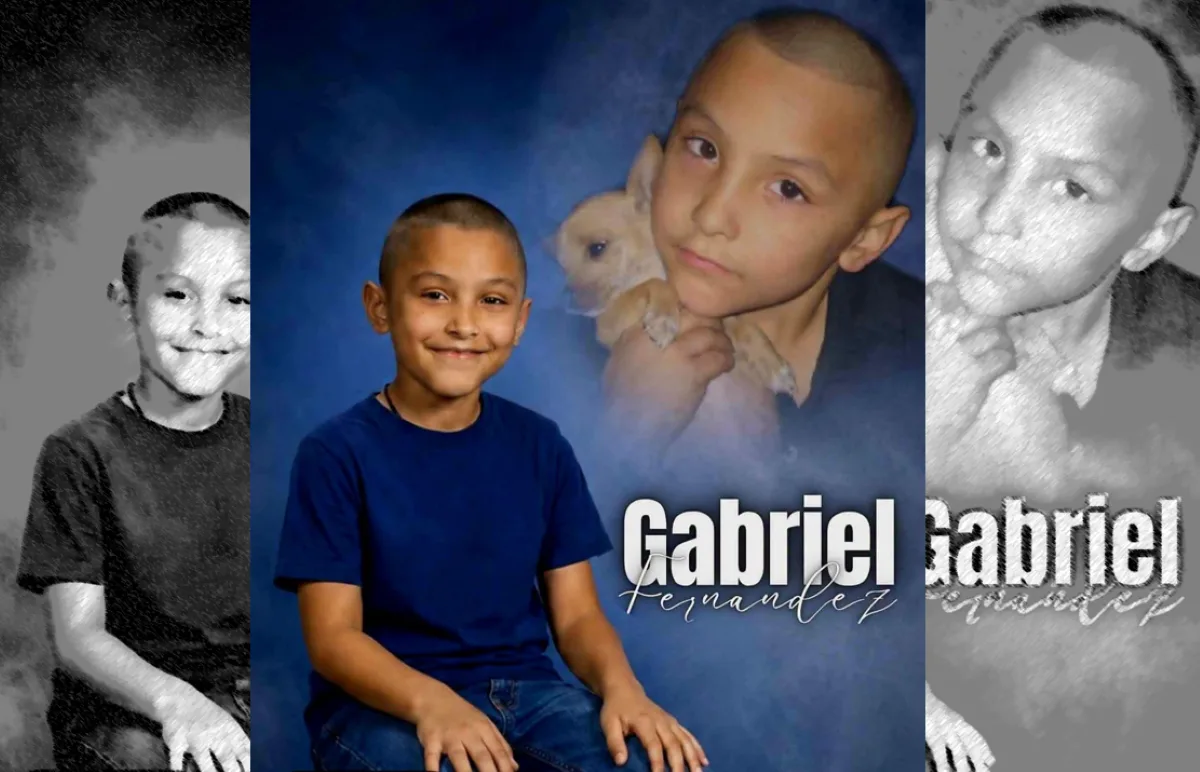
Governor Gavin Newsom has signed Gabriel’s Law (AB 2304), a new California statute aimed at tightening accountability for county social service workers and improving emergency protections for children in state custody.

This new law was authored by California State Assemblyman Tom Lackey, a Republican from Palmdale.
The new law requires social workers to secure immediate medical, surgical, or remedial care for children who appear injured or ill, and it imposes felony penalties on workers who knowingly falsify or alter case documents.
The bill is named after Gabriel Fernandez, the 8‑year‑old Palmdale boy murdered in 2013 after repeated abuse reports were ignored by Los Angeles County social workers.
Why Social Service Workers So Often Fail to Protect Children
California’s child‑welfare failures are not new, and Los Angeles County remains the epicenter. Multiple state audits, grand jury reports, and academic studies point to systemic issues that make tragedies like Gabriel’s case far more common than the public realizes.
Structural Problems
- Extreme caseloads LA County social workers routinely carry 30–40 cases each, far above the recommended national standard of 12–15. High caseloads reduce time for home visits, documentation, and follow‑up checks.
- Chronic understaffing LA County’s Department of Children and Family Services (DCFS) has struggled with vacancies for more than a decade, with annual vacancy rates hovering between 18–22%.
- High turnover Studies show that one in five LA County child‑welfare workers leave within their first year due to burnout, safety concerns, and administrative pressure.
- Poor training and supervision State audits have repeatedly found inconsistent training on risk assessment, documentation, and emergency medical protocols.
- Culture of avoidance Multiple investigations have documented a pattern where workers avoid removing children because removals generate more paperwork, court hearings, and scrutiny.
Data on LA County Child‑Welfare Failures
- LA County receives over 200,000 child‑abuse hotline calls per year, more than any other county in the United States.
- Roughly 30,000 children are monitored by DCFS at any given time.
- A 2025 state audit found that over 50% of emergency response investigations in LA County were late or incomplete.
- The LA County Civil Grand Jury reported that falsified case notes were discovered in multiple investigations between 2018 and 2024.
- Children in LA County’s system are twice as likely to experience repeat maltreatment compared to the statewide average.
Why Los Angeles Performs Worse Than Other Western States
California’s system—especially LA County—is uniquely large, bureaucratic, and decentralized. Other western states operate smaller, more centralized systems with clearer accountability.
Comparisons With Other States
- Utah Utah’s Division of Child and Family Services maintains caseloads averaging 10–12 cases, and the state has one of the lowest rates of repeat maltreatment in the nation. Utah also requires mandatory supervisory review of all high‑risk cases.
- Colorado Colorado uses a statewide Structured Decision Making (SDM) model with strict timelines. A 2024 review found 95% compliance with investigation deadlines, compared to LA County’s 50%.
- Arizona After a series of child deaths in 2013–2014, Arizona created the Department of Child Safety, a standalone agency with independent oversight. Caseloads dropped from over 30 to under 15, and repeat maltreatment fell by 40%.
- Nevada Nevada mandates third‑party audits of child‑welfare cases every two years. California does not.
Why These States Perform Better
- Smaller populations and more manageable caseloads
- Centralized oversight rather than county‑by‑county fragmentation
- Mandatory audits and external accountability
- Stronger emergency‑care protocols
- Lower turnover and better training consistency
How Gabriel’s Law Attempts to Fix California’s Weak Points
Gabriel’s Law directly targets two of California’s most persistent failures:
- Delayed medical care for children in temporary custody
- Falsified or incomplete case documentation
Key Provisions
- Requires social workers to obtain immediate medical care for children who appear injured or ill.
- Makes it a felony to knowingly falsify or alter child‑welfare case documents.
- Strengthens oversight of emergency response investigations.
- Creates clearer accountability for county agencies, especially LA County DCFS.
Community Impact
- Gabriel’s Law aims to fix long‑standing failures in California’s child‑welfare system.
- Los Angeles County has some of the worst child‑protection metrics in the western United States.
- Other states—Utah, Colorado, Arizona, Nevada—maintain lower caseloads, stronger oversight, and better outcomes.
- The new law introduces felony penalties for falsifying case records and mandates emergency medical care for children in custody.
- California’s decentralized system and LA County’s chronic staffing issues continue to put vulnerable children at risk.