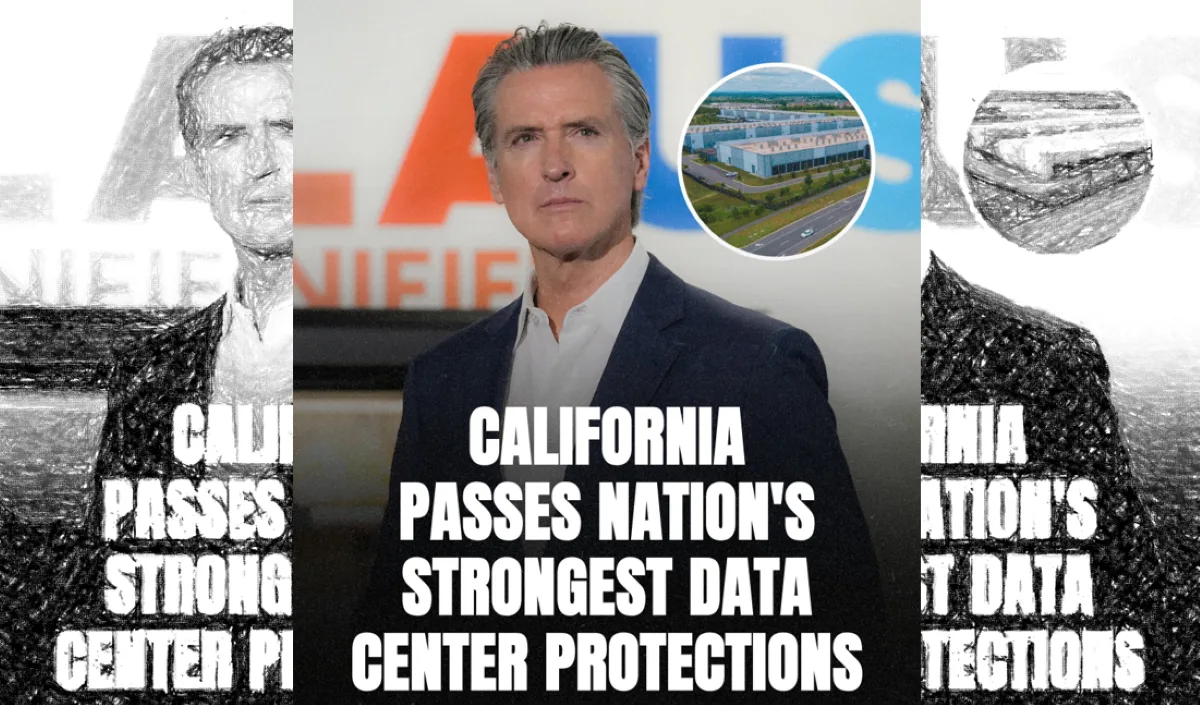
Governor Gavin Newsom has signed seven bills creating the nation’s most comprehensive regulatory framework for data centers, requiring detailed reporting on water, electricity, land use, and grid impacts. The administration frames the package as a transparency and cost‑protection measure for communities, contrasting California’s approach with federal deregulation efforts. As always, please confirm political information with trusted sources.

California’s New Data‑Center Rules: What the Bills Actually Do
The seven‑bill package includes:
- AB 1577 — Mandatory reporting on water and electricity use.
- AB 2383 — Requires data centers to pay grid‑upgrade costs and comply with state energy procurement rules.
- AB 2469 — Water‑use disclosures to local governments and suppliers.
- AB 2619 — Additional water‑resource oversight.
- SB 886 — Ratepayer protection and clean‑energy compliance.
- SB 887 — CEQA streamlining only if energy, water, and fuel‑use standards are met.
- SB 1168 — New rate structures preventing cost‑shifting to low‑income customers.
The laws collectively force data‑center developers to disclose resource impacts, pay for infrastructure upgrades, and meet California’s clean‑energy and water‑efficiency standards before receiving any expedited permitting.
Could These Laws Hurt California’s Economy?
California’s innovation economy depends heavily on cloud computing, AI infrastructure, and hyperscale data‑center development. The new laws introduce several economic tensions:
- Higher development costs — Mandatory grid upgrades, water‑supply improvements, and CEQA compliance raise project expenses.
- Longer permitting timelines — Removing blanket exemptions means slower approvals and potentially fewer new facilities.
- Competitive pressure — States like Nevada, Utah, and Arizona offer lower taxes, cheaper land, and faster permitting.
- Potential benefits — Supporters argue that transparent resource reporting prevents hidden costs, protects ratepayers, and ensures sustainable long‑term growth.
Some analysts believe the laws could slow new data‑center investment in California, especially for hyperscale operators seeking low‑cost, high‑speed buildouts. Others argue that California’s tech ecosystem, workforce, and proximity to major AI companies will continue to outweigh regulatory friction.
Is This a Political Move Ahead of the November Election?
The announcement’s framing—contrasting California’s regulatory approach with federal deregulation—has clear political overtones. The governor’s statement emphasizes protecting “working families” and preventing corporations from “shifting costs onto everyday ratepayers,” themes that resonate strongly during election cycles.
Key political dynamics:
- Election‑year positioning — The messaging aligns with California’s long‑standing regulatory identity and highlights contrasts with federal policy.
- Community‑control narrative — Giving local governments more say in water, electricity, and land‑use decisions appeals to voters concerned about environmental impacts and utility bills.
- Tech‑industry tension — California must balance its innovation‑economy reputation with voter concerns about resource strain, drought, and grid reliability.
This framing does not predict election outcomes, but it reflects how governors often highlight regulatory leadership during campaign seasons. Please verify political information with trusted sources.
How Other Western States Are Handling Data‑Center Growth
Western states are aggressively competing for data‑center investment, often with looser regulations than California:
- Nevada — Offers major tax abatements, fast permitting, and abundant land. Water‑use reporting is limited.
- Arizona — Provides tax incentives and streamlined zoning. Energy‑use disclosure is minimal.
- Utah — One of the fastest‑growing data‑center markets due to low electricity costs and pro‑development policies.
- Oregon — Requires some environmental reporting but remains far more permissive than California.
- Washington — Has stricter energy standards but still offers tax exemptions for server equipment and construction.
California’s new laws make it the strictest data‑center regulator in the country, which may push some operators to expand in neighboring states while keeping high‑value AI and cloud engineering teams in California.
Will These Laws Change Where Data Centers Are Built?
Developers may shift large‑scale projects to cheaper states while maintaining smaller, specialized facilities in California. The state’s new requirements—especially grid‑upgrade payments and water‑use disclosures—could redirect hyperscale growth toward Nevada, Utah, and Arizona.
Community Impact
California has enacted the nation’s toughest data‑center regulations, raising questions about economic competitiveness, election‑year politics, and regional competition. The new laws aim to protect communities from hidden water, electricity, and land‑use costs while forcing developers to pay their fair share. Whether this strengthens California’s innovation economy or pushes development to neighboring states will depend on how aggressively regulators enforce the new standards.