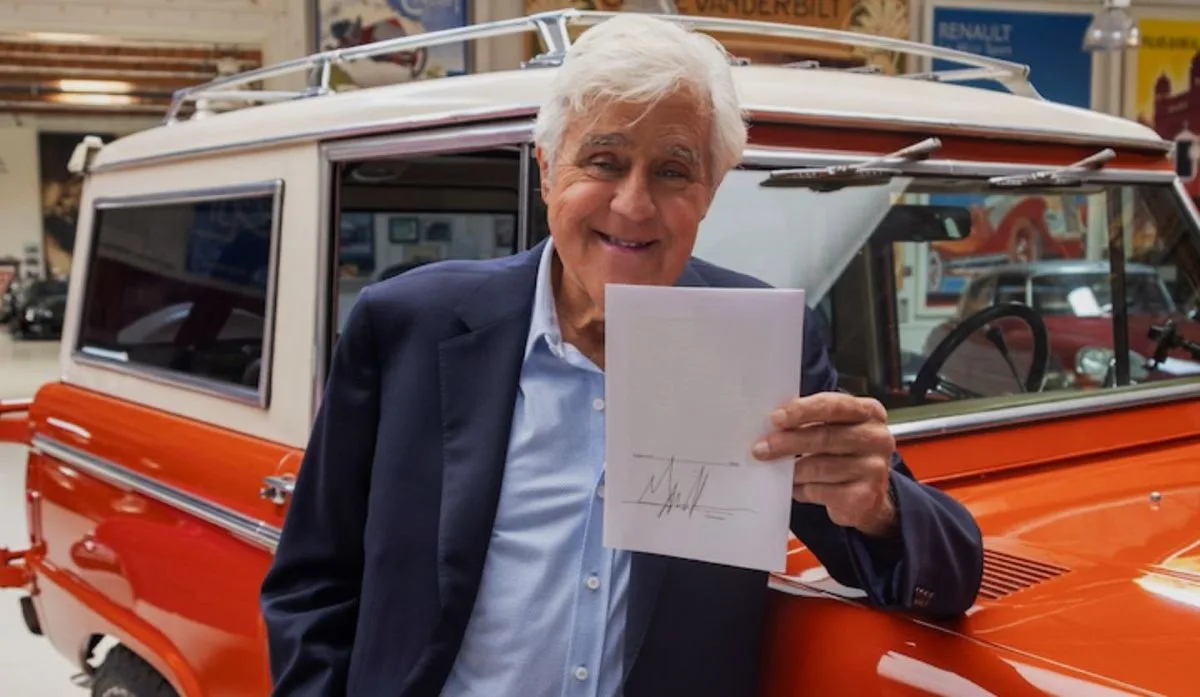
California Gov. Gavin Newsom has officially signed Leno’s Law (SB 1392)—a landmark reform that reshapes how the state treats classic and collector vehicles. The signing took place inside Jay Leno’s famed garage in Los Angeles, a symbolic venue for a bill designed to preserve automotive history while maintaining environmental responsibility.

Legislative History and How Leno’s Law Was Passed
Leno’s Law began as a targeted reform effort led by Sen. Dave Cortese (D‑San Jose), with Sen. Shannon Grove (R‑Bakersfield) serving as principal coauthor. The bill was sponsored by Jay Leno and the Specialty Equipment Market Association (SEMA), which mobilized industry support across California.
Key Legislative Milestones
- Initial Drafting and Introduction Sen. Cortese introduced SB 1392 in early 2026 after months of consultation with SEMA, collector‑car groups, lowrider organizations, and restoration businesses.
- Committee Assignments The bill moved through several committees central to environmental and transportation policy:
- Senate Transportation Committee – reviewed impacts on smog‑check systems and DMV processes.
- Senate Environmental Quality Committee – evaluated emissions implications and environmental safeguards.
- Assembly Transportation Committee – assessed implementation logistics and enforcement.
- Assembly Appropriations Committee – analyzed fiscal impacts, including DMV modernization requirements.
- Bipartisan Support The bill gained traction because it offered a narrow, phased‑in exemption for vehicles used primarily for shows, parades, charity events, and historical preservation—not daily driving. Democrats and Republicans united around the cultural significance of California’s automotive heritage.
- Public Advocacy
- California lowrider groups submitted over 1,700 letters supporting the bill.
- The FIA International Historical Commission endorsed it, citing its balance between preservation and environmental goals.
- Restoration shops, car clubs, and collectors testified during committee hearings.
- Final Passage and Signing After clearing both chambers with strong bipartisan votes, Gov. Newsom signed the bill on Sept. 16, 2026.
What Leno’s Law Actually Does
Beginning Jan. 1, 2028, collector‑use vehicles manufactured before 1981 become eligible for smog‑check exemption. Each year, the exemption expands by one model year until 2033, when it covers vehicles manufactured before 1986.
Eligibility Requirements
- Vehicle must meet collector‑use standards.
- Owner must carry collector‑car insurance, or
- Starting in 2030, verify under 1,000 miles per year through a DMV process.
- Pre‑1976 vehicles remain exempt under existing law.
This framework ensures only true collector vehicles—not daily drivers—qualify.
Jay Leno’s Role in Making This Bill Possible
Jay Leno’s involvement was not symbolic; it was instrumental.
How Leno Helped Pass SB 1392
- Direct Sponsorship Leno partnered with SEMA to sponsor the bill, lending credibility and visibility.
- Legislative Advocacy He met with lawmakers, testified in support, and used his platform to explain why collector vehicles pose minimal environmental impact due to limited use.
- Public Mobilization Leno’s outreach helped unify car clubs, lowrider groups, restoration shops, and collectors—communities that often operate independently.
- Hosting the Signing Ceremony Gov. Newsom signed the bill inside Leno’s garage, underscoring Leno’s central role and the cultural significance of the legislation.
Jay Leno: A Quick Bio for Younger Readers
Jay Leno is one of America’s most recognizable entertainers and one of the world’s most respected automotive enthusiasts.
Who He Is
- Former host of NBC’s “The Tonight Show” (1992–2009, 2010–2014)
- Host of “Jay Leno’s Garage”, a long‑running TV and digital series showcasing automotive history, engineering, and restoration
- Owner of one of the largest private car collections in the world, including over 180 cars and 160 motorcycles
- Philanthropist, frequently using his collection for charity events and educational programs
Leno is widely regarded as a bridge between automotive culture and mainstream audiences, making him uniquely positioned to advocate for collector‑car legislation.
Classic Car Ownership in California
California is one of the nation’s largest hubs for classic‑car ownership and automotive culture.
Key Data Points
- California is home to over 1,500 SEMA member businesses.
- The state’s automotive aftermarket supports nearly 150,000 jobs.
- The sector generates over $40 billion in annual economic activity.
- California consistently ranks among the top states for registered classic and collector vehicles, with estimates exceeding 500,000 vehicles statewide when including pre‑1976 exempt cars, lowriders, hot rods, and restored trucks.
- Collector‑car insurance companies report California as one of their largest markets, driven by climate, car culture, and restoration industry density.
These numbers underscore why smog‑check reform for collector vehicles has long been a priority for enthusiasts.
Why Leno’s Law Matters
Benefits for California
- Protects historically significant vehicles
- Supports restoration shops, small businesses, and car clubs
- Reduces regulatory burdens for low‑mileage collector vehicles
- Preserves cultural heritage tied to California’s identity
- Demonstrates that environmental stewardship and automotive history can coexist
Stakeholder Reactions
- SEMA praised the bill as a “historic win” for families, enthusiasts, and small businesses.
- Lowrider organizations celebrated the recognition of cultural automotive traditions.
- Restoration shops