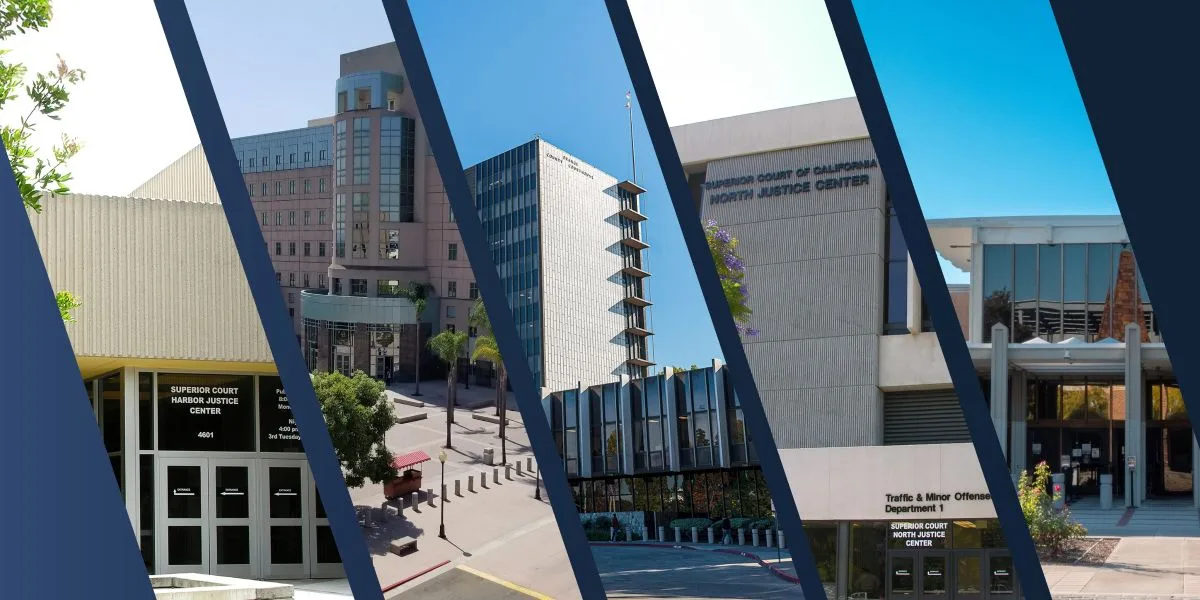
Santa Ana, CA – Orange County Superior Court announced the launch of an eFiling program to better serve attorneys in criminal cases, beginning on Friday, May 22, 2026.

The Criminal Defense Attorney Portal (CDAP) will enable attorneys to electronically file motions, petitions and responses that would have otherwise required in-person filing at the clerk’s office. All other documents will continue to be filed through the standard process.
“This program is designed to increase access and address immediate needs in Criminal Operations,” said Presiding Judge Sheila F. Hanson. “We strive to serve our stakeholders and the legal community of Orange County by expanding the digital filing options, reducing reliance on in-person filings, and improving overall efficiency while broader and long-term system enhancements continue to be developed.”
By expanding digital services through a phased and strategic approach, the Court reaffirms its commitment to accessibility and high-quality service to the public and the legal community at a time of decreasing budgets.
Other Superior Courts in California already allow criminal eFiling, and there is an ongoing national push to modernize criminal court documentation. While California courts have widely mandated electronic filing for civil, family law, and probate cases, criminal eFiling has traditionally lagged behind due to complex workflows involving unique “justice partners”—such as local police, district attorneys, and probation departments. The launch of Orange County’s Criminal Defense Attorney Portal (CDAP) reflects a broader state and national transition toward fully digital court management systems.
The Landscape of Criminal eFiling in California
Because California’s 58 Superior Courts operate under a decentralized model, technology implementation is fragmented. However, several counties are moving in the exact same direction:
- Los Angeles County: The Los Angeles Superior Court initiated a multi-phased criminal and juvenile eFiling rollout. They began integrating internal justice partners, like the county probation department, onto a unified digital platform before expanding to private defense attorneys.
- Alameda County: Alameda Superior Court was an early adopter, implementing electronic filing for its Criminal and Juvenile Divisions several years ago.
- San Luis Obispo & San Benito Counties: San Luis Obispo allows eFiling for subsequent motions in existing criminal cases, while San Benito Superior Court instituted an explicit local mandate requiring all criminal defense filings to be processed electronically.
- The Appellate Level: At the higher court levels in California, electronic filing via platforms like TrueFiling has been strictly mandatory for all civil and criminal proceedings for several years.
The National Push for Criminal Modernization
Nationwide, state and federal court systems are aggressively moving to eliminate paper, driven by long-term cost savings, remote work demands, and efficiency needs.
- The Federal Model: The federal court system remains the blueprint. Electronic filing has long been mandatory for attorneys across all federal civil and criminal cases via the Case Management/Electronic Case Files (CM/ECF) system. The federal judiciary is currently undergoing a massive multi-year CM/ECF Modernization project to streamline full-text search capabilities across districts.
- Statewide Rollouts (e.g., North Carolina): Entire states are switching to unified, cloud-based portals. North Carolina is in the middle of a massive statewide rollout of its “eCourts” initiative, which recently hit a milestone of 10 million electronic filings. Their system integrates electronic warrants (eWarrants) for law enforcement alongside attorney filings.
- National Policy Initiatives: Organizations like the National Center for State Courts (NCSC) actively advocate for a national push toward digital integration. Their initiatives focus on providing “roadmaps” for courts to handle budget shortfalls by moving operations online while ensuring portals remain accessible.
Civil cases only involve private litigants and their attorneys. Criminal eFiling is much harder to deploy because the court portal must securely “talk” to law enforcement databases, jail booking systems, the District Attorney, and Public Defenders.
As Presiding Judge Sheila F. Hanson noted, courts are launching these portals during a time of “decreasing budgets”. While building these portals requires an upfront technology investment, they drastically lower long-term overhead by reducing physical foot traffic at the clerk’s window and minimizing manual data entry for court staff.
This shift is not always smooth. For example, North Carolina’s rapid eCourts rollout faced heavy pushback from local District Attorneys who claimed system bugs initially created massive scheduling backlogs and required twice as many staff to process cases. Orange County’s “phased and strategic approach”—starting specifically with motions, petitions, and responses—is a direct effort to avoid those systemic bottlenecks.