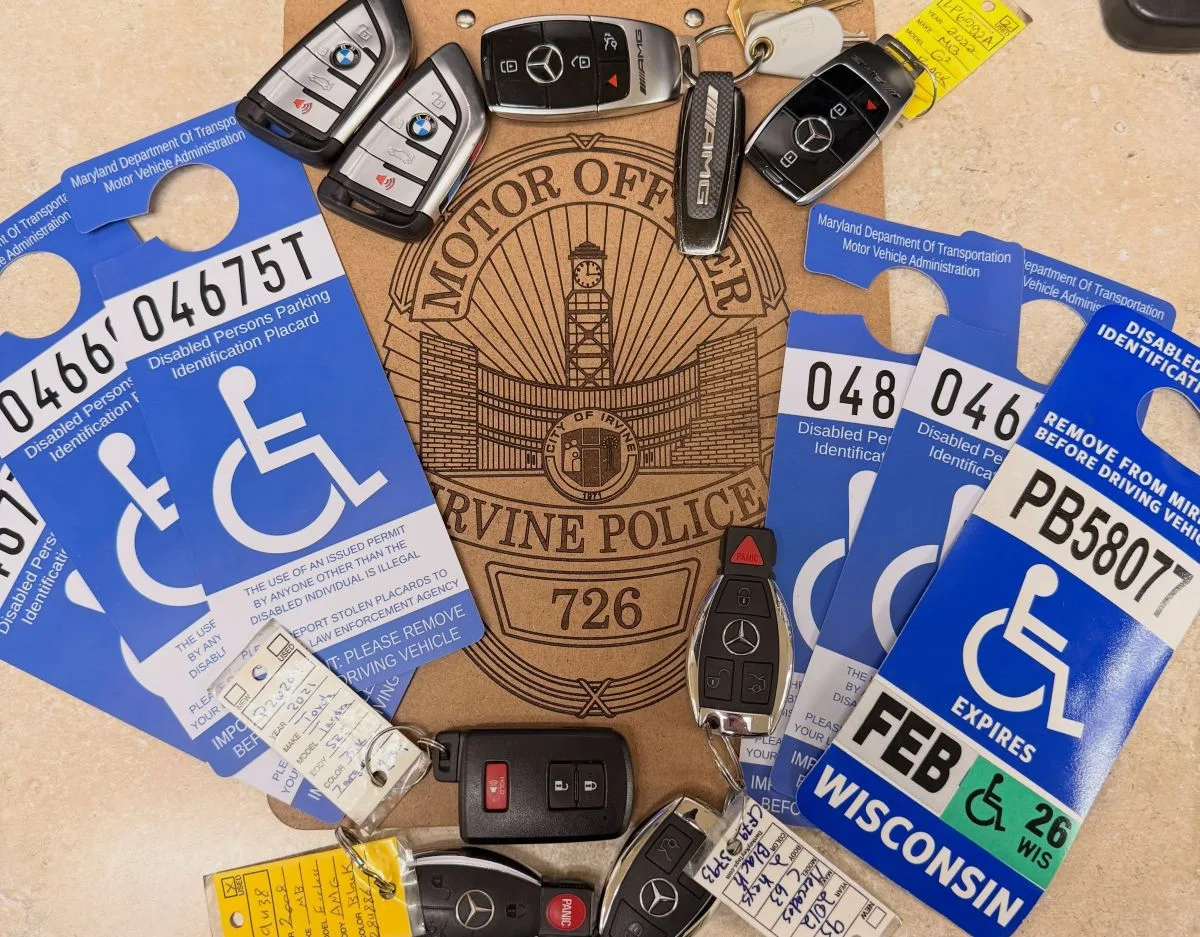
Irvine Police say a man has been arrested after Traffic Detectives uncovered a scheme involving six vehicles parked with fraudulent disabled placards at an apartment community.

According to investigators, a tip led officers to the property, where they determined the placards were bogus and being used to secure long‑term parking in disabled‑only spaces.
On Friday, the suspect was taken into custody and the placards were seized.
Criminal Charges the Suspect Is Facing
Based on California law and the facts released, the suspect is likely facing multiple charges, including:
- Disabled placard misuse — Using, displaying, or possessing a fraudulent or altered placard is a misdemeanor punishable by fines up to $1,000 and possible jail time.
- Possession of a forged government document — Fake placards qualify as forged state-issued documents, a felony that can carry up to three years in custody.
- Parking fraud — Intentionally using fraudulent credentials to obtain parking access can add misdemeanor penalties.
- Identity misuse — If any placard numbers belonged to real disabled individuals, additional charges may apply.
- Theft of services — Illegally occupying restricted parking spaces can be charged as theft of public accommodation.
If prosecutors stack charges across all six vehicles, the suspect could face multiple counts, significantly increasing fines and potential jail exposure.
Impound Fees for the Vehicles When fraudulent placards are discovered, vehicles are commonly towed and impounded. In Orange County, typical impound costs include:
- Tow fee: $250–$350
- Daily storage: $60–$85 per day
- Administrative citation: $100–$150
For six vehicles, the suspect could easily face $2,000–$3,500 in immediate impound-related costs, plus additional storage fees if the cars were held for evidence.
Impact on the Suspect’s Auto Insurance
Fraud involving vehicles almost always affects insurance. Carriers routinely review criminal records and DMV actions. Consequences may include:
- Higher premiums due to fraud-related risk
- Denial of coverage or non-renewal
- Requirement to obtain high‑risk insurance
- Increased deductibles
Insurance companies treat fraudulent placard use as a behavioral risk indicator, especially when tied to multiple vehicles. The suspect will likely face long-term financial consequences.
Data on Disabled Placard Fraud — National and Orange County Trends Disabled placard abuse is a widespread problem:
- Nationally, studies estimate 10–20% of disabled placards in major cities are misused, either borrowed, stolen, or forged.
- In California, audits have found over 35,000 questionable placards in circulation statewide.
- Orange County agencies report hundreds of placard fraud investigations each year, especially in high‑density housing areas and shopping centers.
- Enforcement sweeps in OC often result in 20–40 citations in a single operation, showing how common the issue is.
Fraudulent placard use is not a victimless crime. It directly harms people who rely on these spaces for mobility and independence.
Impact on Truly Disabled Residents
Disabled parking exists for people who genuinely need close access due to mobility limitations. Placard abuse:
- Forces disabled drivers to park farther away, increasing physical strain
- Reduces access to medical appointments, grocery stores, and workplaces
- Creates frustration and distrust within communities
- Increases demand for enforcement, raising costs for property managers and cities
For disabled residents in apartment communities, losing access to designated spaces can be devastating. Irvine PD’s strict enforcement protects those who rely on these accommodations every day.
Community Impact
Irvine Police emphasized that there is zero excuse for placard abuse, and those who exploit the system should expect aggressive enforcement.
Fraudulent disabled placard cases continue to rise nationwide, making Irvine’s action part of a broader effort to protect disabled parking access, reduce fraud, and maintain fairness in community spaces.
Excellent Bust, Great Job Irvine PD….. That God that lo life coward is arrested along with his trash property seized.