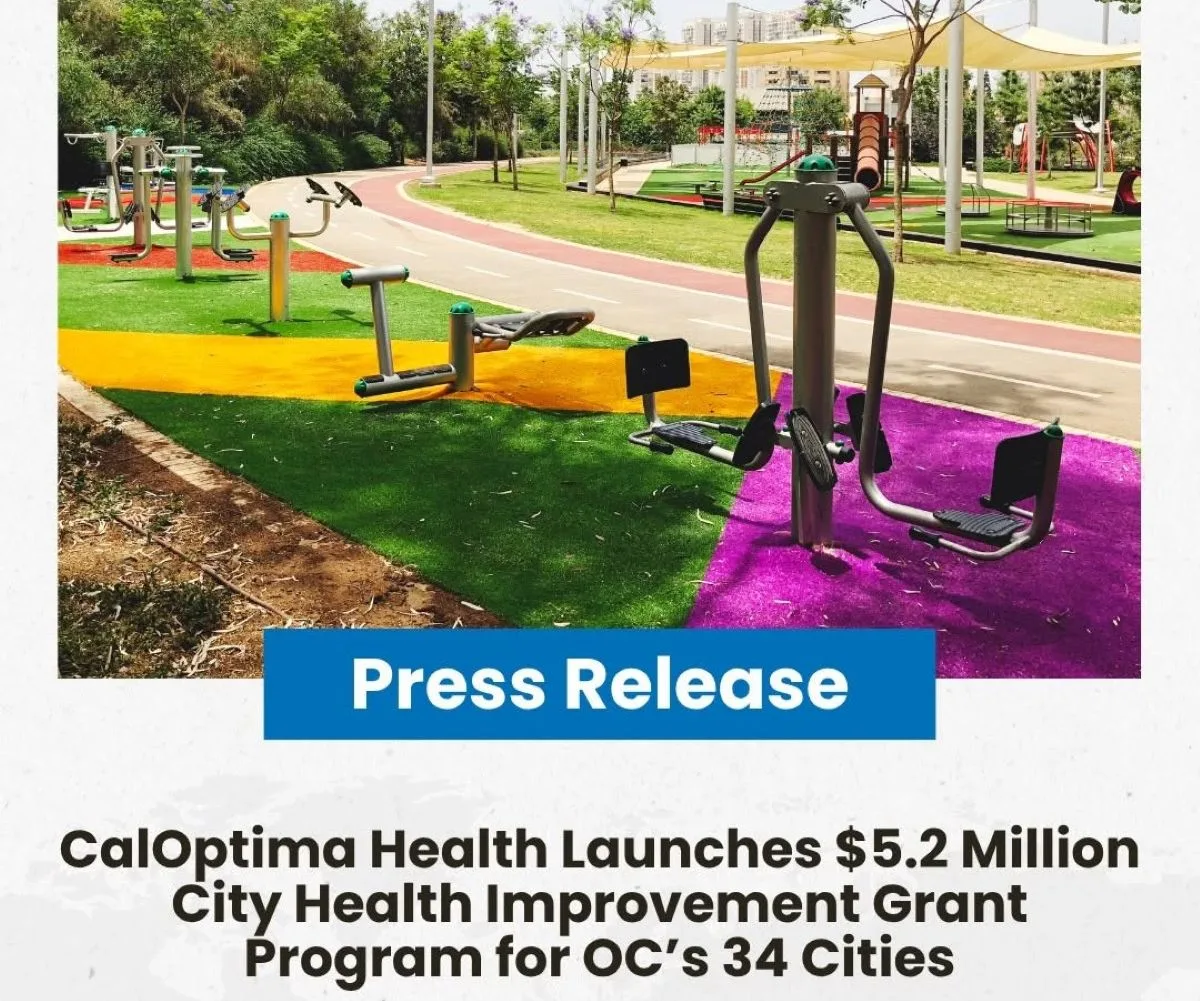
CalOptima Health has launched a first‑of‑its‑kind City Health Improvement Grant Program, opening $5.2 million in funding for projects that expand wellness infrastructure, improve preventive health access and strengthen community environments across all 34 cities in Orange County.

The initiative marks one of the county’s largest coordinated investments in upstream health supports — and positions OC alongside other Southern California counties that have begun shifting toward community‑based health improvement models.
A Regional Push Toward Community Health Infrastructure
The new grant program allows cities to apply for funding to build or enhance projects that directly improve member health. Eligible initiatives fall under four categories:
- Community Wellness Infrastructure — park shade structures, walking paths, fitness zones, safe public spaces
- Preventive Health Access — mobile screenings, chronic disease detection, early‑intervention programs
- Food and Mental Health Supports — healthy food access, mental wellness resources
- Environmental and Climate Health — air‑quality improvements, heat‑mitigation projects, pollution reduction
Funding allocations will be based on each city’s number of CalOptima Health Medi‑Cal members and the percentage of members within the city’s population, ensuring resources flow to communities with the greatest need.
Why OC Needs This: Data Shows Significant Gaps
Orange County’s health indicators reveal clear disparities that city‑level projects can help address:
- More than 806,000 Medi‑Cal members rely on CalOptima Health — a population larger than many entire counties in California.
- OC cities with high poverty rates (Santa Ana, Anaheim, Stanton) report higher rates of chronic disease, lower access to preventive care and fewer safe outdoor recreation spaces.
- According to regional health assessments, over 30% of OC adults report insufficient physical activity, often due to lack of safe parks or walkable infrastructure.
- Heat‑related ER visits have increased across OC, especially in inland cities lacking shade structures and cooling zones.
- Food insecurity remains a challenge: 1 in 10 OC residents struggles to access healthy food consistently.
These data points mirror trends seen across Southern California, where counties are increasingly investing in community‑level health infrastructure to reduce long‑term medical costs and improve quality of life.
How Other Southern California Counties Compare
Orange County’s new program aligns with broader regional strategies, but its city‑by‑city grant structure is unique.
Los Angeles County
- LA County’s Measure H and Park Needs Assessment investments focus on homelessness, parks and community wellness, but funding flows through county departments rather than individual cities.
- LA’s mobile health units target chronic disease detection, similar to OC’s preventive health goals.
San Diego County
- San Diego’s Live Well San Diego initiative promotes community wellness, but relies on partnerships rather than direct municipal grants.
- The county has expanded mental‑health access and environmental health projects, paralleling OC’s grant categories.
Riverside County
- Riverside has invested in heat‑mitigation, air‑quality improvements and walkable infrastructure, but programs are county‑administered and not structured as competitive city grants.
- OC’s model provides direct funding to cities, giving municipalities more control over project design.
San Bernardino County
- SB County’s public‑health investments emphasize chronic disease prevention and environmental health risks, but lack a dedicated city‑level grant program.
Orange County now stands out as the only Southern California county offering a structured, competitive grant program specifically for cities, giving local governments more autonomy to address neighborhood‑level health needs.
Leadership Perspective
Supervisor Vicente Sarmiento emphasized that cities will now be “active partners” in improving member health, noting that projects can range from recreational space upgrades to healthy food access and mental‑health supports.
CalOptima COO Yunkyung Kim highlighted the program’s upstream focus: strengthening the places where people live, work and gather to create safer, healthier environments for Medi‑Cal members.
Key Dates for Cities
- Letter of Interest Deadline: August 31, 2026
- Proposal Deadline: October 30, 2026
Funding comes from previously allocated intergovernmental funds.
What This Means for Orange County
This program represents a major shift toward localized, preventive, community‑driven health investment. By empowering cities directly, CalOptima Health is positioning OC as a regional leader in wellness infrastructure — and addressing long‑standing gaps in physical activity access, environmental health and preventive care.