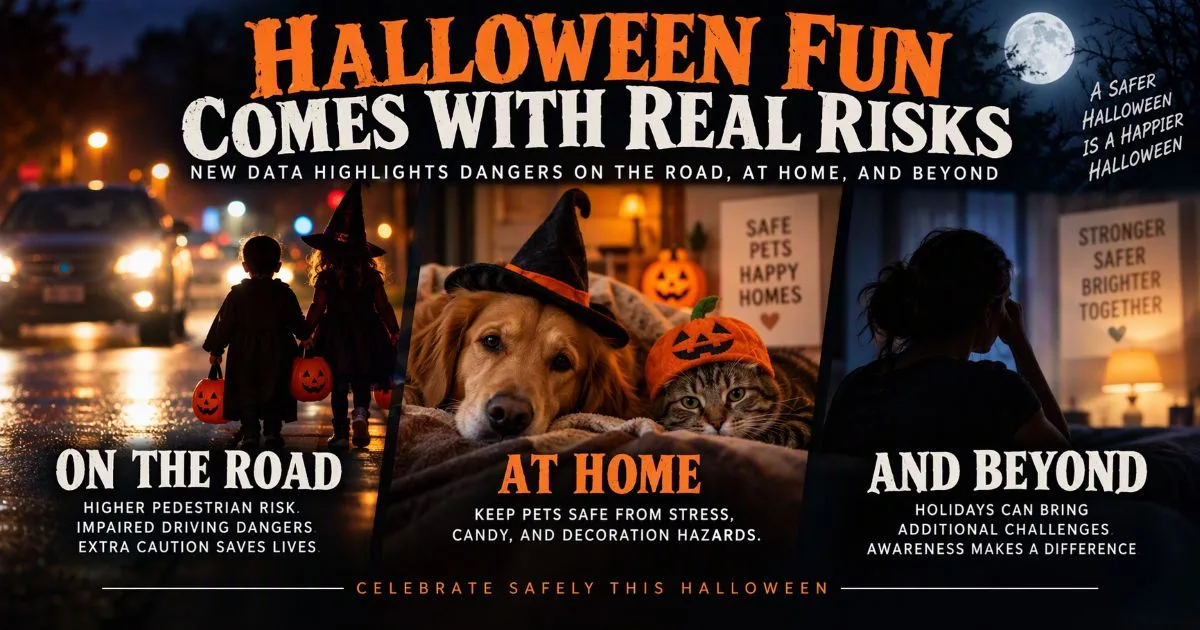
New analysis highlighted by Lerner & Rowe draws attention to a troubling overlap between Halloween pedestrian risks and impaired-driving dangers.

According to data from the National Highway Traffic Safety Administration (NHTSA), 176 people were killed in Halloween-night crashes involving a driver with a blood-alcohol concentration of .08 or higher between 2019 and 2024. Among those victims were 31 pedestrians.
A separate 42-year analysis published in JAMA Pediatrics found that pedestrian fatalities on Halloween evenings were 43% higher than on comparable nights.
Researchers examined Halloween evenings between 1975 and 2016 and compared them to the same hours one week before and one week after Halloween. After adjusting for the larger number of comparison nights, they found:
- Halloween pedestrian fatality rate: 2.07 deaths per hour
- Comparison-evening rate: 1.45 deaths per hour
- Relative risk increase: 43%
Notably, the highest pedestrian risk occurred around 6 p.m., the same timeframe when trick-or-treating activity is peaking and when NHTSA’s annual Halloween impaired-driving enforcement period begins.
Traffic safety data also show that alcohol-impaired driving remains a significant national problem even as overall fatality numbers have improved.
Key findings include:
- 11,904 people died in alcohol-impaired-driving crashes nationwide during 2024
- Those deaths represented approximately 30% of all U.S. traffic fatalities
- One alcohol-related traffic death occurred every 44 minutes on average
- Fatal crashes involving impaired drivers happened at roughly three times the daytime rate during nighttime hours
- Men ages 21 to 34 accounted for the largest demographic group of alcohol-impaired drivers involved in fatal crashes
Children Face the Greatest Halloween Pedestrian Risk
The JAMA Pediatrics study found that young children experience the most dramatic increase in risk on Halloween.
Among children ages 4 to 8, pedestrian fatality risk was approximately ten times higher than on comparable evenings. Researchers also found that children under 18 experienced an overall risk increase of 3.6 times compared to similar nights throughout the year.
Earlier CDC research reached similar conclusions, finding that children ages 5 to 14 suffered an average of four pedestrian deaths on Halloween between 4 p.m. and 10 p.m., compared to roughly one child fatality on comparable evenings.
Safety experts note that large numbers of children crossing streets after dark, excitement over candy collection, costumes that may restrict visibility, and increased vehicle traffic all contribute to elevated risks.
Parents are encouraged to:
- Use reflective materials on costumes
- Carry flashlights or glow sticks
- Cross only at designated intersections
- Supervise younger children closely
- Avoid distracted walking while using phones
While the pedestrian research and drunk-driving statistics measure different risks, both point to Halloween night as a time when extra caution is warranted.
Source Links
- – https://www.
trafficsafetymarketing.gov/ safety-topics/drunk-driving/ buzzed-driving-drunk-driving/ halloween - – https://www.nhtsa.gov/risky-
driving/drunk-driving - – https://jamanetwork.com/
journals/jamapediatrics/ fullarticle/2711459 - – https://jamanetwork.com/
journals/jamapediatrics/ article-abstract/2725860 - – https://www.
trafficsafetymarketing.gov/ communication-calendars
Halloween Can Be Stressful for Pets Too
The holiday’s noise and activity may be entertaining for people, but many pets experience Halloween very differently.
According to dog trainer Shannon Walker, founder of Northwest Battle Buddies and longtime canine behavior specialist, the constant stream of visitors, doorbell ringing, unusual costumes, and decorations can create significant stress for both dogs and cats.
Walker recommends creating a quiet sanctuary for pets before trick-or-treating begins.
Among her top recommendations:
Create a Safe Space
Place pets in a secure room away from the front door and Halloween activity. Crate-trained dogs may feel more comfortable in their crates with familiar toys and bedding nearby. Soft background music can also help mask outside noise.
Keep Candy Out of Reach
Many popular Halloween treats can be dangerous or even fatal to pets.
Items of concern include:
- Chocolate
- Gum
- Candy containing xylitol
- Raisins and certain baked goods
Pet owners should ensure children understand that human Halloween treats should never be shared with animals.
The ASPCA Animal Poison Control Center can be reached at 888-426-4435 if accidental ingestion occurs.
Watch Out for Decorations
Decorative items can become hazards for curious pets.
Potential dangers include:
- Lit candles
- Rubber decorations
- Plastic spiders and skeletons
- Synthetic cobwebs
Ingested decorations can create blockages, choking hazards, or other medical emergencies requiring veterinary attention.
Choose Pet Costumes Carefully
While many owners enjoy dressing up their pets, experts recommend prioritizing comfort over appearance.
Signs a pet may be uncomfortable include:
- Excessive panting
- Attempts to remove the costume
- Flattened ears
- Tucked tail
- Visible anxiety
Simple accessories such as bandanas or themed collars may be better tolerated than elaborate costumes.
Keep Pets Indoors
Halloween is one of the busiest nights of the year for neighborhood activity. Frightened pets are more likely to bolt through open doors or escape fences.
Owners should verify that:
- ID tags are current
- Microchip information is updated
- Pets remain indoors during peak trick-or-treat hours
A Reminder That Holidays Can Bring Other Hidden Risks
Halloween is not the only holiday associated with elevated safety concerns.
A separate analysis from Dellino Family Law examined police-recorded assault and intimidation cases during major holidays and found that holiday periods often experience increases in reported incidents involving intimate partners and former partners.
Among four holidays studied, Halloween recorded 2,631 qualifying incidents nationwide, representing a rate approximately 10.9% above matched non-holiday days.
However, New Year’s Day stood out dramatically from the rest of the calendar.
Researchers found:
- 4,671 qualifying incidents on New Year’s Day
- A rate increase of 125% above comparable days
- Nearly 1,000 incidents involving former partners
Christmas and Thanksgiving also exceeded baseline levels, though by smaller margins.
The study’s authors cautioned that the data do not explain why incidents rise during particular holidays. Still, researchers noted that the findings align with separate emergency-room studies that have identified elevated intimate-partner violence injuries around Thanksgiving, Christmas, and the New Year period.
A Season for Celebration and Awareness
Halloween remains a favorite tradition for millions of families, but safety experts say the holiday’s excitement can sometimes obscure genuine risks.
Whether it’s watching for impaired drivers, helping children cross busy streets safely, protecting pets from dangerous candy and decorations, or recognizing that holiday stress affects households in different ways, awareness remains one of the most effective tools available.
As trick-or-treaters head out this year, experts hope families will focus not only on having fun but also on taking a few simple precautions that could save lives.