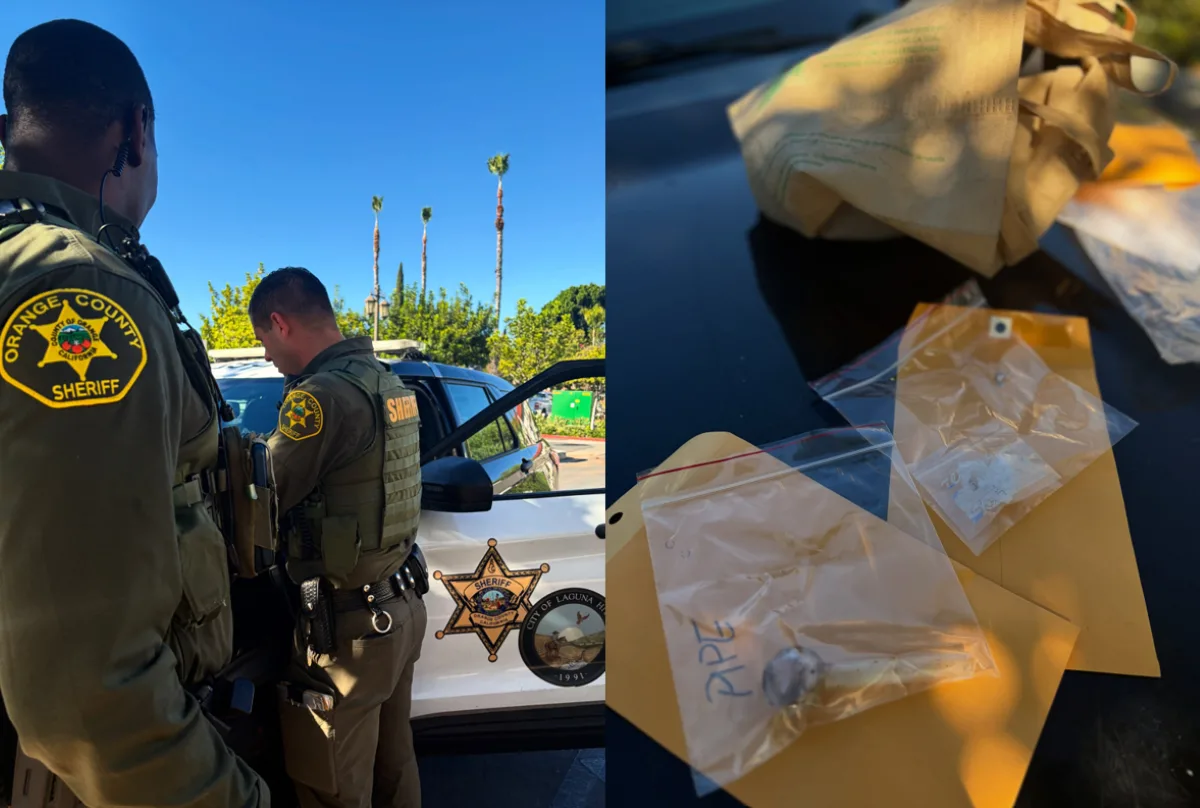
A probationer was arrested in Laguna Hills after Orange County Sheriff’s Department deputies allegedly discovered illegal narcotics and drug paraphernalia during a proactive patrol contact, according to a social media post published by the Laguna Hills Police Services unit on Nov. 19.
Authorities said deputies were patrolling the community when they contacted the probationer and found the individual to be in possession of illegal narcotics and drug paraphernalia. The suspect was taken into custody and booked into the Orange County Jail.
Officials did not identify the suspect, disclose the specific narcotics involved, or announce what charges were ultimately filed by prosecutors.
The arrest highlights the continuing role probation searches and proactive patrol efforts play in Orange County’s efforts to combat drug-related crime and monitor individuals who are already under court supervision.
Potential Charges and Penalties
Because law enforcement has not identified the specific drug involved, the exact charges remain unknown. However, under California law, common charges associated with cases like this may include:
- Possession of a controlled substance (Health and Safety Code §11350 for certain narcotics), generally a misdemeanor punishable by up to one year in county jail and fines.
- Possession of methamphetamine, fentanyl, heroin, cocaine, or other controlled substances under applicable sections of the California Health and Safety Code.
- Possession of drug paraphernalia (Health and Safety Code §11364), typically a misdemeanor offense punishable by up to six months in jail and fines.
- Violation of probation conditions, which can lead to additional sanctions, custody time, stricter supervision, or revocation of probation.
If the probationer has prior convictions, outstanding warrants, or additional aggravating factors, prosecutors could seek enhanced penalties. The individual’s probation status may ultimately have a greater impact on the outcome than the new possession allegations themselves.
Drug Arrests Remain a Major Issue in Orange County
Drug-related arrests continue to represent a significant share of law enforcement activity throughout Orange County.
According to FBI arrest data compiled for Orange County, law enforcement agencies reported more than 7,200 arrests classified as drug abuse violations in 2024. Drug offenses accounted for more than 12% of all arrests countywide, making them one of the most common categories of criminal arrests.
While methamphetamine and fentanyl receive much of the public attention due to their connection to overdoses and violent crime, cocaine, heroin, prescription narcotics, and other controlled substances also continue to generate arrests throughout the county.
Recent Orange County law enforcement operations have repeatedly resulted in the seizure of fentanyl, methamphetamine, cocaine, narcotics sales packaging materials, scales, firearms, and drug paraphernalia, highlighting the continuing challenge narcotics enforcement poses for local agencies.
Orange County Cities Reporting the Highest Numbers of Arrests
Available FBI arrest data shows that the largest Orange County cities generally account for the highest overall arrest activity, including many narcotics-related arrests.
The five Orange County cities reporting the highest overall arrest totals recently were:
- Anaheim
- Santa Ana
- Fullerton
- Costa Mesa
- Garden Grove
Because federal arrest reporting systems do not always break drug arrests down by city in publicly accessible summaries, overall arrest activity is often used as a reasonable indicator of where law enforcement encounters and narcotics enforcement actions are most frequently occurring.
Probationers and Recidivism Concerns
The Laguna Hills arrest also draws attention to the ongoing challenge of probation recidivism.
Orange County’s Community Corrections Partnership tracks recidivism as a key measure of public safety outcomes. Recidivism generally refers to a new criminal conviction occurring after release from custody or while under supervision.
County officials have noted that many offenders face significant barriers after release, including substance abuse disorders, mental health challenges, housing instability, and unemployment. Those factors can increase the likelihood of reoffending.
Drug addiction remains one of the strongest predictors of repeat involvement with the criminal justice system. Individuals struggling with addiction frequently cycle through arrests, probation violations, treatment programs, and incarceration before achieving long-term recovery.
Orange County has invested heavily in evidence-based supervision strategies, behavioral health treatment, drug courts, recovery programs, and community-based interventions aimed at reducing repeat offending among probationers and parolees.
Law enforcement officials frequently emphasize that probation compliance checks, field contacts, and proactive patrol operations are intended not only to enforce the law, but also to identify individuals who may require intervention, treatment, or additional supervision before more serious crimes occur.
Deputies Continue Proactive Patrol Efforts
In their Nov. 19 post, Laguna Hills deputies emphasized that they remain active throughout the community addressing safety concerns, conducting patrols, and building relationships with residents.
The agency said deputies routinely check on neighborhoods, respond to community concerns, and maintain a visible presence throughout Laguna Hills in an effort to keep the city safe.
The probationer arrested during the Nov. 19 contact remains presumed innocent unless and until proven guilty in court.