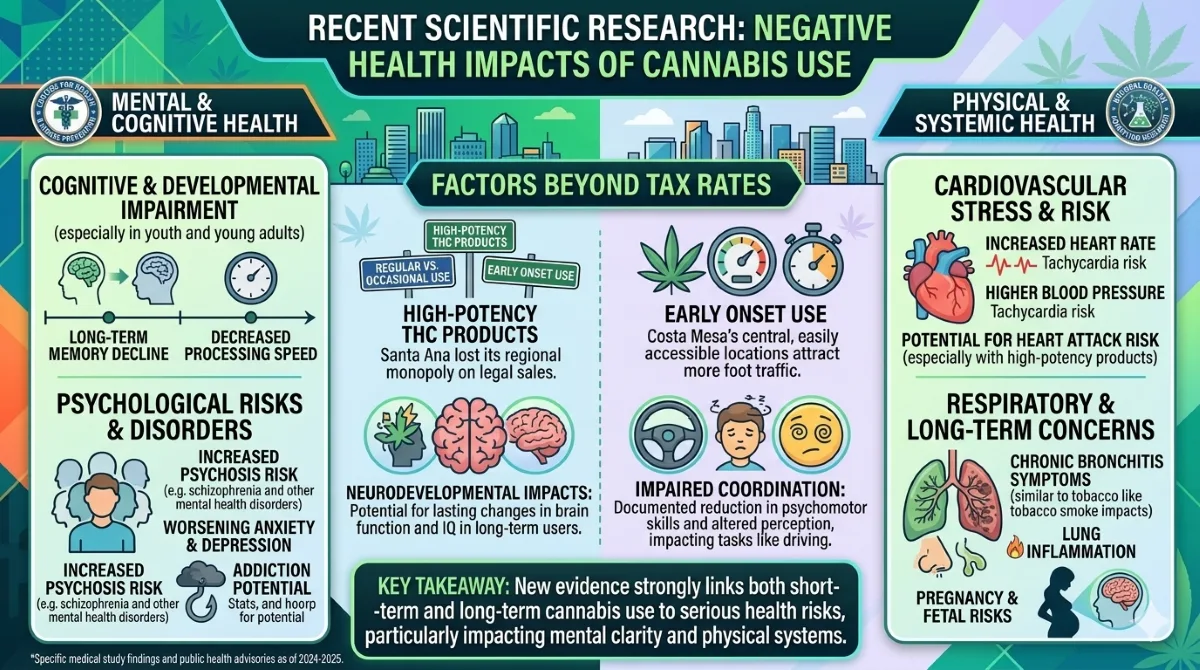
For years, the narrative around marijuana has leaned heavily into its potential as a “natural” wellness product. However, a wave of research from late 2025 and early 2026 is providing a sobering counterpoint. From mental health setbacks to physical risks, the latest data suggests that frequent use—especially of high-potency products—may carry significant consequences.

The Cognitive and Memory Toll
New research from early 2025 and 2026 has significantly deepened our understanding of how marijuana affects the brain’s processing power. While proponents often cite “wellness,” these landmark studies highlight specific, measurable deficits in how users process, store, and even invent information.
- The Largest Brain Function Study to Date: A massive study of over 1,000 young adults published in JAMA Network Open in January 2025 found that 63% of heavy lifetime users showed reduced brain activity during working memory tasks. This reduction was linked to a lower ability to follow complex instructions and mentally manipulate information.
- The “False Memory” Phenomenon: Research from Washington State University in March 2026 revealed that THC doesn’t just make you forgetful—it can actually reshape your memories. In controlled tests, users were nearly twice as likely to “recall” events or words that never occurred, a phenomenon known as false memory.
- Source Confusion: That same 2026 study found significant impairments in “source memory,” where users could recall a fact but had no idea if they learned it from a trusted source, a conversation, or an online advertisement.
- Slower Teen Development: A long-term study by UC San Diego released in April 2026 monitored over 11,000 teens and found that those who start using cannabis show significantly slower gains in thinking and memory skills compared to their peers.
- Prospective Memory Gaps: Recent findings also highlight “prospective memory” failures—the ability to remember to do something in the future, like taking medication or attending a scheduled meeting.
The Cognitive Cost and Future Lawsuits
The physical risks are only part of the story. New brain imaging studies have shown that over 60% of heavy cannabis users exhibit reduced brain activity during memory tasks. Frequent use has also been linked to permanent IQ loss of up to 8 points in those who begin at a young age.
This mounting evidence is sparking a new conversation: could pot companies and cities face class-action lawsuits?
- Precedent for Litigation: Legal experts are already seeing a “new breed” of product liability suits targeting the cannabis industry for deceptive health claims and failing to warn users about risks like psychosis and cognitive decline.
- Consumer Fraud: In Illinois and California, lawsuits have already been filed against manufacturers for mislabeling THC levels or making unverified health claims.
- City Liability?: While cities that approve sales are currently protected by various immunities, the growing focus on “duty to warn” could eventually see municipalities scrutinized for their role in promoting an industry with known public health risks.
Cannabinoid Hyperemesis Syndrome (CHS) – Chronic pot smokers vomit a lot!
Researchers and doctors in Colorado have documented a dramatic rise in patients arriving at emergency rooms with severe, persistent vomiting linked to chronic marijuana use.
What is CHS?
CHS is a paradoxical condition where long-term, heavy marijuana users—people who often use the drug daily for a year or more—develop cycles of severe nausea, abdominal pain, and intractable vomiting. It is often called “scromiting” because patients are sometimes in so much pain that they scream while vomiting.
The “Colorado Connection”
Colorado became a ground zero for CHS research due to its early adoption of recreational sales:
- ER Surges: One major study of a Denver hospital found a three-fold increase in marijuana-related ER visits between 2012 and 2016.
- Statewide Impact: Statewide hospitalizations for cyclical vomiting increased by 46% in just five years following legalization.
- The Hot Shower Telltale: A hallmark symptom of CHS is that patients find temporary relief by taking scalding hot showers or baths. Doctors in Colorado began using this specific behavior to help diagnose the condition.
Why Does It Happen?
While marijuana is often used to treat nausea, CHS occurs when the body’s endocannabinoid system becomes overwhelmed.
- Digestive Receptors: Cannabinoids bind to receptors in the digestive tract that control how fast food moves through the stomach.
- Toxic Build-up: Frequent use can cause these receptors to malfunction, essentially “flipping a switch” where the drug starts causing the very symptoms it usually prevents.
- The Only Cure: Medical experts, including those at the University of Colorado Anschutz Medical Campus, emphasize that the only way to stop the cycles is complete cessation of cannabis use.
The “Medicinal” Myth: New Study Finds No Relief for Anxiety or PTSD
The most striking recent update comes from a massive review published in The Lancet Psychiatry in April 2026. This study, the largest of its kind, found no reliable evidence that medicinal cannabis is effective for treating anxiety, depression, or PTSD—three of the primary reasons patients seek prescriptions.
Key takeaways from the research include:
- Mental Health Paradox: Instead of relieving symptoms, routine use may worsen mental health outcomes, including a higher risk of psychotic symptoms.
- Limited Scope: Clear clinical benefits were only found for highly specific, FDA-approved pharmaceutical-grade products for conditions like chemotherapy-induced nausea or severe pediatric seizures.
- Rebound Effects: Chronic use for insomnia often leads to “rebound insomnia” when users stop, creating a cycle of dependence.
Vaping: More Than Just “Clean” Smoke
If you thought switching to a vape pen was a safer alternative, the latest 2026 findings might change your mind.
- Cancer Markers: Research published in Carcinogenesis has identified DNA damage and inflammation in the mouth and lungs of people who vape—biological markers often linked to cancer development.
- Respiratory Damage: A Johns Hopkins study linked exclusive e-cigarette use to higher risks of COPD and high blood pressure.
- Nicotine Overload: Some modern vape cartridges can contain nicotine levels equivalent to 600 cigarettes, rapidly affecting brain development and cognitive function in young adults.
Santa Ana: The Financial High and the Looming Legal Hangover
In Santa Ana, the cannabis industry is often touted as a fiscal savior, but the mounting evidence of its health risks is creating a complex dilemma for city leaders and residents alike.
The “Green” Budget: Revenue in Decline
While cannabis has been a significant source of income, Santa Ana is actually seeing a sharp downturn in tax revenue.
- Declining Projections: After collecting $20.6 million in fiscal year 2021–22, the city’s proposed 2025–26 budget projects a steep drop to just under $10 million.
- Funding Priorities: By local law, at least 50% of this revenue must be funneled into youth services. The remaining funds typically support public safety, including police staffing and enforcement.
- The Competitive Squeeze: This decline is partly due to a saturated market in Orange County, with neighbors like Costa Mesa now competing for the same consumer tax dollars.
A Powder Keg for Class Action Lawsuits
The real concern for Santa Ana isn’t just the falling revenue—it’s the potential for future litigation. As research increasingly links cannabis to severe cognitive and physical harm, the legal landscape is shifting toward product liability and failure to warn.
- Documented Brain Damage: With studies showing 63% of heavy users suffer from reduced brain activity and others experiencing false memory syndrome, plaintiffs’ attorneys are beginning to target companies for deceptive health claims.
- The CHS Liability: The rise of Cannabinoid Hyperemesis Syndrome (CHS)—the “scromiting” condition—could lead to suits claiming manufacturers knew their high-potency products were “unreasonably dangerous” without providing adequate warnings.
- City at Risk?: Legal analysts suggest that while cities currently enjoy some immunity, they are “opening themselves up to lawsuits” if their regulations are found to violate state laws or if they fail to adequately protect the public from known risks.
- Precedent in Contamination: Recent “economic class actions” have already been filed where consumers argue they wouldn’t have purchased products had they known about contaminants or false potency labeling.
The Bottom Line for Residents
Santa Ana stands at a crossroads. The city continues to rely on cannabis taxes to fund essential youth and safety programs, yet it oversees an industry that latest research says may be causing permanent cognitive decline and debilitating digestive issues in its citizens. As more users begin to experience these long-term effects, the “green rush” of today could easily transform into the massive legal settlements of tomorrow.
Current research strongly supports the role of parents in discouraging marijuana use among children and adolescents, primarily because the developing brain is uniquely vulnerable to the drug’s effects. Experts emphasize that while many teens view cannabis as “natural” or “harmless,” regular use before the age of 25 can lead to lasting or permanent changes in brain structure and function.
The Role of Parental Influence
Parents remain the primary influence on a child’s decision to use drugs, even if it doesn’t always feel that way. Studies show that:
- Parental Disapproval: Youth who know their parents strongly disapprove of drug use are significantly less likely to try it.
- Open Communication: Honest, fact-based conversations (starting as early as late elementary school) are more effective than overreacting or using “scare tactics,” which can lead to rebellion.
- Monitoring: Staying involved by knowing who your child’s friends are and where they are spending time serves as a powerful protective factor.
Expert-Recommended Strategies
Organizations like the CDC and AACAP suggest these approaches:
- Explain the “Why”: Focus on the biological fact that the brain is “fine-tuning” connections until the mid-20s and that cannabis disrupts this critical process.
- Model Behavior: Avoid using marijuana or tobacco around children, as your own behavior heavily influences their perceptions of what is acceptable.
- Provide Refusal Skills: Help children practice ways to say “no” to peer pressure, such as suggesting an alternative activity or having a “family rule” they can use as an excuse.
Smoking pot IS NOT my cup of tea.
The parallels between current-day marijuana marketing and early 20th century tobacco marketing are striking. Sadly, we have a whole generation of younger people who bought into the lie that smoking weed (or taking edibles) is not just harmless, but actually beneficial. They’ve been lied to by money hungry corporate interests who saw them only as dollar symbols. It’s shameful. And shame on all the state and local officials who did the same and saw weed as nothing but tax revenue. For shame!