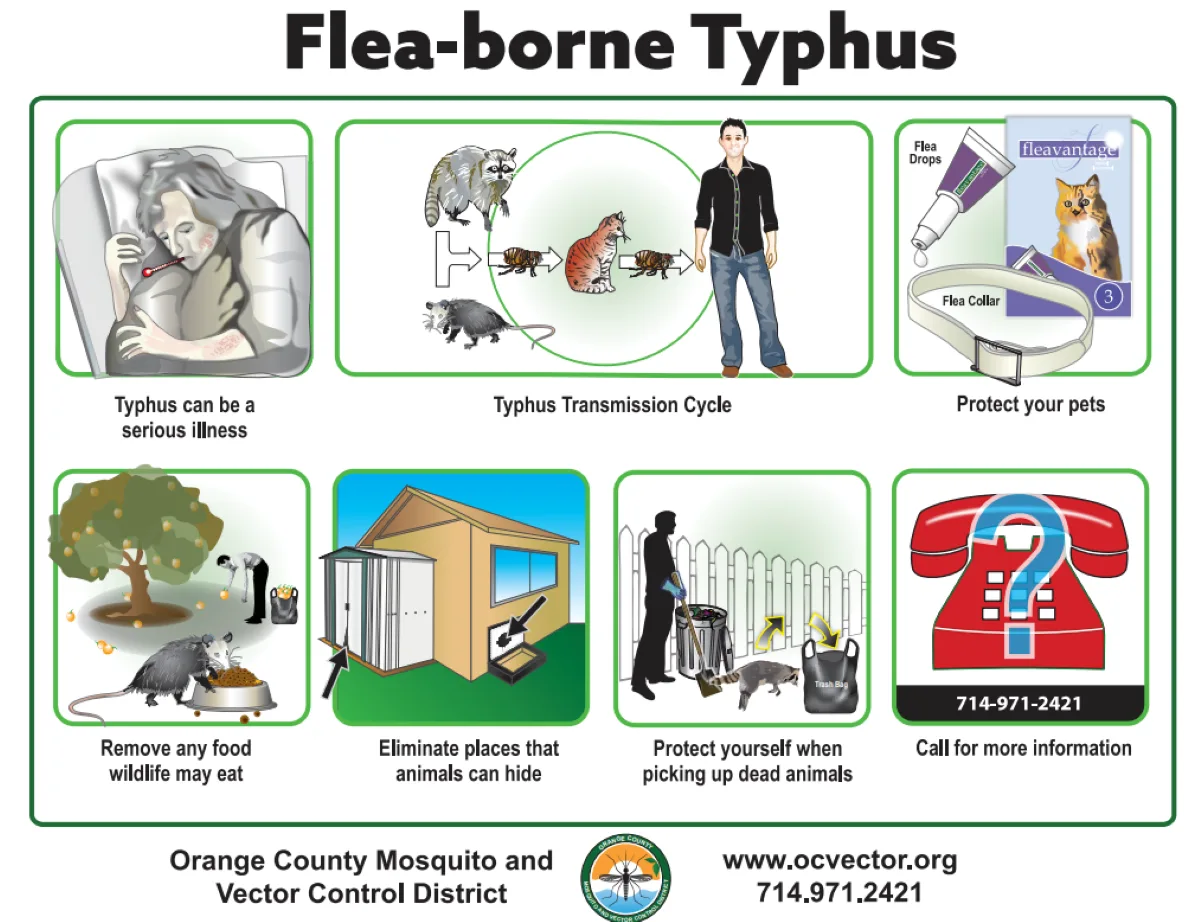
The Orange County Mosquito and Vector Control District (OCMVCD) has identified an increased risk of flea-borne typhus in the City of Santa Ana.

Flea-borne typhus is a potentially fatal disease that is primarily found in fleas that live on feral and domestic cats, dogs, opossums, rats, raccoons, skunks, squirrels and rabbits.
Fleas defecate as they feed. Humans can be infected when flea feces containing the bacteria are scratched into the bite site, other wounds, or are inhaled, eaten, or transferred to the eye.
Animals in Orange County can be infested with fleas year-round in Orange County and may not show obvious symptoms, so using flea control on indoor and outdoor pets is the best way to prevent exposure to flea-borne typhus.
Regularly inspect your pets and their bedding for fleas. The presence of flea feces in pet fur, called “flea dirt,” may be the first sign of a flea infestation. Pet owners should keep pets up-to-date on a flea control and heartworm preventative program.
The key to preventing this disease is to avoid coming into contact with fleas:
- Keep pets on flea control year-round
- Don’t touch or feed stray animals
- Don’t leave pet food outdoors
- Keep your yard free of debris
- Trim overgrown plants and bushes
- Keep trash in containers with tightly fitted lids
Flea-borne typhus can cause fever, chills, headache, and rash. Seek medical care immediately if symptoms develop.
More information about flea-borne typhus is available at ocvector.org/flea-borne-typhus.
Flea-borne typhus (also known as murine or endemic typhus) is a bacterial infection caused by Rickettsia typhi that is transmitted to humans through contact with infected flea feces. While it is generally a mild and highly treatable illness, it can become severe and damage vital organs if medical intervention is delayed.
Symptoms
Symptoms typically appear 6 to 14 days after contact with an infected flea or its dirt, though many people do not recall being bitten. Initial signs mimic the flu and come on suddenly.
- Core Early Symptoms: High fever (which can last up to 2 weeks if untreated), severe headache, chills, and muscle or body aches.
- Gastrointestinal Distress: Nausea, vomiting, loss of appetite, and stomach pain.
- Respiratory: A dry, hacking cough develops in about a quarter of patients.
- Typhus Rash: Occurs in roughly half of all patients. It usually starts around day 5 of the illness on the chest, trunk, or back, and spreads to the limbs while typically sparing the palms and soles.
Treatment
Because laboratory blood tests for typhus can take up to a week to return results, healthcare providers initiate immediate, empiric antibiotic treatment based solely on clinical suspicion and exposure history.
- First-Line Antibiotic: Doxycycline is the gold-standard treatment for patients of all ages.
- Speed of Recovery: Patients who begin doxycycline promptly usually experience a significant reduction in symptoms and begin feeling better within 48 hours.
- Course Duration: The antibiotic regimen is typically prescribed for 7 to 14 days, and it is vital to complete the full bottle even if symptoms vanish early.
Outcomes & Complications
With proper antibiotic care, the prognosis for flea-borne typhus is excellent, and there is no evidence of chronic or persistent long-term infections. However, delayed treatment leads to a higher risk of complications.
- Hospitalization: In areas where the disease is reemerging—such as parts of California and Texas—more than 50% of reported cases ultimately require hospital care due to late diagnosis.
- Severe Complications: Left untreated, the bacteria can cause multi-organ damage, leading to complications like aseptic meningitis (brain lining swelling), endocarditis (heart valve inflammation), renal failure, or liver dysfunction.
- Mortality Rate: Death from flea-borne typhus is highly uncommon, occurring in less than 1% of cases, primarily among the elderly or individuals with heavily compromised immune systems.
For More Information, Visit:
- U.S. Centers for Disease Prevention and Control, www.cdc.gov
- California Department of Public Health, www.cdph.ca.gov
- California Department of Fish and Wildlife, http://www.dfg.ca.gov/wildlife/nongame/nuis_exo/dom_cat/
- Orange County Health Care Agency, ochealthinfo.com
- Orange County Animal Care Services, ocpetinfo.com