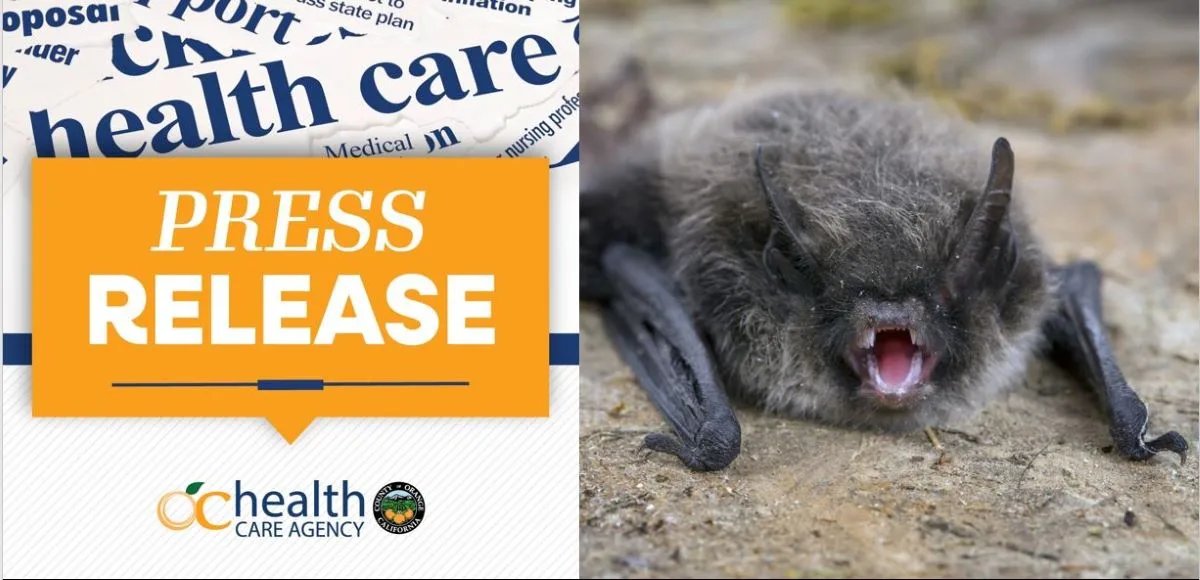
(Orange, CA) – A bat found in Irvine Regional Park has tested positive for rabies. The bat was found on Sunday, May 24, 2026 at 9:30 a.m. Anyone who may have had physical contact with the bat or saw someone else having contact with the bat is asked to call the OC Health Care Agency (HCA) Communicable Disease Control Division at (714) 834-8180 during business hours or after hours to determine the risk for rabies. Owners of pets who may have had contact with this bat should contact their veterinarian.

The rabies virus is found in an animal’s saliva and is transmitted to people by a bite from a rabid animal. Although very rare, contamination of the eyes, mouth or an open wound by the saliva of a rabid animal can also transmit rabies. Most cases of human rabies in the United States in recent years have resulted from bat strains of rabies; bats have very small teeth, and their bites may go unnoticed.
Once a person begins showing signs and symptoms of rabies, the disease is nearly always fatal. For that reason, preventive treatment to stop the rabies virus from causing illness is given to anyone who may have been exposed to rabies. Medical assistance should be obtained promptly after an exposure so any wound can be cleaned and preventive treatment can be started. This treatment is safe and effective.
The HCA and OC Animal Care recommend the following actions to minimize the risk of rabies:
- Avoid all contact with wild animals.
- Vaccinate all cats and dogs against rabies.
- Do not sleep with open unscreened windows or doors.
- If bats are seen inside the house or other structure, close off the area and contact animal control. Once the bat(s) have been removed, close off any areas allowing entrance into the house.
- Do not leave pet food outside where it will attract wild animals.
- Immediately wash all animal bites with soap and water, being sure to flush the wound well, then contact your doctor.
- Report all animal bites to OC Animal Care.
Potential exposure to a bat or other wild animal should be reported to HCA Communicable Disease Control Division at (714) 834-8180. To report a bat in your home or an animal bite, contact OC Animal Care at (714) 935-6848.
More information about rabies is available at the Centers for Disease Control website at http://www.cdc.gov/rabies/.
ABOUT THE OC HEALTH CARE AGENCY
The OC Health Care Agency (HCA) is a regional interdisciplinary health jurisdiction and an accredited health department, charged with protecting and promoting individual, family and community health through partnership and coordination of public and private sector resources. Visit www.ochealthinfo.com to learn more about services and resources.
Once clinical symptoms manifest, the rabies virus has a virtually 100% case-fatality rate in the United States and worldwide. However, because the disease is completely preventable with immediate post-exposure prophylaxis (PEP) before symptoms start, human cases are exceptionally rare in the U.S., resulting in fewer than 10 deaths nationwide each year.
Symptoms of Rabies
Rabies symptoms progress through distinct clinical phases as the virus travels through the nervous system to the brain.
Early (Prodromal) Symptoms
The incubation period typically lasts 2 to 8 weeks, during which a person feels entirely healthy. Once the virus reaches the central nervous system, the first symptoms appear and usually last for several days:
- Bite site sensations: Tingling, prickling, itching, burning, or numbness localized around the original wound.
- Flu-like illness: Fever, headache, muscle aches, sore throat, and general fatigue or discomfort.
- Gastrointestinal upset: Nausea, vomiting, and a decreased appetite.
Advanced (Acute Neurologic) Symptoms
Within days of the initial illness, the disease rapidly progresses into severe brain dysfunction. Rabies primarily presents in one of two clinical forms:
- Furious Rabies (Most Common Case):
- Hydrophobia: Severe, painful throat spasms triggered by trying to drink, or even seeing or hearing water.
- Aerophobia: Spasms triggered by drafts or air blowing on the face.
- Psychiatric changes: Extreme agitation, confusion, aggression, anxiety, and vivid hallucinations.
- Autonomic dysfunction: Excessive salivation (foaming at the mouth), racing heart rate, hyperventilation, and dilated or uneven pupils.
- Paralytic (“Dumb”) Rabies (Approx. 20% of Cases):
- Ascending paralysis: Muscles gradually become paralyzed, starting from the bite location and spreading outward.
- Lack of hyperactivity: Patients experience a much less dramatic, longer course of illness without the hallmark hydrophobia or agitation.
Final Stages
As the neurological damage peaks, the patient falls into a deep coma. Death typically occurs within a few days to two weeks from cardio-respiratory arrest (the heart or lungs completely stopping). [1, 2, 3, 4, 5]
If you suspect you have been bitten or scratched by a wild mammal or a bat, it is critical to consult the Centers for Disease Control and Prevention (CDC) guidelines and seek immediate emergency medical care before any of these symptoms appear. [1, 2]