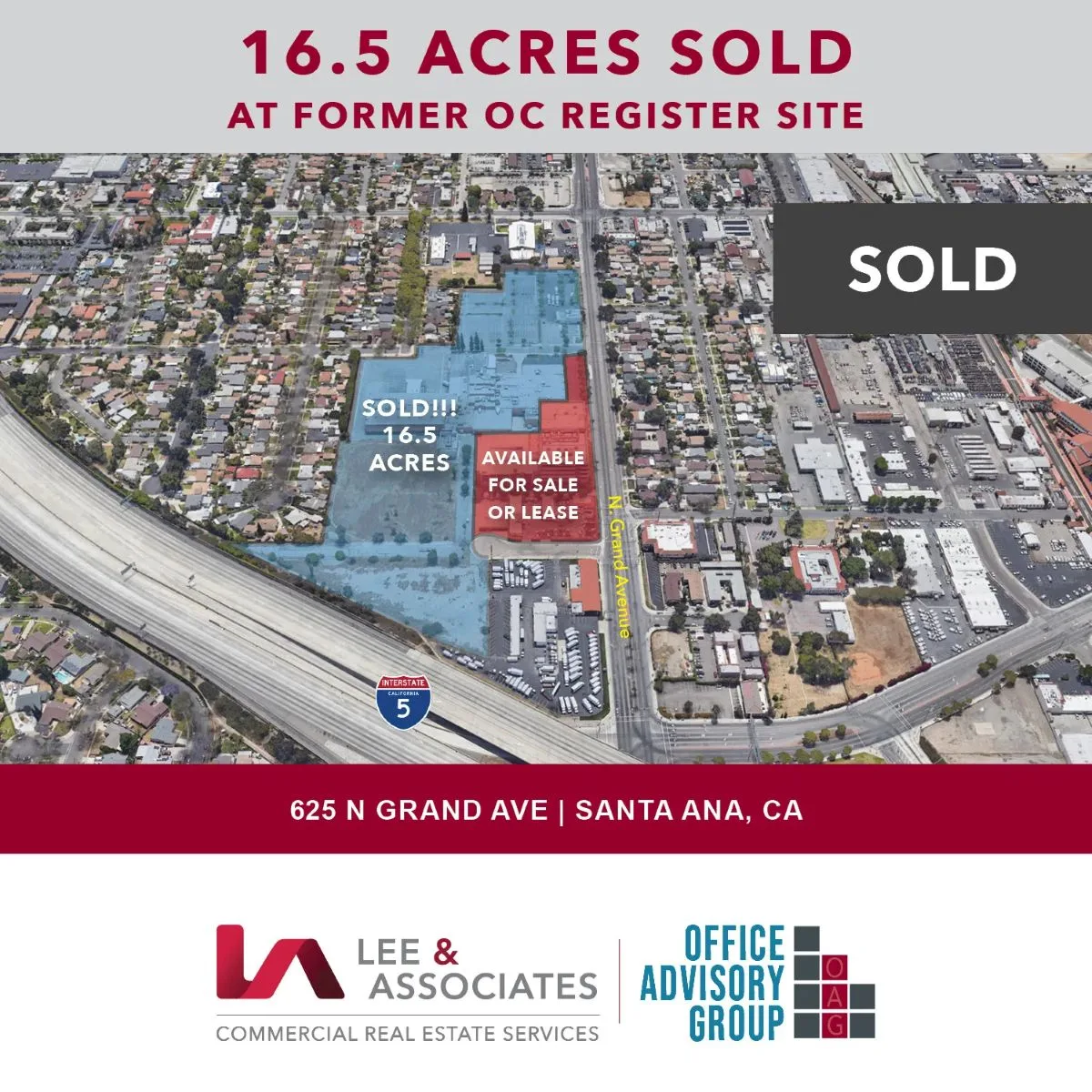
For decades, the sprawling industrial complex at 511 N. Grand Avenue served as the physical pulse of Orange County journalism. The roaring printing presses of the Orange County Register churned out millions of print newspapers here, anchoring a localized economy built around manufacturing, mechanical press operations, ink, and daily neighborhood distribution.
Today, the landmark parcel has completed a massive digital-age evolution: the printing machinery is long gone, replaced by a 112,000-square-foot Amazon last-mile distribution facility codenamed DUR2.
While neighborhood discussions have centered on traffic patterns and street safety, a major under-the-radar story is developing behind the gates regarding the shifting nature of the local workforce, the unique way Amazon is filling positions, and the workplace standards governing the building.
Note for local job seekers: Do not confuse this new Grand Avenue facility (DUR2) with Santa Ana’s existing, much larger 404,000-square-foot Amazon hub on East Dyer Road (DLX8). While DLX8 was converted from an old carpet mill years ago, the new Grand Ave site is a custom build optimized specifically to handle the dense neighborhood delivery grid of central Orange County
The Legacy of 511 N. Grand Ave.
To understand the broader significance of the site, one has to examine its industrial roots. For over half a century, the address served as the central production plant and headquarters for the Register, employing hundreds of local press operators, columnists, editors, and contracted delivery drivers during its operational peak. As media consumption migrated online, maintaining a massive physical press facility became economically unsustainable. The property was sold and newsroom staff relocated to smaller administrative offices, leaving the industrial acreage dormant. Recognizing its strategic proximity to the I-5 corridor, commercial developers repurposed the land into an e-commerce logistics node designed to achieve the modern version of what the newspaper once did: transport physical goods directly into local households as quickly as possible.
The Local Economic and Workforce Impact
Equipped with 27 loading docks and 703 parking spaces, the facility acts as the final sorting waypoint before parcels arrive at doorsteps throughout central Orange County. Last-mile hubs rely on hundreds of associate shifts to manually unload, stage, and sort packages across early morning, daytime, and overnight windows.
The economic impact extends beyond direct warehouse associates through third-party Delivery Service Partners (DSPs). These independent logistics firms operate fleets out of the Grand Avenue hub, creating entrepreneurial opportunities alongside commercial vehicle maintenance and local fleet management positions.
The Phased Hiring Strategy
Job seekers scanning the public Amazon hiring portal will not immediately find hundreds of open entry-level warehouse positions advertised, as staffing for new facilities follows an internal, phased rollout. Amazon initially staffed the location by offering internal transfer windows to veteran employees at neighboring facilities, establishing an experienced core crew to run early operations.
Simultaneously, independent DSPs have already begun public recruiting on platforms like Indeed, seeking delivery drivers mapped to the Santa Ana hub at starting wages around $22.50 per hour.
Public warehouse associate openings typically drop in sudden, narrow waves closer to peak operational throughput, often appearing just weeks before orientation sessions begin, with shifts historically dropping on Friday mornings.
Workplace Safety and Regulatory Scrutiny
The injection of high-volume logistics jobs also brings ongoing scrutiny regarding warehouse safety and employee working conditions. Historically, e-commerce distribution networks have faced regulatory challenges over repetitive-motion injuries and intense delivery pacing.
In California, this scrutiny culminated in the passage of the Warehouse Worker Protection Act (AB 701), which led state labor regulators to issue multi-million-dollar citations against high-throughput facilities in the nearby Inland Empire over undisclosed productivity quotas and break compliance.
In response to state enforcement and public oversight, modern facilities have integrated structural redesigns, including height-adjustable staging carts, mechanized package handlers, and ergonomic protocols to reduce physical strain.
For contracted drivers navigating Santa Ana streets, delivery vans feature in-cab camera telematics to monitor speed, braking distance, and stop compliance in real time, balancing route efficiency with fleet safety.
Balancing Growth with the Neighborhood
Municipal planners took steps during development to balance industrial activity with quality of life in the adjacent Saddleback View neighborhood. To address noise and traffic, the city enforced strict zoning requirements that include perimeter sound barriers, designated vehicle access routes, and comprehensive landscaping along residential edges.
While the roaring mechanical presses that defined Grand Avenue for a generation are gone, Santa Ana has captured a central foothold in modern digital fulfillment, offering steady local employment while operating under California’s strictest workplace safety laws to date.