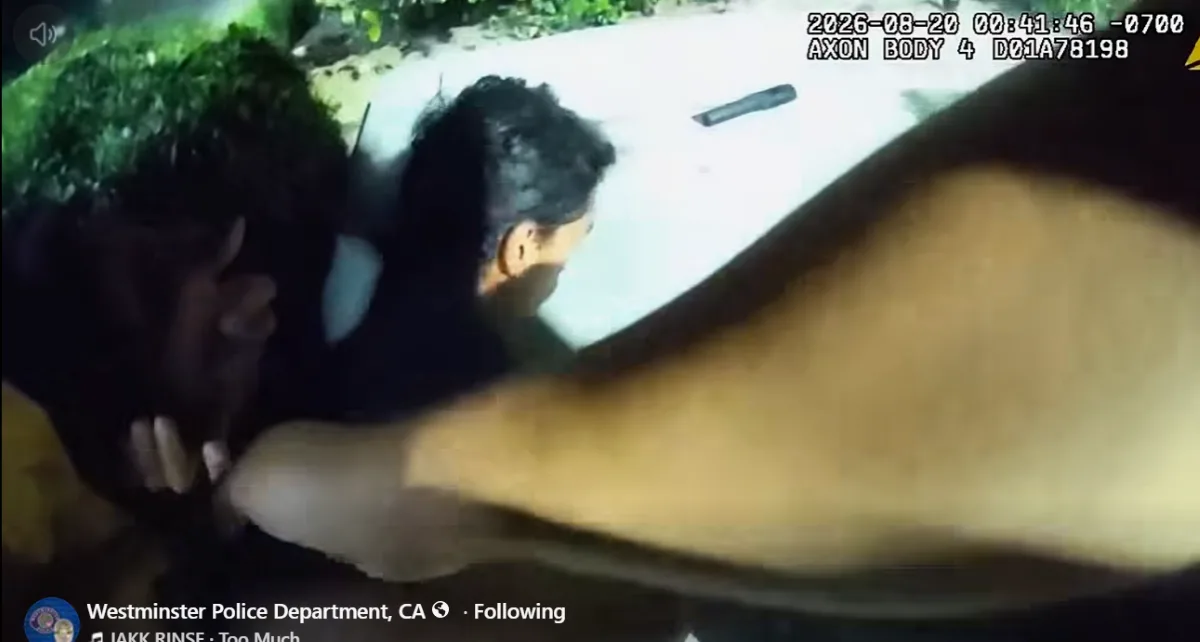
A probationer in Westminster was arrested early August 20 after attempting to flee from officers during a bicycle stop near Beach Boulevard and Bolsa Avenue.

According to the Westminster Police, the rider ditched his bike and tried to run, but the pursuing officer—helped by a football background—closed the distance and took him into custody.
The suspect was determined to be on Orange County probation and is now facing multiple warrants along with a fresh resisting‑arrest charge.
Criminal Charges the Suspect Is Facing
Based on the department’s statement and California law, the suspect is likely facing:
- Two Felony Warrants — Felony warrants typically stem from prior serious offenses and can lead to immediate custody, enhanced sentencing, and probation violations.
- One Misdemeanor Warrant — Misdemeanor warrants often involve lower‑level offenses but still carry fines, custody time, and probation impacts.
- Resisting Arrest — Under Penal Code §148(a)(1), resisting or obstructing an officer is a misdemeanor punishable by up to one year in jail and fines. Running from officers during a lawful stop qualifies as active resistance.
- Probation Violation — Because the suspect was already on Orange County probation, any new criminal conduct or failure to comply with officer instructions can trigger revocation, additional jail time, or reinstatement under stricter terms.
These charges can stack, placing the suspect at risk for extended custody and long‑term supervision consequences.
Recidivism Rates for Probationers in Orange County
Orange County continues to struggle with probation‑related recidivism:
- Countywide felony recidivism rates typically fall between 45–55%, depending on offense type and supervision level.
- Probationers with prior drug, theft, or property crimes show some of the highest re‑offense rates, often tied to unstable housing, untreated addiction, or lack of employment.
- Individuals with outstanding warrants—like the suspect in this case—are statistically more likely to reoffend due to ongoing avoidance of court obligations.
These numbers highlight why probation compliance is critical for avoiding deeper involvement in the criminal justice system.
What Probationers Should Do to Stay Out of Trouble
Probation is designed to offer a second chance, but it requires structure and discipline. Key steps include:
- Attend All Court and Probation Meetings — Missed appointments are one of the fastest ways to trigger a violation.
- Maintain Clean Behavior — Avoiding drugs, weapons, and risky environments reduces the chance of new charges.
- Follow All Search and Supervision Terms — Probation often includes search conditions, curfews, or travel limits.
- Seek Employment or Job Training — Stable work dramatically lowers recidivism risk.
- Engage in Counseling or Treatment — Substance‑abuse or mental‑health programs help prevent relapse into criminal behavior.
Probationers who follow these steps are far more likely to complete supervision successfully and avoid future arrests.
How California Helps Probationers Find Real Jobs
California has expanded programs to help probationers reintegrate:
- Ban‑the‑Box Hiring Rules — Employers cannot ask about criminal history until after a conditional job offer.
- County Workforce Centers — Orange County offers job‑readiness training, résumé support, and employer connections.
- Reentry Programs — State‑funded initiatives help probationers access apprenticeships, trade certifications, and vocational training.
- Record‑Clearing Opportunities — Some probationers may qualify for expungement, improving long‑term employment prospects.
These efforts aim to reduce recidivism by giving probationers legitimate pathways to stability.
Community Impact Summary
The arrest underscores Westminster Police Department’s ongoing efforts to reduce crime by targeting probation violations, outstanding warrants, and resisting‑arrest incidents. With recidivism rates remaining high in Orange County, proactive enforcement and strong probation compliance remain essential to keeping communities safe.