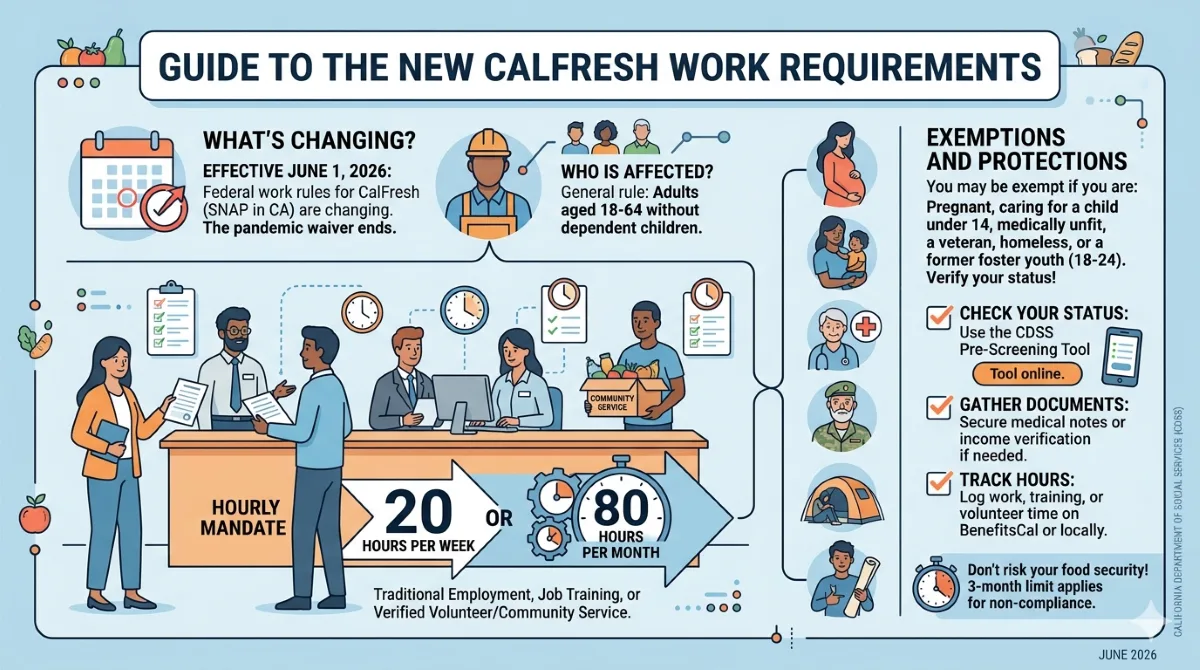
Sweeping federal updates are reshaping California’s food assistance landscape, putting benefits at risk for hundreds of thousands of residents. Mandated by the Trump administration’s H.R. 1 budget legislation (often referred to as the “One Big Beautiful Bill”), stricter community engagement rules take effect on Monday, June 1, 2026. The policy ends a multi-year waiver California utilized since the COVID-19 pandemic to suspend work mandates for Able-Bodied Adults Without Dependents (ABAWD). State officials estimate that roughly 665,000 Californians may not immediately meet the expanded criteria, forcing local food banks to brace for an unprecedented surge in demand.

Understanding the New Rules
Under the newly active provisions, targeted recipients must prove they are meeting activity thresholds or risk losing their grocery assistance. The hourly mandate requires impacted individuals to participate in qualifying activities for at least 20 hours per week (or an average of 80 hours per month). Hours can be filled through traditional employment, approved job training programs, or verified volunteer and community service commitments. Non-working individuals who do not log these hours will be restricted to just three months of CalFresh benefits within a three-year period before being completely cut off.
Who Is Affected?
The legislation significantly broadens the net of who must comply. Previously, work mandates primarily targeted younger adults, but the new framework drastically adjusts the age bracket and closes existing automatic protections. Affected populations include adults aged 18 to 64 who do not have a physical or mental disability that impairs their capability to work, and individuals without dependent children under the age of 14 living in their household. Groups losing previous exemptions now include veterans, people experiencing homelessness, and former foster youth aged 18 to 24. Lawfully present immigrants, such as certain refugees and asylees, also face separate, narrowed eligibility restrictions under the broader federal bill.
Conversely, CalFresh recipients will remain excused from the hourly work requirements if they are pregnant, caring for an incapacitated household member, responsible for a child under the age of 14, or medically certified as physically or mentally unfit for employment.
What This Means for Californians
The immediate concern for local advocates is the strain this puts on families and local infrastructure alike. Local social service departments are urging all participants to proactively check their status. Because CalFresh clients reapply for benefits annually, individuals will have a 90-day window following their specific reapplication date to secure a job or qualifying volunteer position. However, policy critics point out that throwing hundreds of thousands of people into a tight labor market all at once will make finding immediate employment highly competitive.
Next Steps for Recipients
If you or someone you know relies on CalFresh, do not wait for a termination notice. You can take action now to preserve your food security by checking your status. Use the official state CalFresh Work and Community Engagement Pre-Screening Tool to determine if you are required to log hours or if you qualify for a specific exemption.
Additionally, ensure your county has your current address and phone number so you don’t miss critical document request notices. If you are disabled, pregnant, or fit an exempt category, submit your medical paperwork to your local caseworker immediately to prevent an automatic disruption. If you are subject to the rules, begin tracking your employment, training, or volunteer hours via portal services like BenefitsCal.