Police officers found a vehicle parked at Walmart that was used in a previous shoplifting case in which over $900 in merchandise was stolen, according to the Irvine Police Department.

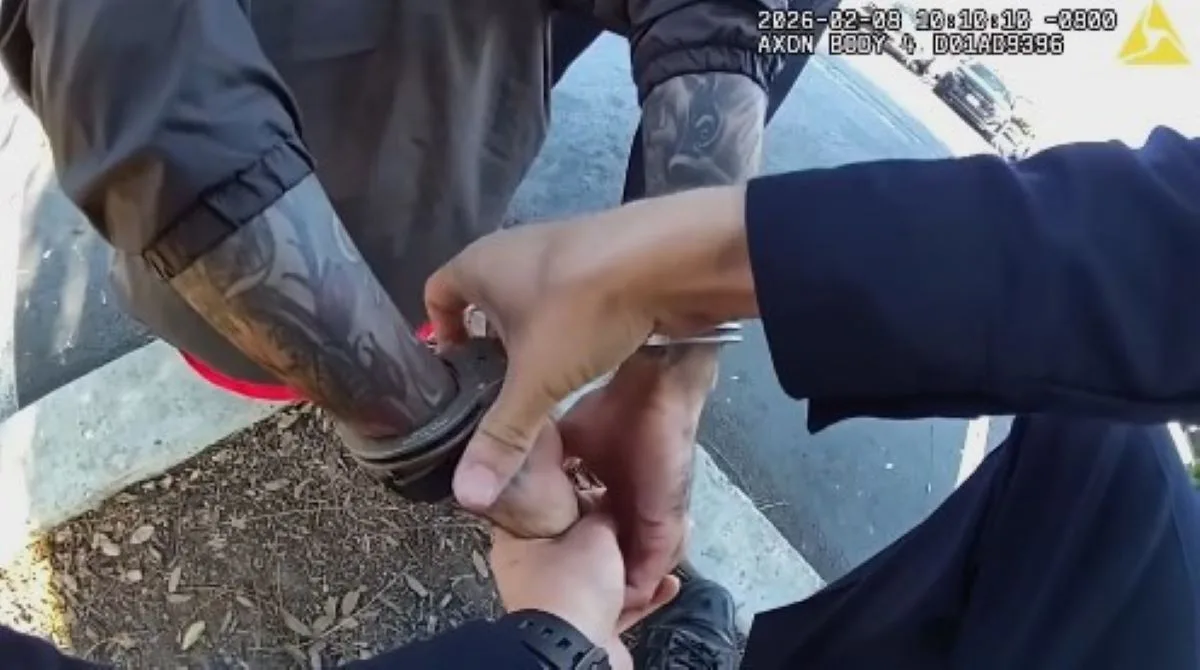
The officers swiftly intercepted Ionut Alexandru Maglasu, 25, of Brea, as he returned to his car with a sack of baby formula.
With the help of an Orange County District Attorney Public Assistance Investigator, the officers determined that the Electronic Benefits Transfer (EBT) cards Maglasu was carrying were in fact stolen.
Maglasu is suspected of using the stolen EBT cards to buy infant formula at Walmart and at Target. He was arrested and benched at Orange County Jail for conspiracy, receiving stolen property, identity theft, grand theft, and burglary.
The surname Maglasu is of Romanian origin, but it is not a name exclusively or specifically identified as Roma.
Legal Penalties Faced by the Suspect
Ionut Alexandru Maglasu, 25, faces significant legal penalties in California following his arrest for multiple theft-related charges. Because his arrest involves conspiracy, identity theft, and EBT fraud, he could face several years in prison and substantial fines. Most of his charges are classified as “wobblers,” meaning they can be prosecuted as either misdemeanors or felonies depending on his criminal history and the specific facts of the case.
Penalties by Specific Charge
| Charge | Classification | Maximum Penalty (Misdemeanor) | Maximum Penalty (Felony) |
|---|---|---|---|
| Identity Theft (PC 530.5) | Wobbler | Up to 1 year in jail, fines, and restitution | Up to 3 years in prison; fines up to $10,000 |
| Grand Theft (PC 487) | Wobbler | Up to 1 year in county jail | 16 months, 2, or 3 years in prison |
| Receiving Stolen Property (PC 496) | Wobbler | Up to 1 year in jail | 16 months, 2, or 3 years in prison |
| Conspiracy (PC 182) | Varies | Up to 1 year in jail | Generally same as the underlying crime |
Key Legal Implications
- EBT and Welfare Fraud: Suspected use of stolen EBT cards falls under welfare fraud (WIC 10980). If the value of benefits obtained exceeds $950, it is a felony punishable by up to three years in prison and a $5,000 fine. Because these were electronically transferred benefits, he could face an additional, consecutive penalty of up to four years in state prison.
- Conspiracy Charges: Conspiracy (PC 182) involves agreeing with another person to commit a crime. If the conspiracy is to commit a felony, the punishment typically matches the sentence for that underlying felony. If convicted of felony conspiracy to commit identity theft, a court can impose a fine of up to $25,000.
- Multiple Violations: Each instance where a defendant uses another person’s information is considered a separate and distinct violation of identity theft laws. This means a defendant can face multiple counts and consecutive penalties even if there is only one victim.
- Grand Theft vs. Petty Theft: While shoplifting under $950 is usually petty theft, grand theft (PC 487) is charged when the value of the property taken exceeds $950. Maglasu’s case involved a previous shoplifting incident totaling over $900 plus the current suspected EBT fraud.
- Civil Penalties: In addition to criminal time, victims of stolen property (PC 496) may sue for three times the amount of their actual damages, plus attorney fees.
Potential Aggravating Factors
Maglasu’s penalties could be increased if he has a prior criminal record. Conversely, in some welfare fraud cases, if a defendant can repay a substantial portion of the stolen funds (restitution), the state may offer leniency or lower the charges. For non-violent fraud linked to theft, new 2025 policies (Prop 36) may mandate rehabilitation instead of prison for those with specific priors.