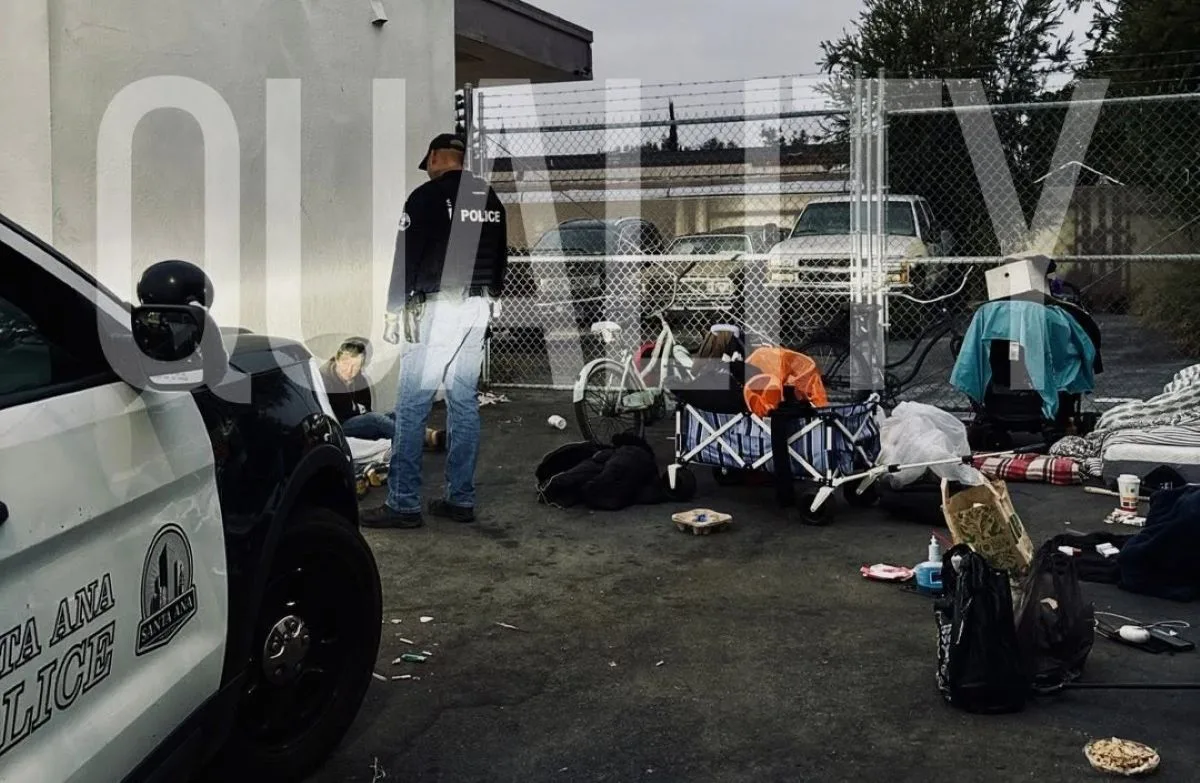
The Santa Ana Police Department (SAPD), through its Quality of Life Team (QOLT) and Directed Patrol units, conducted another major citywide enforcement and outreach operation on June 9, 2026. The early-morning crackdown resulted in the arrest of 74 individuals, highlighting the city’s ongoing, high-visibility efforts to target encampments and transients. While local authorities emphasize the dual role of enforcement and service delivery, the operation renews debates over the frequency and long-term efficacy of using law enforcement to manage the regional homelessness crisis.

Sweep Results and Legal Penalties
The multi-agency task force, operating in high-priority corridors, divided the 74 arrests into two distinct legal categories:
- 15 Felony Arrests: Individuals facing felony charges encounter severe legal consequences. Under California law, a felony conviction can result in state prison sentences ranging from 16 months to several years, substantial fines of up to $10,000, and a permanent loss of specific civil rights, including firearm ownership.
- 59 Misdemeanor Arrests: The vast majority of those detained were cited for misdemeanor offenses. In sweeps of this nature, typical infractions include loitering, illegal camping, and obstructing public rights-of-way. Misdemeanors in California generally carry penalties of up to 364 days in county jail and court fines reaching $1,000.
Beyond criminal bookings, the operation included service outreach. The SAPD confirmed that in partnership with the nonprofit City Net, six unhoused individuals were connected to local services. Additionally, the faith-based recovery organization Teen Challenge assisted three individuals seeking substance abuse rehabilitation and support.
The Frequency of Santa Ana Police Sweeps
This operation is part of an established, recurring enforcement strategy. Data from the Santa Ana Police Department indicates that large-scale citywide sweeps occur roughly every two to three months:
- February 2026: A similar QOLT sweep along railroad tracks and transit corridors resulted in 92 arrests and connected one person to a shelter.
- December 2025: An early-winter quality-of-life operation yielded 86 arrests while placing four individuals into shelter programs.
- November 2025: A large-scale corridor sweep concluded with 109 arrests and two shelter placements.
These recurrent operations indicate that while hundreds of individuals are cycled through the local criminal justice system annually, only a nominal fraction accept or successfully transition into immediate shelter care during the raids.
Does the Data Show Sweeps Reduce Homelessness?
The question of whether law enforcement sweeps effectively reduce homelessness yields mixed conclusions depending on the metrics analyzed.
On one hand, municipal data indicates that Santa Ana has achieved significant broader success. According to the City of Santa Ana Homeless Services Dashboard, the city’s total unhoused population declined by over 19% between 2019 and 2024, far outperforming the rest of Orange County where numbers generally grew.
However, housing experts and official city data attribute this decline to long-term infrastructure investments rather than police sweeps. Santa Ana operates a 200-bed homeless navigation center and has funded over 350 permanent supportive housing units. Furthermore, municipal records highlight that the vast majority of successful exits from the street occur through dedicated service tracking; for example, City Net engaged with nearly 5,000 local individuals in a single fiscal year, helping 874 transition permanently out of homelessness outside of active police sweeps.
Conversely, independent data and housing advocacy research suggest that criminal enforcement can actively hinder regional progress. A comprehensive study on quality-of-life policing by the Urban Institute concluded that frequent sweeps rarely resolve the root causes of displacement. Instead, criminal citations and brief jail stays frequently result in “burden shuffling,” a phenomenon where unhoused individuals are temporarily pushed into neighboring districts or deeper into hidden spaces. The resulting legal fees and active warrants create compounding barriers, making it harder for individuals to secure employment, obtain formal identification, and qualify for permanent housing programs.
Surrounding cities in Orange County handle the homelessness crisis using a mix of enforcement, cross-city regional resource sharing, and infrastructure development. While cities coordinate regionally through the Orange County Continuum of Care, their specific strategies vary considerably.
Resource Sharing and Shelter Partnerships
Facing a lack of internal emergency shelter beds, Irvine established an agreement to utilize vacant beds at the Costa Mesa Bridge Shelter. Under this deal, Irvine pays a daily rate per bed to shelter unhoused residents, while concurrently deploying street outreach via regional programs and funneling grant money to nonprofits to intercept homelessness before it starts. Meanwhile, Costa Mesa and Newport Beach have leaned into strict municipal boundary enforcement by operating a joint 100-bed bridge shelter, which allows them to dedicate fixed bed allotments to their specific populations and maintain the legal authority under federal court precedents to enforce local anti-camping laws.
Mass Shelter Infrastructure and Mental Health Responses
Anaheim, as the county’s second-largest city, focuses heavily on large-scale interim housing and dedicated voucher allocations. The city partners with its local housing authority to fast-track permanent supportive housing. It has also integrated specialized, non-police crisis responders to deal directly with chronic mental illness and substance abuse on the street.
County-Wide Trends and Regional Criticism
Recent Orange County Sheriff’s Department data indicates a sharper reliance on criminal justice systems regionally. Bookings of unhoused individuals into county jails surged 40% over three years, jumping to nearly 10,000 annual bookings. Critics note that statistical drops in street homelessness are being partially driven by temporary incarceration rather than long-term housing solutions. Additionally, regional leaders have struggled to meet aggressive goals to build thousands of permanent supportive housing units due to soaring construction costs.