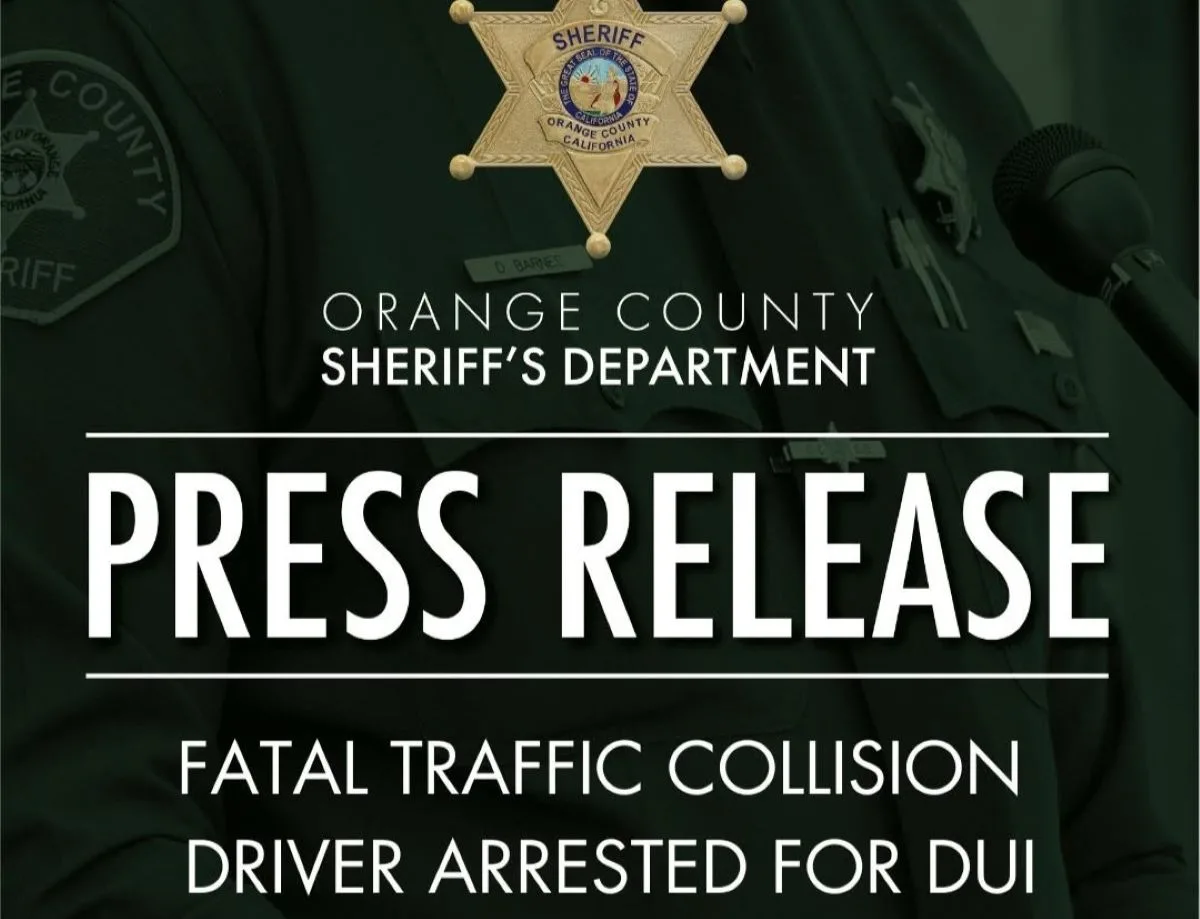
A devastating late-night collision in Lake Forest has cut a life short and left a local family grieving. On Thursday, August 6, 2026, at approximately 9:39 p.m., the Orange County Sheriff’s Department responded to a major two-vehicle traffic accident at the intersection of El Toro Road and Via Ridgeline Road.

First responders from the Orange County Fire Authority arrived quickly to provide medical aid, but tragically, the driver of one of the vehicles—an adult male in his 70s—was pronounced deceased at the scene.
The driver of the second vehicle, 22-year-old Lake Forest resident Joel Obed MendezCamargo, escaped the impact without fatal injuries but now faces severe legal consequences.
Deputies at the scene observed signs of impairment, and MendezCamargo was subsequently arrested on suspicion of driving under the influence. He was transported and booked into the Orange County Jail under charges of gross vehicular manslaughter while intoxicated.
The identity of the elderly victim is currently being withheld pending the notification of his immediate family.
The investigation is being actively handled by the Orange County Sheriff’s Department’s Major Accident Investigation Team (MAIT). Law enforcement officials are urging anyone who may have witnessed the crash or possessed any dashcam footage to contact MAIT at (949) 425-1860. Anonymous tips can also be funneled through the Orange County Crime Stoppers at (855) TIP-OCCS.
The Staggering Legal and Financial Fallout for the Suspect
Facing a charge of gross vehicular manslaughter while intoxicated in California carries life-altering consequences. This felony charge reflects allegations of driving under the influence paired with gross negligence that results in a fatality. If convicted, the criminal penalties, financial fines, and long-term consequences are immense:
- State Prison Sentence: A conviction under California Penal Code 191.5(a) carries a severe prison sentence of 4, 6, or 10 years in California State Prison. If the suspect has prior DUI convictions, the penalty can escalate to 15 years to life.
- Massive Financial Fees: Court-mandated fines, restitution to the victim’s family, and statutory penalties can easily accumulate to over $10,000, excluding independent civil wrongful death liabilities.
- Driver’s License Revocation: The California Department of Motor Vehicles will enforce a mandatory revocation of the individual’s driver’s license for a minimum of three years.
- Devastating Insurance Impact: A fatal felony DUI conviction will permanently destroy a driver’s insurance profile. Most standard auto insurance carriers will instantly cancel or drop the policy. To legally drive again in the future, the individual must secure an SR-22 certificate, categorizing them as a high-risk driver. This transition typically causes auto insurance premiums to skyrocket by 100% to 300%, adding thousands of dollars in yearly out-of-pocket costs for a minimum of ten years.
The Reality of DUI Traffic Accidents in Orange County
This tragic incident is part of a broader, systemic issue across Southern California. Data tracked by local agencies and the California Office of Traffic Safety highlights that Orange County averages over 28,000 total traffic collisions annually, culminating in more than 200 fatalities. A significant portion of these fatal wrecks involve alcohol or substance impairment.
According to local accident data mapping, DUI crashes do not happen purely at random. They heavily concentrate around major nightlife centers, beach communities, and transitional highway corridors during late-evening hours and weekends. Incidents like the Lake Forest collision underscore how a single poor decision can instantly transform an average evening commute into a lethal event, leaving innocent drivers vulnerable on public roads.
Practical Tips to Stay Safe and Avoid Impaired Driving
Preventing a DUI is entirely within every driver’s control. By executing proactive choices, motorists can safeguard themselves, protect their financial future, and ensure everyone makes it home alive:
- Secure Rideshare Apps Proactively: Download apps like Uber or Lyft before heading out, and map out your budget to account for a dynamic-priced ride home.
- Establish a True Designated Driver: A designated driver is someone who drinks absolutely zero alcohol, not just the individual who appears the “least intoxicated” in the group.
- Utilize Public Transit or Taxis: Orange County has accessible public transportation options and localized taxi services that eliminate the need to get behind a wheel.
- Stay Over at Your Destination: If you are drinking at a friend’s residence or a hotel, plan ahead to stay the night rather than risking a late-night drive.
- Intervene Early for Others: If a friend or family member shows signs of impairment, actively take their keys away and order them an alternative ride.
Spotting Danger: How to Identify an Impaired Driver on the Road
Defensive driving saves lives. Remaining hyper-aware of your surroundings can help you spot a drunk driver before an accident takes place. Watch out for these specific visual warning signs on the road:
- Erratic Lane Drifting: Vehicles that repeatedly hug or cross over center divider lines, swerve across multiple lanes, or struggle to stay centered.
- Inconsistent Driving Speeds: Drivers who alternate between speeding up rapidly and braking abruptly without any clear external traffic triggers.
- Delayed Reactions at Intersections: Vehicles that stop significantly before or past a designated limit line, or fail to move when a traffic light turns green.
- Tailgating or Near-Misses: Operating too closely behind other cars or narrowly missing curbs, roadside structures, and surrounding vehicles.
- Driving Without Headlights: Vehicles traveling in dark or low-visibility conditions with their headlights completely turned off.
If you observe a motorist exhibiting these hazardous patterns on an Orange County roadway, maintain a safe physical distance. Pull over safely when possible, and immediately dial 911 to report the vehicle’s description, license plate number, and direction of travel to local authorities.