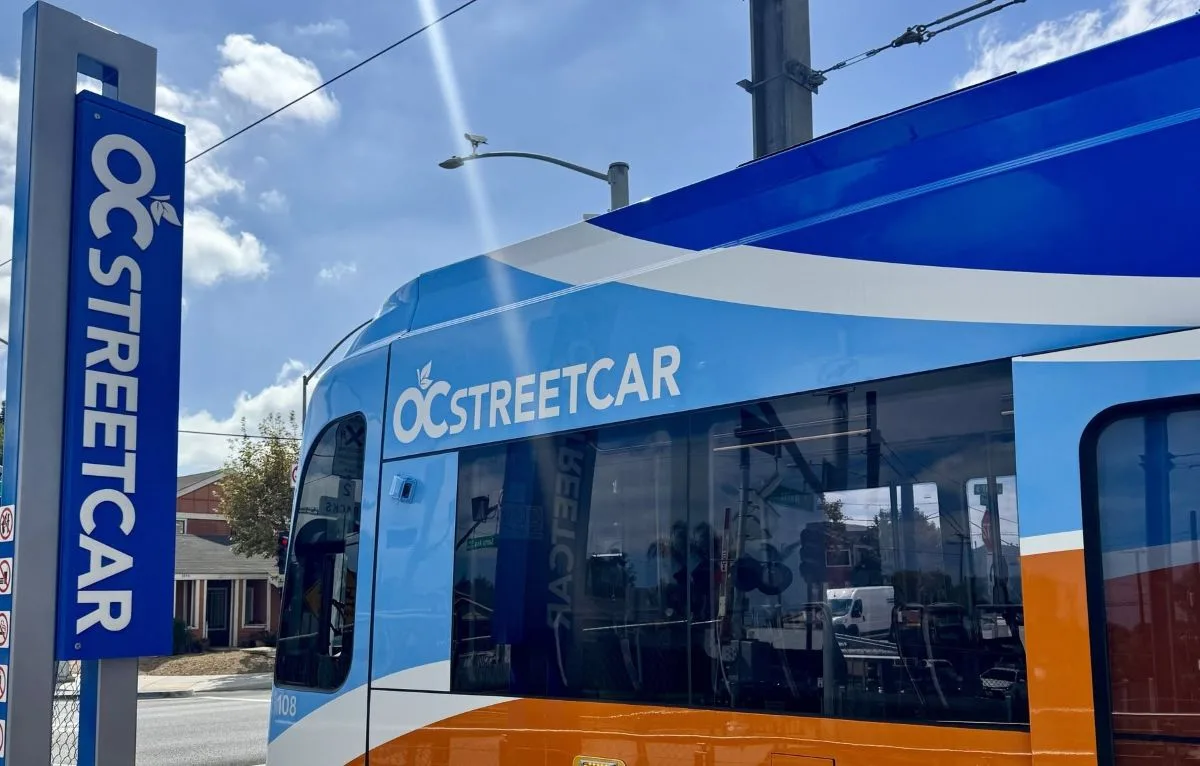
Orange County residents will get a rare chance to step aboard the OC Streetcar on Nov. 21 during Downtown Santa Ana’s Plaza Navideña celebration, as transportation officials showcase the county’s first modern electric streetcar before passenger service is scheduled to begin in early 2027.
According to the Orange County Transportation Authority (OCTA), visitors will be able to explore a stationary streetcar at the French Street platform near Calle Cuatro Plaza and learn more about the transit project that has been under development for nearly two decades.
The OC Streetcar will travel along a 4.1-mile route connecting the Santa Ana Regional Transportation Center with Harbor Boulevard in Garden Grove. The system includes 16 stops and is intended to link riders with Metrolink, Amtrak and local bus routes while serving Downtown Santa Ana, the Civic Center and several commercial corridors.
A Project With a Growing Price Tag
While OCTA is promoting the streetcar as a new transportation option for central Orange County, the project has also attracted significant scrutiny because of its rising costs and repeated delays.
When construction officially broke ground in 2018, OCTA estimated the project would cost approximately $408 million and begin providing service several years later.
Today, the project’s reported cost has climbed to approximately $649 million, according to OCTA-related project documents and multiple transportation reports.
That means Orange County taxpayers and funding partners are paying roughly $158 million per mile for the 4.1-mile system, making it one of the most expensive streetcar projects in the United States on a per-mile basis.
Years of Delays
The opening date has also moved repeatedly.
The streetcar was originally expected to open several years ago, but construction delays pushed back completion multiple times. Officials have cited challenges including:
- Unidentified underground utilities
- Contaminated soil discoveries
- Native American cultural and archaeological findings
- Utility relocation work
- Pandemic-related disruptions
- Contractor disputes and litigation
Those issues collectively pushed the project years beyond its original target date. As of late 2026, OCTA is now targeting passenger service in early 2027 while testing continues along the route.
Local Businesses Endured Years of Construction
One of the most contentious aspects of the project has been its impact on businesses along the construction corridor.
Merchants in Downtown Santa Ana and other affected areas have spent years dealing with lane closures, restricted parking, blocked sidewalks, dust, noise and reduced customer access. Critics argue that some small businesses never fully recovered from the combination of streetcar construction and the economic disruptions caused by the COVID-19 pandemic.
The prolonged construction timeline intensified those concerns. What was initially expected to be a major infrastructure upgrade became a years-long challenge for many business owners who depended on vehicle traffic and easy customer access.
Supporters counter that once operational, the streetcar could increase foot traffic and help stimulate economic activity in the downtown corridor, potentially offsetting some of the hardships experienced during construction. [walshgroup.com], [octa.net]
Will a 4.1-Mile Streetcar Succeed?
The biggest question now is whether the OC Streetcar will attract enough riders to justify its cost.
Supporters point to several advantages:
- Connections to Metrolink and Amtrak at the Santa Ana Regional Transportation Center
- Links to some of OCTA’s busiest bus routes
- Service through one of the county’s densest urban corridors
- Frequent service every 10 to 15 minutes
- Reduced reliance on automobiles for short local trips
Critics remain skeptical.
The route is relatively short, covering just over four miles between Santa Ana and Garden Grove. Unlike larger rail systems that extend across multiple cities or employment centers, the OC Streetcar functions primarily as a local circulator. Some transportation observers have questioned whether enhanced bus service could have achieved similar results at a fraction of the cost. Others note that no significant extension of the route is currently planned.
Ridership projections have also become a subject of debate. Earlier forecasts estimated more than 6,000 daily riders, but those forecasts were prepared years before changing work patterns and shifts in transit use following the pandemic. Critics argue that lower-than-expected rail and commuter ridership throughout Southern California could reduce the streetcar’s long-term usage.
Still, the system may benefit from serving a corridor that includes government offices, courthouses, restaurants, entertainment venues, educational institutions and transit hubs. If the streetcar succeeds in attracting regular commuters, students and visitors traveling to Downtown Santa Ana, it could eventually become an important part of Orange County’s transit network.
For now, after years of construction, hundreds of millions of dollars in spending and repeated schedule changes, Orange County residents are finally getting a glimpse of the nearly completed system. The public preview event offers an opportunity to see firsthand what may become one of the county’s most debated transportation projects and, soon enough, riders will get to decide whether the OC Streetcar was worth the wait.