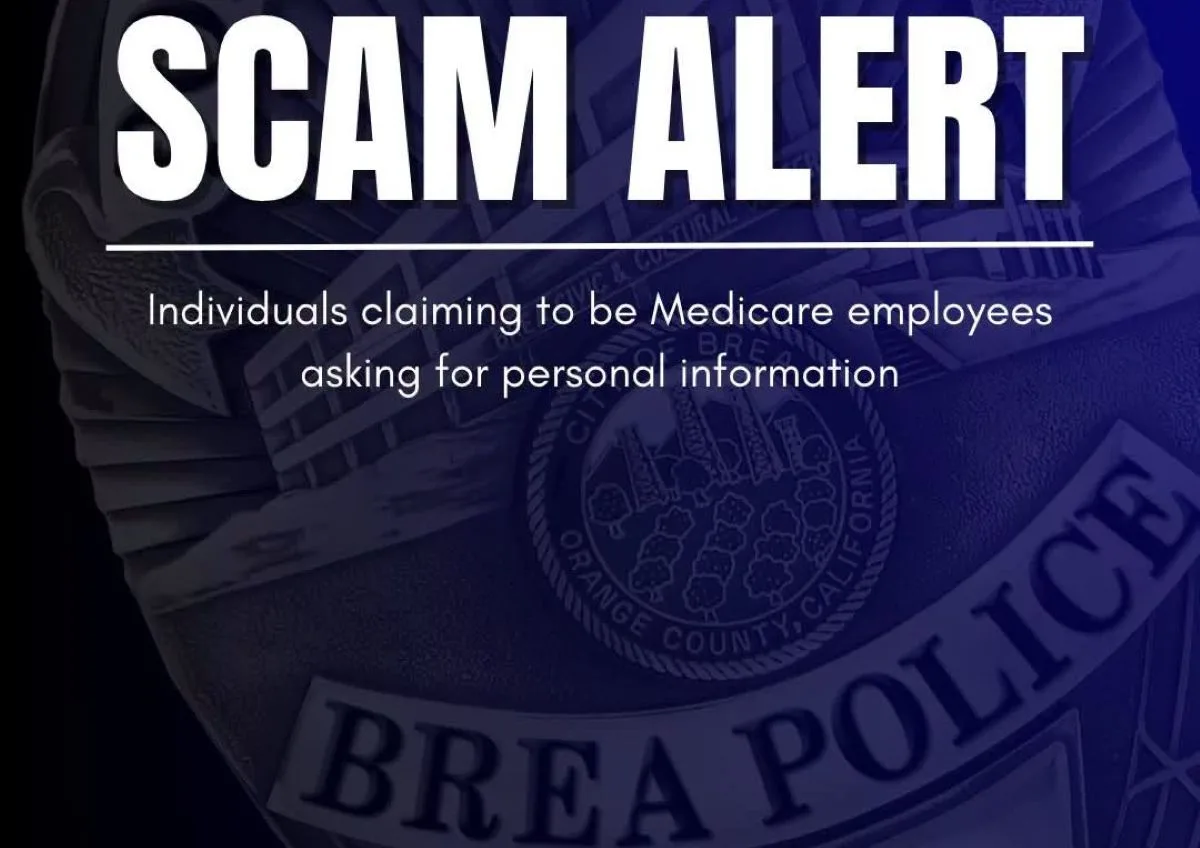
The Brea Police Department is warning residents about an ongoing scam involving individuals falsely claiming to be Medicare employees and requesting sensitive personal information. According to the police alert, scammers are contacting potential victims and attempting to obtain personal identifying information that can later be used for identity theft, financial fraud, medical fraud, or unauthorized access to government benefits.
While the latest warning does not identify any specific suspects or arrests, law enforcement agencies throughout California have repeatedly reported similar schemes in which criminals pose as government representatives, Medicare officials, Social Security employees, bank investigators, or law enforcement officers to gain victims’ trust. Seniors are frequently targeted because they are more likely to be Medicare beneficiaries and may be accustomed to receiving legitimate communications regarding healthcare benefits.
What Charges Could the Suspects Face?
If investigators identify and arrest the individuals responsible for a Medicare impersonation scam, prosecutors could pursue a variety of California and federal criminal charges depending on the facts of the case.
Potential California charges may include:
• Identity theft (Penal Code 530.5) for obtaining or using another person’s personal identifying information.
• Theft by false pretenses (Penal Code 532) for deceiving victims into surrendering money or information.
• Grand theft (Penal Code 487) if losses exceed $950.
• Elder financial abuse (Penal Code 368) when victims are age 65 or older.
• Conspiracy (Penal Code 182) when multiple participants work together in the scheme.
• Unauthorized access to computer systems or online accounts if stolen information is used electronically.
Federal charges may also apply because Medicare is a federal program. Those charges can include healthcare fraud, wire fraud, mail fraud, identity theft, and conspiracy.
What Sentences Could Be Imposed?
The exact sentence depends on the criminal history of the suspects, the number of victims, and the financial losses involved.
Potential penalties can include:
• State prison sentences ranging from several years to more than a decade in major fraud cases.
• Additional sentence enhancements for targeting elderly victims.
• Restitution orders requiring repayment of stolen funds.
• Significant fines.
• Asset forfeiture and seizure of fraud proceeds.
• Federal prison sentences when Medicare or interstate communications are involved.
Organized fraud rings that victimize multiple seniors frequently face the most severe penalties because courts often consider both the financial losses and the vulnerability of elderly victims.
Similar Medicare and Healthcare Fraud Cases in California
California has experienced several major healthcare and Medicare fraud investigations in recent years.
In Southern California, federal authorities announced the arrest of eight individuals connected to alleged Medicare and hospice fraud schemes involving more than $50 million in fraudulent billings. Investigators alleged that Medicare beneficiaries were improperly enrolled in hospice programs and claims were submitted for patients who were not terminally ill.
In another major Los Angeles-area healthcare fraud crackdown, federal prosecutors charged 15 defendants and alleged approximately $1.8 billion in fraudulent healthcare claims involving hospice services, unnecessary medical procedures, and sham treatment programs.
These cases demonstrate that healthcare-related fraud remains a major enforcement priority for both state and federal authorities.
Orange County Trends
Reliable countywide statistics ranking Medicare impersonation arrests by city are not publicly maintained in a standardized format across Orange County law enforcement agencies. However, recent fraud and elder-financial-abuse investigations have frequently surfaced in:
- Irvine
- Fountain Valley
- Anaheim
- Santa Ana
- Huntington Beach
These cities have all reported notable fraud, elder-financial-abuse, identity-theft, or scam investigations during the past several years. Because reporting practices vary among agencies, a verified countywide “top five” ranking for Medicare impersonation arrests is not currently available.
How Residents Can Protect Themselves
Law enforcement agencies consistently recommend the following precautions:
- Never provide a Medicare number, Social Security number, banking information, or date of birth to an unsolicited caller.
- Hang up immediately and call Medicare directly using an official phone number.
- Be suspicious of callers creating urgency or threatening loss of benefits.
- Never click links contained in unexpected text messages or emails.
- Review Medicare statements regularly for unfamiliar charges.
- Place fraud alerts on credit reports if personal information has been compromised.
- Discuss suspicious calls with family members before taking action.
- Report suspected scams to local law enforcement, Medicare, the Federal Trade Commission, and the FBI’s Internet Crime Complaint Center.
Bottom Line
The Brea Police Department’s warning serves as an important reminder that scammers continue to exploit public trust in government agencies and healthcare programs. While a request for personal information may seem routine, criminals often need only a small amount of data to begin committing identity theft or financial fraud. Residents should remain cautious, independently verify all requests for information, and immediately report suspicious contacts to law enforcement.