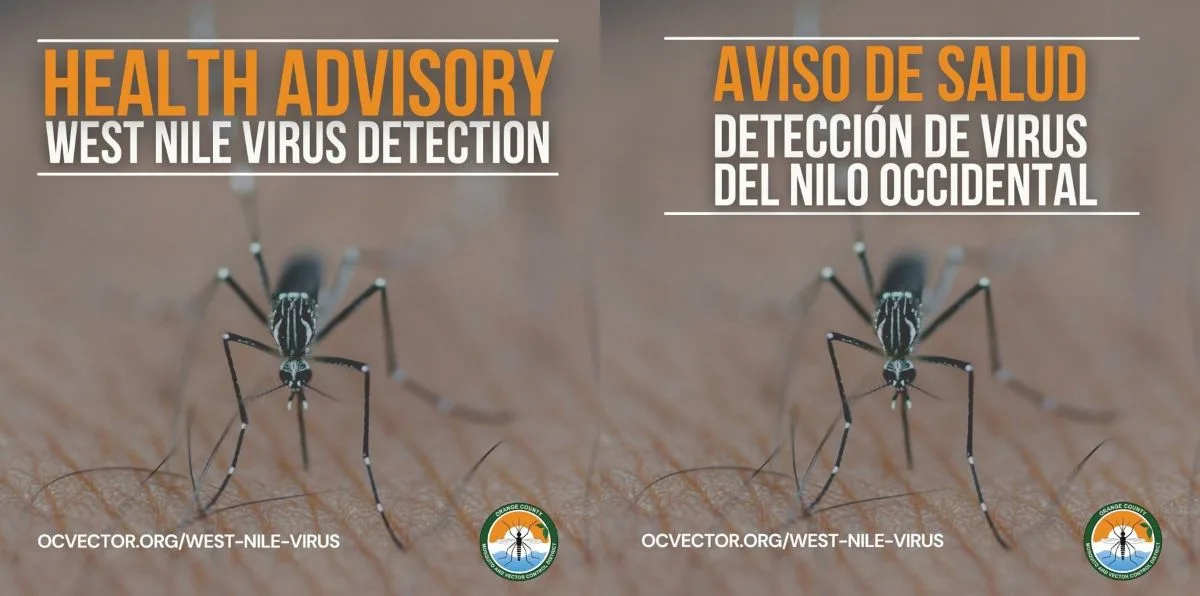
The Orange County Mosquito and Vector Control District (OCMVCD) has officially confirmed that mosquito samples infected with West Nile Virus (WNV) are spreading across the region.

Positive samples were detected this week in Costa Mesa, Fullerton, Garden Grove, and Westminster. These join Buena Park, Huntington Beach, Santa Ana, and Seal Beach, bringing the total to eight local cities with WNV-positive mosquitoes.
District inspectors are actively working to locate and treat known and hidden mosquito breeding sources. If positive samples continue to appear, the district may initiate adult mosquito control measures in the near future.
West Nile Virus Across California
West Nile Virus is a persistent health threat and stands as the most serious vector-borne disease in California. Historically, the state has recorded over 8,000 human infections and more than 400 deaths since the virus was first detected in 2003. Localized surges change year by year depending on rainfall and summer temperatures, making vigilant monitoring vital for public health.
Understanding Illness and Fatality Rates
The vast majority of people infected with WNV do not get sick, but the virus can still be highly dangerous.
- Asymptomatic Infections: Approximately 80% of people who contract the virus show no symptoms at all.
- Mild to Moderate Illness: Around 20% of infected individuals develop a temporary febrile illness known as West Nile fever.
- Severe Neuroinvasive Disease: Roughly 1 in 150 individuals (less than 1%) develop severe neurological infections like encephalitis or meningitis.
- Fatality Rate: Among patients who develop severe neuroinvasive disease, the case-fatality rate is high, ranging between 10% and 15%. Individuals over the age of 50 or those with weakened immune systems carry the highest risk of severe complications and death.
Symptoms to Watch For
Symptoms typically appear between 2 to 14 days after being bitten by an infected mosquito. If you are bitten, look out for these signs:
Mild to Moderate Symptoms
- Sudden fever and headache
- Body aches and joint pains
- Nausea, vomiting, or diarrhea
- Swollen lymph glands
- A skin rash on the chest, stomach, or back
Severe Neurological Symptoms
- High fever and neck stiffness
- Stupor, disorientation, or tremors
- Convulsions and muscle weakness
- Vision loss or partial paralysis
Essential Mosquito Prevention Tips
You can protect your home and eliminate mosquito breeding environments by taking action around your property:
- Eliminate Standing Water: Dump and drain any containers holding stagnant water at least once a week.
- Scrub Water Features: Clean bird baths and pet water bowls thoroughly every week to remove hidden mosquito eggs.
- Secure Your Home: Keep unscreened doors and windows tightly closed.
- Fix Damaged Barriers: Inspect, repair, or replace broken window and door screens immediately.
Staying Safe Outdoors
Mosquitoes are most active during dawn and dusk. Protect yourself during outdoor activities with these safety practices:
- Apply Proven Repellent: Use EPA-registered insect repellents containing active ingredients like DEET, Picaridin, IR3535, or oil of lemon eucalyptus.
- Dress Defensively: Wear light-colored, loose-fitting, long-sleeved shirts and long pants to limit exposed skin.
Natural Plant Repellents for Your Garden
In addition to traditional prevention, adding certain plants to your yard can help naturally repel mosquitoes due to their strong essential oils:
- Lavender: Produces a soothing scent that deters insects and thrives in sunny spots.
- Marigolds: Contain pyrethrum, a natural compound commonly used in commercial insect repellents.
- Citronella Grass: The classic ingredient used in outdoor bug candles, best planted in large pots.
- Rosemary: A hardy aromatic herb that naturally wards off pests while doubling as a kitchen staple.
- Catnip: Contains nepetalactone, a powerful natural chemical compound found to be highly effective at driving mosquitoes away.
- Basil: Emits a strong aroma from its leaves that naturally keeps mosquitoes at bay without needing to be crushed.