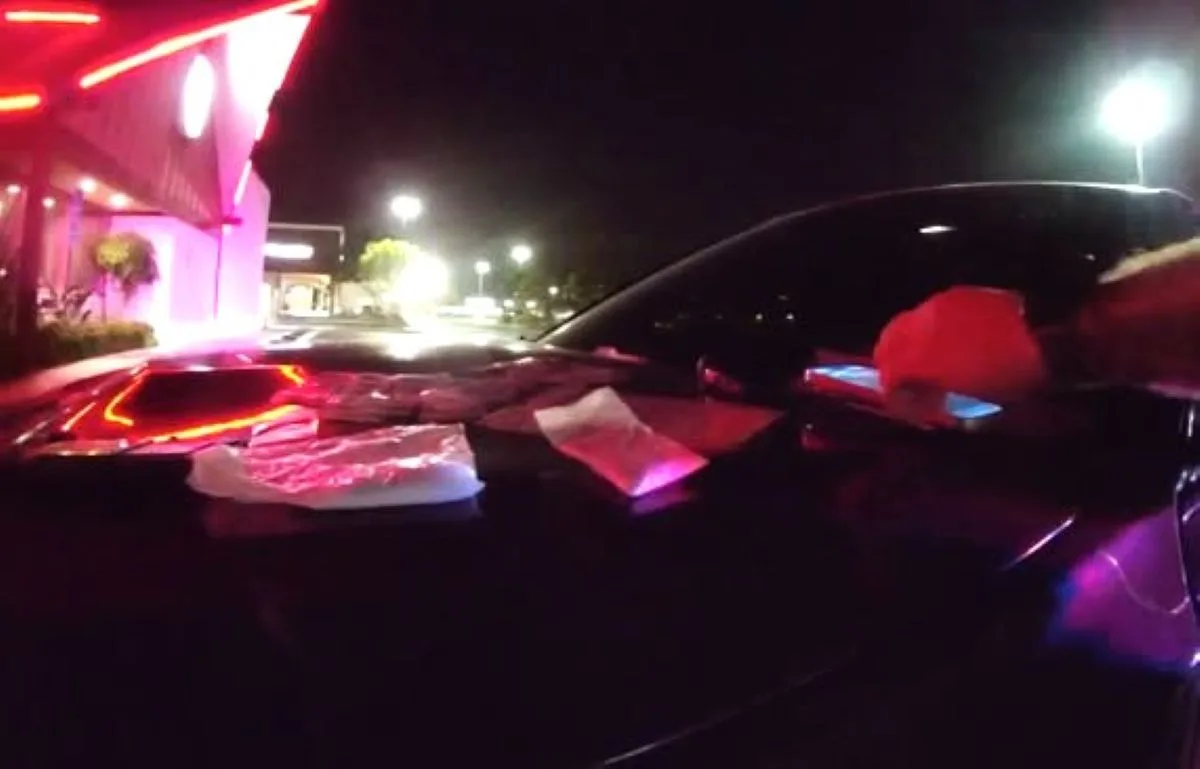
A routine Huntington Beach Police traffic stop escalated into a narcotics investigation after officers discovered multiple baggies of suspected illegal drugs spread across the hood of a vehicle.

The nighttime stop, illuminated by neon lighting from a nearby building, underscores how often simple California Vehicle Code violations turn into far more serious criminal cases in Orange County.
Criminal Charges the Suspects Face
Based on the items displayed on the vehicle’s hood and standard charging practices in Orange County, suspects in similar cases typically face:
- Possession for sale — A felony under Health & Safety Code §11351 or §11378. Penalties often include 2–4 years in county jail or state prison, plus substantial fines.
- Transportation of controlled substances — A felony under H&S §11352. Sentences range from 3–9 years depending on quantity and intent.
- Possession of controlled substances — A misdemeanor or felony depending on the drug type and prior record.
- Paraphernalia possession — A misdemeanor under H&S §11364.
If fentanyl is involved, sentencing exposure increases dramatically. Courts routinely impose enhanced penalties due to the drug’s lethality, and prosecutors often push for custody time even for first‑time offenders.
How Often CVC Stops Lead to Additional Charges
Orange County agencies consistently report that 20–30% of traffic stops for basic CVC violations lead to additional criminal charges, including:
- Drug possession or drug sales
- DUI (alcohol or drugs)
- Weapons violations
- Probation or parole violations
- Outstanding warrants
This trend is especially pronounced during nighttime enforcement, when officers frequently encounter impaired drivers or individuals transporting narcotics.
Top Reasons Officers Pull Drivers Over
Traffic stops that begin with minor violations often uncover major crimes. The most common CVC violations leading to stops include:
- Speeding
- Expired registration
- Equipment violations such as broken lights
- Unsafe lane changes
- Cell phone use while driving
- Failure to stop at signals
These stops give officers legal grounds to investigate further when they observe suspicious behavior, contraband, or impairment.
Dangers of the Seized Drugs
The baggies displayed on the hood appear consistent with individually packaged narcotics. If fentanyl is involved, the risks are extreme:
- Fentanyl is 50–100 times stronger than morphine.
- As little as 2 milligrams can be fatal.
- Orange County recorded over 300 fentanyl‑related deaths last year, a number that continues to rise.
- Dealers often mix fentanyl into counterfeit pills or powder drugs, causing accidental overdoses among users who never intended to ingest it.
Methamphetamine and cocaine also pose severe dangers, including cardiac arrest, violent behavior, and long‑term neurological damage.
Why This Case Matters for Public Safety
Traffic stops remain one of the most effective tools for intercepting dangerous drugs before they reach the community. When officers pull over a vehicle for a simple CVC violation and uncover narcotics, it demonstrates how routine enforcement prevents overdoses, violent crime, and drug distribution networks from expanding.