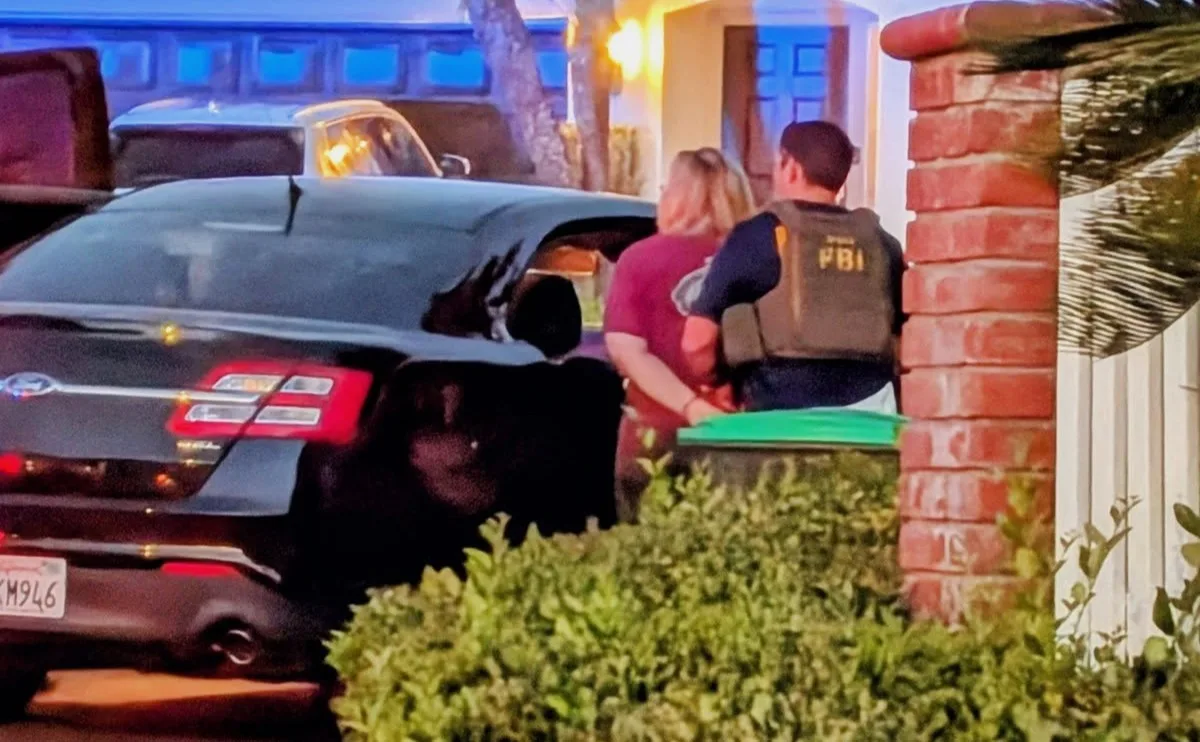
Federal prosecutors say Julie Hanway Molina, 56, of Aliso Viejo, siphoned more than $400,000 from a high school football booster club she was entrusted to manage—money she allegedly used to pay her delinquent mortgage and personal credit card bills.

She was arrested Thursday morning by FBI agents with assistance from the Orange County Sheriff’s Department and is scheduled to appear in U.S. District Court in Santa Ana.
Federal filings do not indicate whether Molina has children or family members connected to the school, but in similar booster‑club cases, families often experience significant social and financial fallout even when they had no involvement in the alleged fraud.
Federal Charges and Potential Penalties
Molina faces four counts of wire fraud, each carrying a statutory maximum of 20 years in federal prison.
Prosecutors allege that between 2023 and November 2025, she diverted funds from the nonprofit’s Laguna Hills bank account and concealed the theft by sending false treasurer reports to board members. One transfer alone—approximately $131,523—was allegedly routed through Federal Reserve facilities in New Jersey and Texas to pay off her mortgage.
If convicted, Molina could face:
- Up to 80 years in federal prison (20 years per count)
- Substantial restitution orders exceeding $411,000
- Federal supervised release and long-term financial monitoring
- Permanent federal felony record, which carries severe employment consequences
Employment Repercussions for Molina
A federal wire fraud indictment is devastating for current and future employment, especially in Orange County where background checks are standard for administrative, financial, nonprofit, and public-facing roles. Employers typically view federal fraud charges as disqualifying, particularly for:
- Accounting, bookkeeping, or treasurer positions
- School district or youth sports roles
- Government or municipal employment
- Any job requiring fiduciary responsibility
Even if she is not yet convicted, the indictment alone may trigger administrative leave, termination, or contract cancellation. If convicted, Molina will likely be barred from holding any financial role in a nonprofit or booster club under federal compliance rules.
Impact on Insurance and Financial Standing
Insurance carriers often reevaluate policy risk when a policyholder faces felony fraud charges. Potential impacts include:
- Homeowner’s insurance scrutiny, especially if the alleged fraud involved mortgage delinquency
- Higher premiums due to increased financial-risk profile
- Possible denial of future coverage for certain financial-loss policies
- Difficulty obtaining bonding or liability coverage, which is required for many administrative jobs
If restitution is ordered, Molina may also face civil judgments, wage garnishment, and long-term credit damage.
Why Booster Club Fraud Happens in Orange County
Orange County has seen repeated cases of nonprofit and booster club theft over the past decade. These organizations often rely on volunteers, many of whom have unchecked access to bank accounts, donation platforms, and financial reporting systems. According to regional nonprofit fraud data:
- OC law enforcement agencies report dozens of nonprofit theft cases annually, often involving youth sports organizations.
- The average loss in booster club fraud cases ranges from $20,000 to $150,000, but federal cases—like Molina’s—can exceed $400,000.
- Most cases involve single individuals with long-term access to accounts and little oversight.
How Booster Clubs Can Protect Themselves
To prevent similar fraud, booster clubs across Orange County should adopt stronger financial controls:
- Dual-signature requirements for all payments
- Monthly independent audits performed by non-board volunteers or third-party accountants
- Restricted access to online banking and donation platforms
- Mandatory rotation of treasurer roles every 1–2 years
- Real-time financial dashboards visible to all board members
- Annual forensic audits for clubs handling more than $50,000
These measures significantly reduce the risk of long-term embezzlement and help maintain donor trust.
Additional Context From the Media and Federal Sources
Media outlets report that Molina allegedly used false treasurer reports to hide missing funds and misled board members for more than two years.
The indictment notes that she routed payments through multiple states, a detail that often signals intentional concealment—a factor federal prosecutors may highlight during sentencing.
The FBI’s involvement underscores the seriousness of the case. Federal agencies typically intervene when:
- Losses exceed $100,000
- Funds cross state lines
- Nonprofits supporting youth programs are targeted