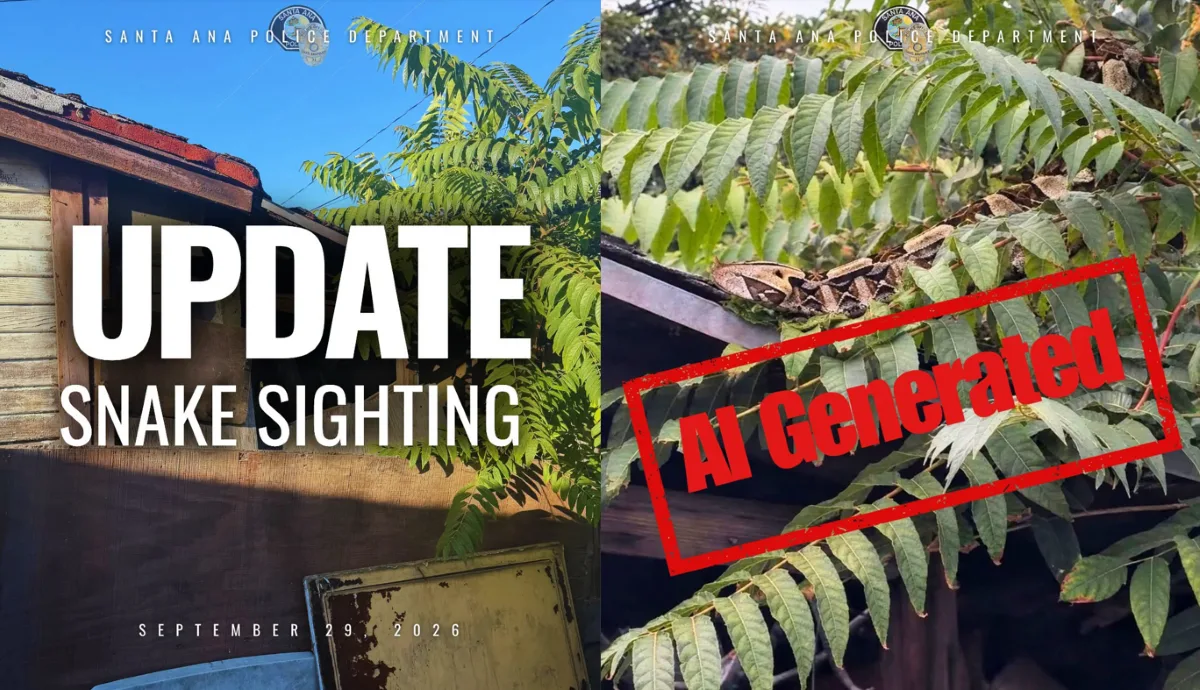
The Santa Ana Police confirmed today that the reported Gaboon Viper sighting in the 1400 block of S. Cypress Ave. was based on an AI‑generated image, not an actual exotic snake. Detectives say the reporting party admitted during follow‑up questioning that he fabricated the photo and falsely claimed he saw the snake in his backyard.

Herpetologists and officers had already conducted an extensive search yesterday and found no snake and no physical evidence matching the description.
How the Incident Unfolded
SAPD personnel responded to the residence after the man reported seeing a Gaboon Viper and provided a photo that appeared realistic enough to warrant investigation. Because Gaboon Vipers are highly venomous and illegal to possess in California, officers and reptile experts treated the report as credible until proven otherwise. After a full search produced nothing, detectives revisited the reporting party today, where he admitted the image was AI‑generated and the report was false.
SAPD emphasized that while many residents suspected the photo might be AI‑generated, police must still investigate any report involving a potentially dangerous animal to protect public safety.
Potential Criminal Charges for Filing a False Snake Report
A false report involving a dangerous animal can trigger multiple criminal statutes in California. Based on the facts SAPD released, the reporting party could face:
- False Report of an Emergency — Penal Code §148.3 makes it a misdemeanor to knowingly make a false emergency report. Penalties can include up to 6 months in jail and fines up to $1,000.
- Filing a False Police Report — Penal Code §148.5 prohibits knowingly providing false information to police. This is also a misdemeanor punishable by up to 6 months in jail and fines.
- Obstruction or Wasting Public Resources — Penal Code §148(a)(1) may apply if the false report caused officers or specialists to expend significant time and resources.
- Restitution — Courts can order reimbursement for costs associated with emergency response, including specialized personnel such as herpetologists.
SAPD has not yet announced whether charges will be filed, but the incident clearly meets the criteria for multiple misdemeanor offenses.
How Often AI Contributes to Fake News in the U.S.
AI‑generated misinformation has surged nationwide. Recent studies from media‑analysis groups and academic institutions show:
- Over 30% of Americans have encountered AI‑generated fake news in the past year.
- More than 20% of viral misinformation images circulating on social platforms in 2026 were created or altered using AI tools.
- Election‑related misinformation has increased sharply, with AI‑generated images and videos being shared millions of times before platforms intervene.
- Local public‑safety hoaxes, like fabricated animal sightings or false crime‑scene photos, have risen by double‑digit percentages since 2025.
AI‑generated content is becoming more realistic, making it harder for the public—and sometimes even experts—to distinguish real events from fabricated ones.
Recent Examples of AI‑Generated Fake News in the U.S.
Several high‑profile incidents illustrate how quickly AI‑generated misinformation spreads:
- Fake East Coast Hurricane Evacuation Orders — AI‑generated government “alerts” circulated widely, prompting confusion before officials debunked them.
- AI‑Generated Wildfire Photos in California — Images showing “new fire outbreaks” went viral despite no fires occurring in those locations.
- Fabricated Tornado Damage in the Midwest — AI images depicting destroyed neighborhoods caused panic until emergency managers confirmed they were fake.
- False Crime‑Scene Photos — Multiple police departments nationwide have issued warnings after AI‑generated crime photos were shared as real incidents.
These cases mirror what happened in Santa Ana: a realistic AI image triggered public concern and forced authorities to investigate.
Why This Matters for Public Safety
AI‑generated images can look extremely convincing. When shared as fact, they can:
- Spread fear and confusion
- Divert police resources
- Delay responses to real emergencies
- Damage public trust in official alerts
- Create viral misinformation that persists even after being debunked
SAPD thanked residents for their patience while officers and reptile experts worked to determine what actually happened. The department also reminded the public that sharing false information—especially involving dangerous animals—can lead to criminal charges.
Community Impact
Santa Ana Police have confirmed that the reported Gaboon Viper sighting on S. Cypress Ave. was based on an AI‑generated fake photo, not a real exotic snake. The reporting party admitted fabricating the image, and detectives are evaluating potential charges for filing a false report. As AI‑generated fake news becomes more common across the U.S., law enforcement agencies warn that realistic AI images can create unnecessary fear and waste critical public‑safety resources. SAPD urges residents to verify information before sharing and to report suspicious activity responsibly.
I suppose the snitching party has conflict with their neighbors & fabricated evidence like that AI photo just to get their neighbor in trouble.