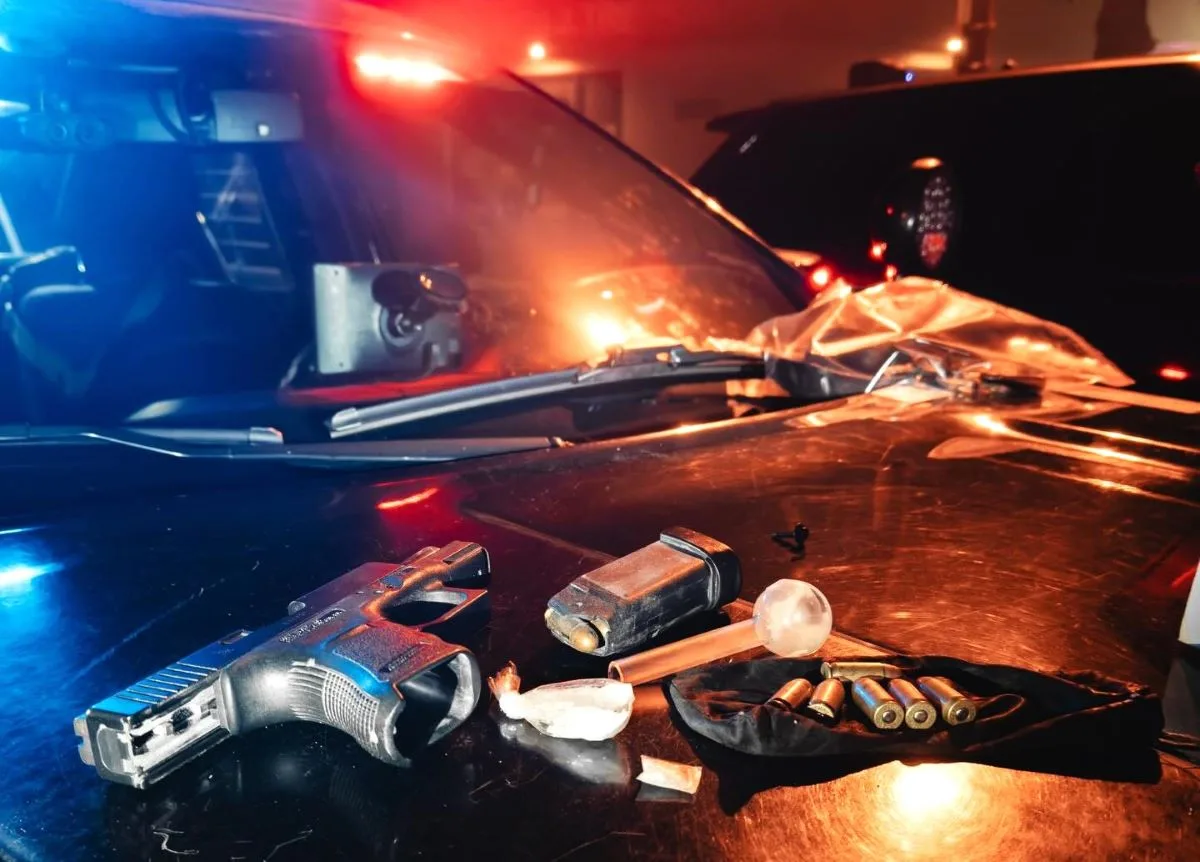
The OC Sheriff’s Lake Forest Specialized Enforcement Team (SET) recently tracked down a wanted suspect.
The suspect happened to have an illegally purchased firearm (it was loaded), illegal drugs and paraphernalia at the time of his arrest.
Illegal firearm trends in Orange County
In 2026, firearm-related crimes in Orange County (OC) are notably less frequent than in neighboring major California counties, though certain trends like “ghost guns” remain a concern.
- Prevalence Rate: As of 2025, approximately 14% of violent crimes in Orange County involve a firearm. This rate is significantly lower than in counties like Alameda or San Joaquin, where firearms are used in nearly 40% of violent incidents.
- Declining Trends: Overall violent crime in OC has trended downward from a pandemic-era peak in 2021–2022. By 2024–2025, violent crime rates were approximately 15% lower than their previous peaks.
- Specific Incident Data:
- Homicides: While statewide roughly 73% of homicides involve firearms, OC’s homicide rate has seen an 18% decrease since 2022.
- Aggravated Assaults: Assaults involving guns surged by 74% between 2019 and 2022 but have since steadily declined due to enhanced law enforcement presence and community intervention programs.
- Illegally Obtained Firearms: A major statewide trend affecting OC is the prevalence of “crime guns” without valid records. In 2024 and 2025 reports, nearly 65% of recovered crime guns in California had no prior sale record in the state’s database, indicating they were likely purchased illegally, imported, or manufactured as unserialized “ghost guns”.
- Enforcement Actions: Law enforcement continues to target “armed and prohibited persons.” In 2024, California DOJ removed a record 4,058 individuals from the prohibited persons database through enforcement actions, an 18% increase over the previous year.
Penalties faced by the suspect
In 2026, a suspect arrested in Lake Forest under these circumstances faces significant penalties under California law, particularly due to the combination of a loaded firearm and illegal narcotics.
Primary Felony Charges
- Possession of a Controlled Substance While Armed (HS 11370.1): This is a “straight felony,” meaning it cannot be reduced to a misdemeanor. It is punishable by two, three, or four years in state prison and a fine of up to $10,000. A conviction for this offense also makes the suspect ineligible for drug diversion programs.
- Carrying a Loaded Firearm in Public (PC 25850): While often a misdemeanor, this charge becomes a felony if the suspect is not the registered owner of the firearm or has prior convictions. A felony conviction carries 16 months, two, or three years in state prison.
Additional Penalties
- Possession of Drug Paraphernalia (HS 11364): This is typically a misdemeanor punishable by up to six months in county jail and/or a $1,000 fine.
- Illegal Firearm Purchase/Possession: Since the firearm was illegally purchased, the suspect may face separate charges for unlawful possession. If the suspect is a “prohibited person” (e.g., a convicted felon or narcotic addict), they face a felony charge under PC 29800, punishable by up to three years in state prison.
- Possession for Sale: If the quantity of drugs found is significant, the charge may be elevated to possession with intent to distribute, which carries two to four years in jail.
Collateral Consequences
- Lifetime Firearm Ban: Any felony conviction in California results in a lifetime prohibition from owning or possessing firearms.
- Immigration Status: For non-citizens, these offenses—especially those involving firearms and controlled substances—are often deportable offenses.
- Professional Impact: Convictions can lead to the revocation of professional licenses (e.g., real estate, teaching, or healthcare).
