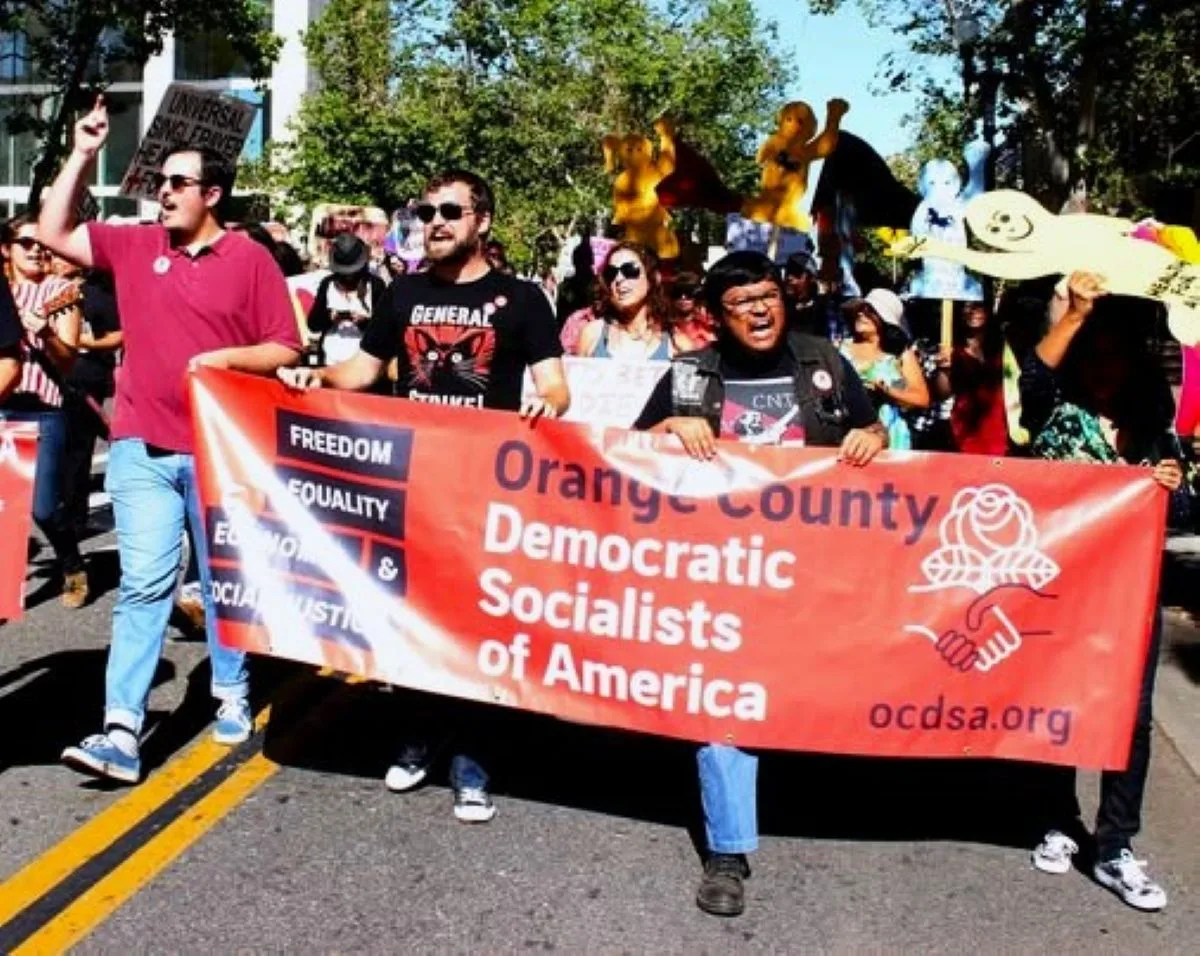
With the November election drawing closer, the Orange County chapter of the Democratic Socialists of America (DSA) has released its 2026 General Election Guide, offering endorsements and recommendations in dozens of local races across the county. The guide also provides a window into the organization’s growing role in local politics and its efforts to influence the future direction of the Democratic Party.

The DSA is a national political organization that advocates for democratic socialism, a political philosophy that generally supports a larger role for government in healthcare, housing, labor protections, and economic policy. While many DSA-backed candidates are Democrats, the organization often supports candidates who favor policies that are further left than those embraced by many mainstream Democratic officeholders.

The group’s new Orange County voter guide notes that it made only four official endorsements this election cycle, including three candidates in Santa Ana and one in Irvine. According to the guide, these endorsements received formal approval from DSA members and represent the commitment of organizational resources to those campaigns.
The Orange County DSA’s endorsed candidates are:
- Irvine City Council District 5: Betty Martinez-Franco
- Santa Ana City Council District 2: Benjamin Vazquez
- Santa Ana City Council District 4: Sandra De Anda
- Santa Ana City Council District 6: Isuri S. Ramos
The organization also issued recommendations in numerous additional city council, school board, and ballot measure contests throughout Orange County.

Santa Ana Becomes a Focal Point
The concentration of DSA endorsements in Santa Ana is notable. Three of the organization’s four official endorsements are in Santa Ana City Council races, reflecting the city’s importance to the local progressive movement.
The contests also highlight an increasingly visible divide within Democratic politics. In several Santa Ana races, DSA-backed candidates are competing against fellow Democrats who generally support maintaining robust police services and more traditional public safety policies.

Over the past several years, Santa Ana leaders have debated issues ranging from police funding and public safety staffing to homelessness, affordable housing, development, and criminal justice reform. Those discussions have often revealed differing philosophies among elected officials and candidates who otherwise share the same party affiliation.
As a result, many of the city’s most closely watched political contests are no longer defined simply by Democrat-versus-Republican distinctions, but by competing visions within the Democratic Party itself.

Other Candidates and Measures Highlighted in the Guide
Beyond its formal endorsements, the Orange County DSA voter guide recommends candidates and ballot measures in numerous jurisdictions, including races in:
- Aliso Viejo
- Anaheim
- Costa Mesa
- Fullerton
- Garden Grove
- Huntington Beach
- Irvine
- Mission Viejo
- Newport Beach
- Placentia
- San Clemente
- Santa Ana
- Tustin
- Westminster
The guide also takes positions on several local ballot measures, supporting some proposals while opposing others.
A Broader Debate Within the Democratic Party
The DSA’s growing influence has sparked debate well beyond Orange County.
Supporters argue that democratic socialist candidates are helping push the Democratic Party to address affordability, worker protections, tenant rights, healthcare access, and economic inequality. Critics, including many moderate Democrats, contend that some DSA-backed policies move the party too far left and risk alienating mainstream voters.
Several prominent Democratic leaders have publicly distanced themselves from the DSA in recent years. Hakeem Jeffries, the Democratic leader in the U.S. House of Representatives, recently stated that he does not support the DSA’s agenda, even while acknowledging that Democratic caucuses include a wide range of ideological viewpoints.
Veteran Democratic strategist James Carville has been one of the party’s most vocal critics of the organization’s growing influence, arguing that Democratic candidates should focus on issues that resonate with a broader electorate. Former Democratic National Committee chairman Jaime Harrison has also publicly criticized candidates who seek Democratic nominations while opposing the party’s direction.
Meanwhile, Democratic Congressman Ritchie Torres of New York has frequently clashed with democratic socialist activists and candidates, particularly over public policy and the ideological direction of the party.
These disagreements reflect an ongoing debate over whether the Democratic Party should continue moving in a more progressive direction or maintain a more moderate approach focused on broad coalition-building and traditional public safety priorities.
DSA Positions Opposed by Most Moderate Democrats
Policing and Criminal Justice
The DSA and many DSA-backed activists have supported reducing police budgets, shifting funding toward social services, limiting police powers, and implementing broader criminal justice reforms. Some DSA chapters have promoted “defund the police” or similar reform efforts.
Moderate Democrats generally support police accountability reforms but tend to oppose reducing police staffing levels. Many argue that effective policing is necessary for public safety, particularly in communities experiencing increases in violent crime or quality-of-life offenses.
This may be the most visible point of disagreement in Santa Ana politics, where debates over police hiring, public safety spending, and enforcement priorities have divided local Democrats.
Housing and Development
The DSA often advocates for stronger tenant protections, rent control policies, public or social housing programs, and restrictions on market-driven housing development.
Moderate Democrats frequently support affordable housing initiatives but are often more willing to partner with private developers and use market-based approaches to increase housing supply.
Economic Policy
The DSA supports policies such as:
- Medicare for All
- Free public college
- Expanded union power
- Wealth taxes
- Higher taxes on corporations and high-income earners
- Expanded public ownership of certain industries
Moderate Democrats often support expanded government programs but generally favor a mixed economy rather than the more transformational economic changes advocated by democratic socialists.
Foreign Policy
The DSA has frequently taken positions that differ from many Democratic leaders on foreign policy, particularly regarding military spending, U.S. intervention overseas, and support for Israel.
Moderate Democrats such as Congressman Ritchie Torres and House Democratic Leader Hakeem Jeffries have often found themselves at odds with democratic socialist activists on these issues.
Municipal Government Priorities
At the local level, DSA-backed candidates often place greater emphasis on:
- Tenant protections
- Rent stabilization
- Homeless services
- Civilian oversight of police
- Labor and union issues
- Environmental justice initiatives
Moderate Democrats generally support many of those goals but often place greater emphasis on:
- Public safety
- Business development
- Fiscal stability
- Infrastructure investment
- Incremental policy changes
Why Moderate Democrats Push Back
The criticism from moderate Democrats is not usually that the DSA is “communist.” Rather, many believe DSA-backed policies can be politically difficult to sell to swing voters and may move the party away from issues that resonate with a broader electorate.
For example, veteran Democratic strategist James Carville has been highly critical of the party’s socialist wing, while Hakeem Jeffries has explicitly stated that he does not support the DSA’s agenda
The DSA’s Orange County Strategy
Orange County has long been known as a political battleground, and progressive organizations have increasingly focused on local government races where city councils, school boards, and special districts make decisions affecting housing, policing, labor relations, and local development.
The DSA’s 2026 voter guide includes recommendations in races across numerous Orange County cities, including Anaheim, Costa Mesa, Fullerton, Garden Grove, Huntington Beach, Irvine, Mission Viejo, Newport Beach, San Clemente, Santa Ana, Tustin, Westminster, and others.
In the guide’s introductory statement, the organization argues that electing progressive candidates at the local level is critical to advancing its long-term political goals and building support for future policy changes throughout the county.
Looking Ahead to November
The Orange County DSA’s voter guide offers voters an opportunity to better understand one of the county’s most active progressive political organizations and the candidates it believes best represent its priorities.
Whether voters agree or disagree with the group’s recommendations, the guide highlights a significant trend in local politics: some of the most consequential contests are increasingly taking place within the Democratic Party itself.
Nowhere is that dynamic more apparent than in Santa Ana, where several key city council races feature DSA-backed candidates facing off against fellow Democrats who have generally been more supportive of traditional public safety policies and law enforcement. The results of those races may provide an early indication of which vision of Democratic politics is gaining momentum in Orange County.