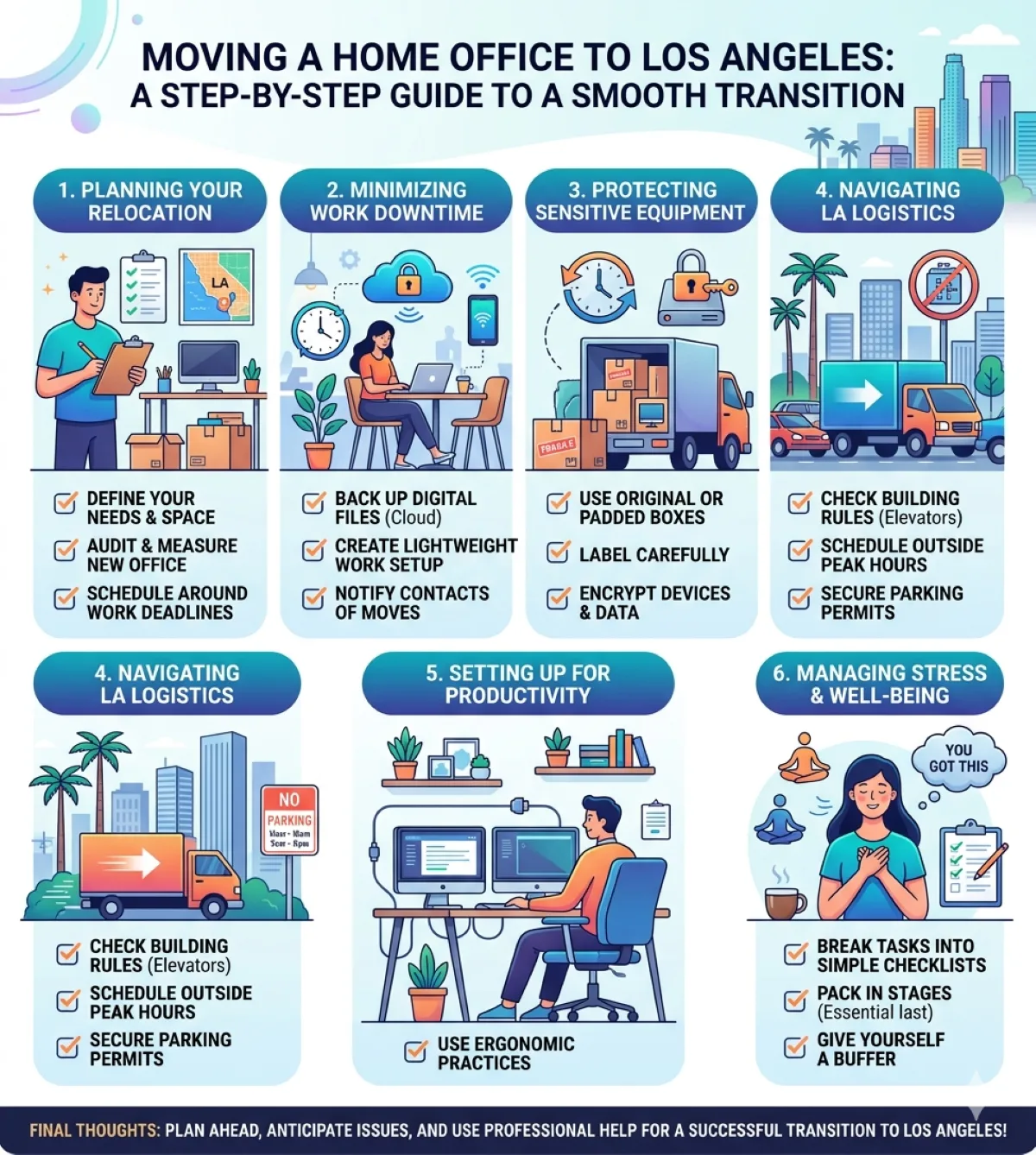
Moving a home office to Los Angeles can be both exciting and overwhelming. The city offers huge opportunities, but relocating your work environment requires careful planning.

From navigating traffic and building rules to protecting sensitive equipment, there are several challenges you should anticipate and manage in advance.
Planning Your Home Office Relocation
Before you pack a single box, define what your home office needs to look like in Los Angeles. Consider how much space you will have, what furniture will realistically fit, and what equipment is essential for your day-to-day work.
- Audit your current office and list everything you use weekly. This helps you decide what to keep, donate, or replace.
- Measure the new space so you can plan desk placement, storage, and cable access.
- Schedule your move date around work commitments to reduce interruptions to clients and colleagues.
Planning with this level of detail makes it easier to adapt once you arrive in Los Angeles and helps you avoid last-minute chaos.
Issue 1: Minimizing Work Downtime
One of the biggest concerns when moving a home office is lost productivity. If your computer, files, and equipment are in boxes, your business can stall. In a competitive market like Los Angeles, even a short break in communication can affect relationships and income.
To tackle this, create a continuity strategy:
- Back up all digital files to a secure cloud service before packing anything.
- Prepare a lightweight setup with a laptop, essential chargers, and a mobile hotspot so you can work from temporary spaces if needed.
- Notify key contacts of your move timeline and possible response delays.
Professional movers can help reduce downtime by packing, transporting, and unloading your office items on a tightly managed schedule. Their ability to handle logistics lets you stay focused on client communication and time-sensitive tasks.
Issue 2: Protecting Sensitive Equipment and Data
Home offices often contain expensive hardware and confidential information. Moving across a large city like Los Angeles introduces extra risk, including long transit times and potential damage from bumps, heat, and dust.
To safeguard your tools and data:
- Use original packaging for computers and monitors if you still have it, or invest in high-quality padded boxes.
- Label boxes carefully as “Fragile” and “This Side Up” to reduce mishandling.
- Encrypt devices and use password protection in case anything is misplaced.
Experienced office movers in Los Angeles routinely handle servers, desktops, and other delicate equipment, which can significantly lower the chance of damage. Their teams typically bring protective materials, dollies, and straps that keep your gear stable during transport.
Issue 3: Navigating Los Angeles Buildings and Traffic
Los Angeles is known for dense traffic and complex building regulations. Apartments, condos, and mixed-use buildings often have rules on elevator reservations, moving hours, and loading dock access. Overlooking these details can delay your move or lead to unexpected fees.
Plan by:
- Contacting your building management to learn about move-in rules, required insurance documents, and parking guidelines.
- Scheduling your move outside peak traffic hours when possible to shorten transport time.
- Checking parking restrictions on your street so the moving truck has safe and legal space to load and unload.
A professional moving company familiar with Los Angeles neighborhoods will often coordinate these logistics, from obtaining necessary certificates of insurance to planning the best routes. This helps you avoid fines and scheduling conflicts that can derail your moving day.
Issue 4: Setting Up an Ergonomic, Productive Space
Once your belongings arrive, the next challenge is creating a workspace that supports focus and health. Poor ergonomics can lead to fatigue, discomfort, and lower productivity, especially if you work long hours at your desk.
Consider these steps:
- Decide on the desk and chair location first, prioritizing natural light and minimal noise.
- Set up your internet and power connections before arranging smaller items so cords stay organized.
- Position your monitor at eye level and keep your keyboard and mouse at a comfortable height to reduce strain.
Many moving companies will place furniture exactly where you need it and help reposition heavy pieces until the layout feels right. This saves you from lifting injuries and allows you to fine-tune your workspace quickly.
Issue 5: Managing Stress During the Transition
Relocating both your home and office can be mentally exhausting. Decisions about what to keep, how to organize, and how to maintain your workflow can quickly pile up. Stress can make you more prone to mistakes, such as mislabeling boxes or forgetting critical tasks.
To keep stress under control:
- Create a simple checklist broken into small daily tasks rather than one massive to-do list.
- Pack the office in stages, starting with nonessential items and leaving critical tools for last.
- Give yourself a buffer between move day and important deadlines whenever possible.
Handing off physical labor and logistics to professionals frees up your mental bandwidth. Instead of worrying about hauling boxes and navigating traffic, you can focus on communication, planning, and adapting your schedule.
Final Thoughts
Moving a home office to Los Angeles involves more than just transporting furniture. It is a project that touches productivity, security, logistics, and personal well-being.
By planning, anticipating issues, and using the expertise of a qualified moving company, you can transition into your new Los Angeles workspace with far less disruption and a stronger foundation for long-term success.