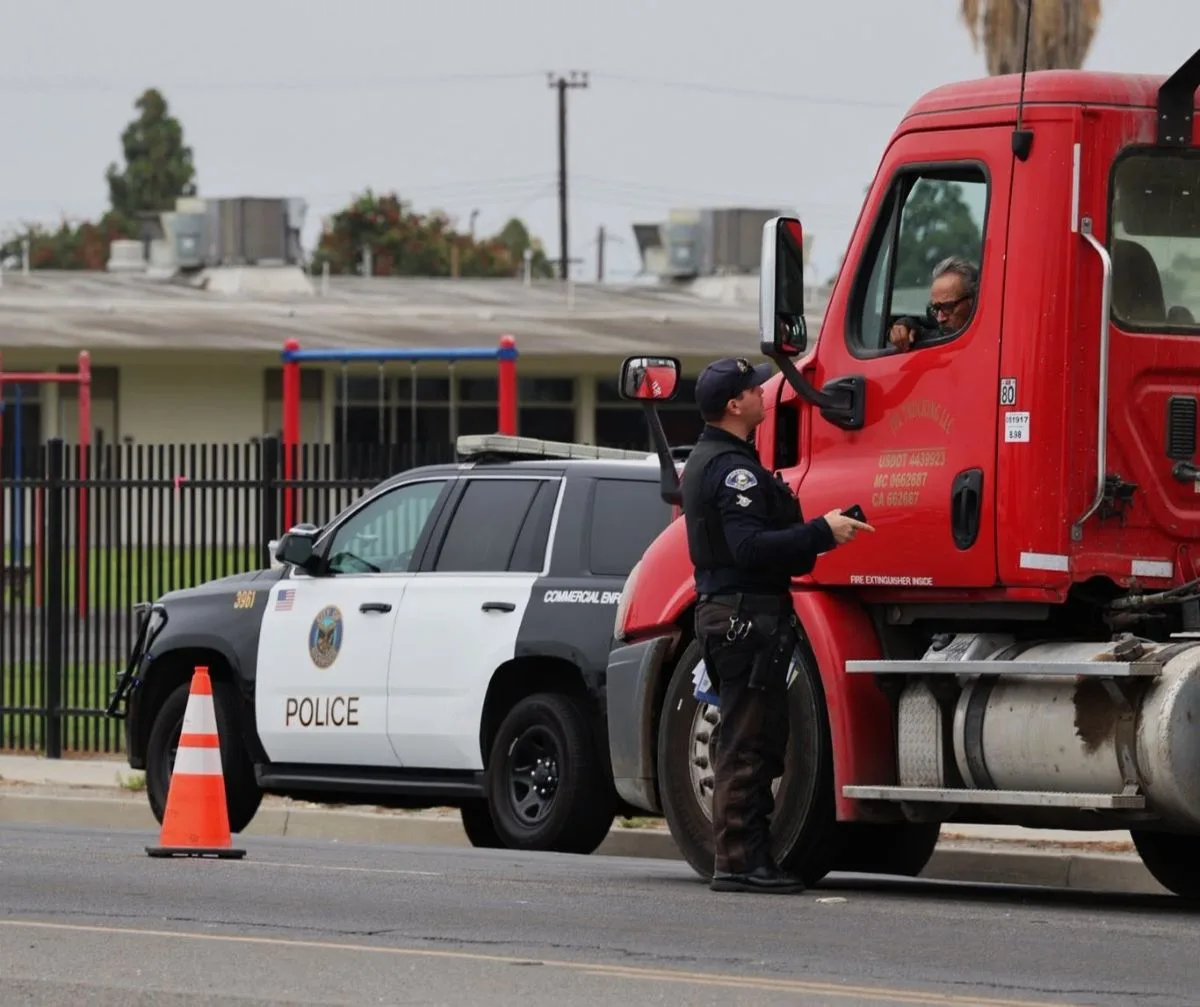
The Garden Grove Police Department (GGPD) recently completed a massive commercial vehicle enforcement checkpoint that removed 16 dangerous trucks from local roads. Operating in close collaboration with nearly a dozen Southern California law enforcement agencies, the multi-jurisdictional crackdown targeted commercial vehicle compliance to drastically improve regional roadway safety. By the end of the operation, officers conducted 70 comprehensive vehicle inspections and uncovered a staggering 87 regulatory violations. The enforcement blitz ultimately led to 50 citations, 5 vehicle tows, and the immediate grounding of 16 commercial vehicles deemed too hazardous to operate.

Potential Criminal and Civil Legal Charges
Commercial drivers and fleet operators caught in operations like the GGPD checkpoint face severe legal penalties that go far beyond standard traffic tickets. Depending on the severity of the 87 violations discovered, local prosecutors and state regulators can file a variety of heavy charges.
- Misdemeanor Reckless Driving: Filed if an operator knowingly drives a commercial truck with catastrophic mechanical failures like completely failed brakes.
- Vehicle Code Equipment Violations: Standard criminal infractions issued for hazardous issues like bald tires, broken lights, or overweight cargo.
- Logbook and Hours of Service Falsification: Criminal charges brought against drivers who alter federally mandated rest logs to conceal operator fatigue.
- Driving Without a Valid Commercial License: Charges applied if an operator lacks a proper Class A or Class B CDL, or drives with a suspended license.
- Corporate Carrier Liability: Civil and criminal negligence lawsuits directed at fleet owners who knowingly force drivers into non-compliant vehicles.
Severe Impacts on Commercial Insurance
The immediate financial fallout of 50 citations and 16 out-of-service orders will drastically impact the insurance profiles of the involved trucking companies. Insurance underwriters continuously monitor state and federal safety databases, and an enforcement sweep of this magnitude triggers immediate financial penalties for a fleet.
- Skyrocketing Premium Rates: Insurance companies routinely raise annual premiums by 20% to 50% following serious out-of-service violations.
- Loss of Safe Driver Discounts: Citations instantly wipe out any hard-earned corporate discounts for clean fleet operations.
- Spike in SMS and CSA Scores: Citations drastically raise the carrier’s Compliance, Safety, Accountability (CSA) score, flagging them for automatic future inspections.
- Policy Non-Renewal Notices: Premium insurers frequently drop carriers entirely if a single checkpoint reveals a systemic pattern of neglected maintenance.
- Sky-High Deductibles: Companies forced to seek secondary high-risk insurance markets face massive deductibles alongside severely limited coverage limits.
Proactive Steps Drivers Can Take to Avoid Issues
Commercial operators can easily avoid criminal citations and devastating insurance spikes by adopting strict, non-negotiable safety habits before ever hitting the road. Staying compliant ensures that an unexpected police checkpoint is a routine interaction rather than a business-ending event.
- Conduct Flawless Pre-Trip Inspections: Review the entire vehicle every morning, paying extreme attention to air brake lines, tire tread depths, and fluid levels.
- Log Every Minute Accurately: Utilize electronic logging devices carefully to ensure hours-of-service compliance matches exact physical driving times.
- Refuse Deemed Unsafe Loads: Exercise the legal right to refuse a dispatch if the trailer is dangerously overloaded or mechanically unsound.
- Keep Digital Paperwork Accessible: Organize all medical certificates, commercial licenses, permits, and registration documents cleanly within the cab for instant police review.
- Report Mechanical Faults Immediately: Submit written vehicle condition reports to fleet mechanics the moment an engine light, brake squeal, or tire issue appears.