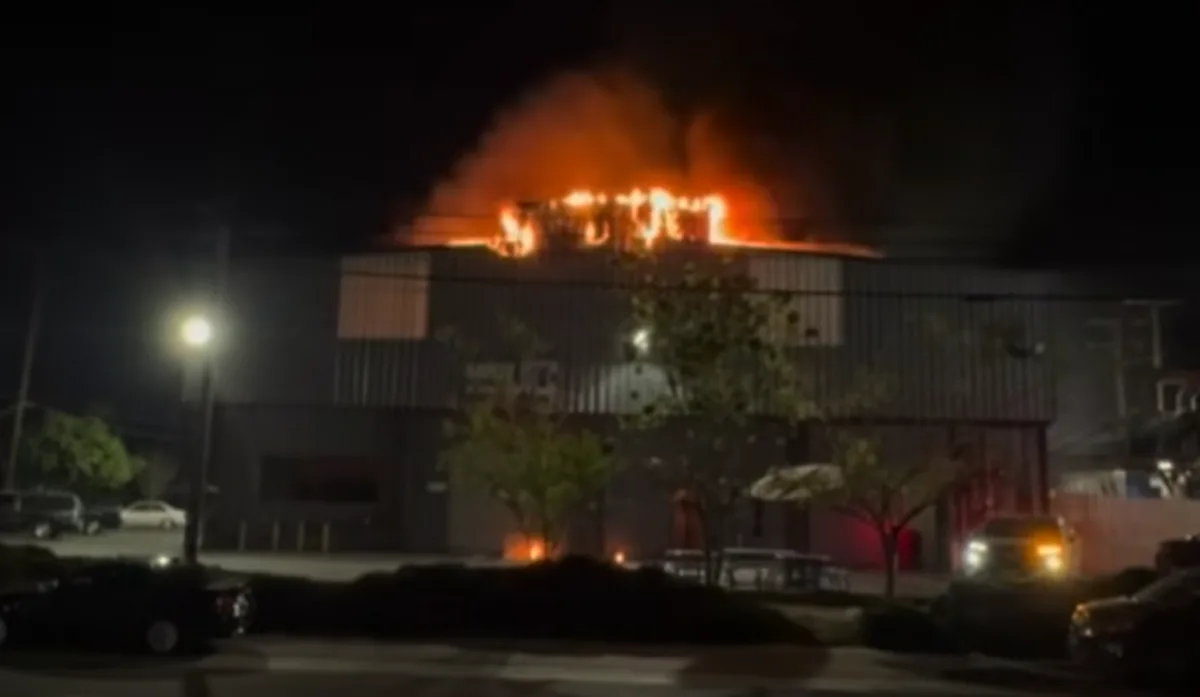
Last night, firefighters responded to a 2-alarm blaze in Santa Ana where flames were blowing through the roof of a metal building used by a business manufacturing aerospace products from aluminum, according to the Orange County Fire Authority.
Orange County Fire Authority crews launched a coordinated fire attack and brought the fire under control swiftly, preventing it from spreading to an adjacent building.
One individual was evaluated for smoke inhalation but did not require hospital transport. Thankfully, no injuries to firefighters.
The fire was located in the 3200 block of West Central Avenue. Aluminum Precision Products operates multiple plants in Santa Ana, including a facility at 2621 S. Susan St., which is just around the corner from the 3200 block of West Central Avenue.
Historically, Aluminum Precision Products has experienced fires at its Santa Ana locations, including a 2-alarm fire in 2015 on South Susan Street and another major blaze at their Alton Avenue facility in 2013.
The business involved in last night’s fire fits the exact description of APP—a metal building used for manufacturing aerospace products from aluminum.
The damage caused by last night’s fire is approximately $6.5 million.
It is not yet known if the burned building had fire sprinklers. However if the fire involved aluminum then water alone would have a tough time putting it out. Fire crews typically have to use special foams to put out metal fires.
For a 2-alarm industrial fire with damage estimated at $6.5 million, the recovery and business interruption period is likely to be extensive, potentially lasting from several months to over a year.
To avoid high-intensity blazes like the one in Santa Ana, companies manufacturing aerospace products from aluminum must manage the unique risks of combustible metal dust and molten material. The following steps are industry standards for preventing such incidents:
1. Rigorous Dust Management
Aluminum dust is highly explosive when airborne. Companies must follow NFPA 484 standards to control it:
- Dedicated Dust Collection: Use wet-type dust collectors (scrubbers) to safely trap particles in a liquid solution, as dry collection can lead to internal explosions.
- Regular Housekeeping: Implement a strict schedule to clean dust from “hidden” areas like overhead rafters, ledges, and ductwork where a small initial fire can trigger a massive secondary explosion.
- Prohibit Compressed Air: Avoid using air hoses for cleaning, as this creates the exact “dust clouds” that lead to flash fires.
2. Ignition Source Control
In a facility filled with metal shavings and powders, even a small spark can be catastrophic:
- Hot Work Permits: Require formal authorization and safety oversight for any welding, cutting, or grinding.
- Non-Sparking Tools: Use tools made of specialized materials (like bronze or brass) and ensure all machinery is properly grounded and bonded to prevent static electricity buildup.
- Equipment Maintenance: Inspect motors and wiring frequently for friction points or “hot spots” that could ignite nearby materials.
3. Specialized Fire Suppression
Standard water sprinklers can actually worsen an aluminum fire by reacting with the metal to produce flammable hydrogen gas:
- Class D Extinguishers: Install and train staff on Class D fire extinguishers, which use dry powders specifically designed to smother metal fires.
- Automatic Suppression: Use inert gas (like Argon) or specialized chemical systems in high-risk zones instead of traditional water-based systems.
4. Strategic Facility Layout
The physical setup of the plant plays a major role in containment:
- Material Segregation: Store aluminum separate from other combustible materials (like wood, paper, or oils) and different metals to avoid hazardous chemical reactions.
- Fire Barriers: Install fire-resistant walls and doors to compartmentalize the building and prevent a fire in one area from spreading to the rest of the facility.
5. Employee Training and Culture
Safety relies on the workforce recognizing hazards before they ignite:
- Hazard Recognition: Train employees to identify dangerous dust accumulations and report faulty equipment immediately.
- Emergency Drills: Conduct regular drills specifically for metal fire scenarios, emphasizing that water should never be used on burning aluminum.