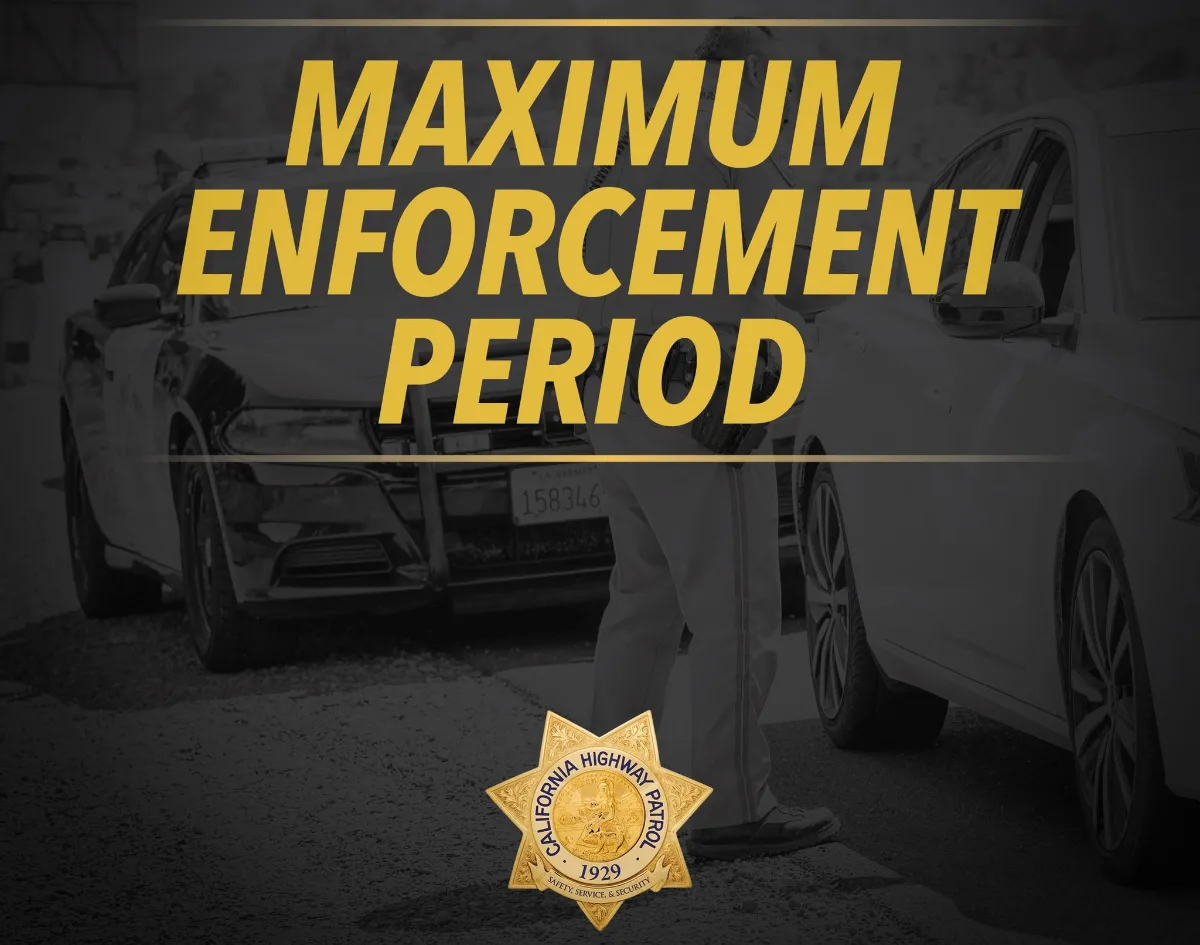
The California Highway Patrol (CHP) has officially launched a statewide Maximum Enforcement Period (MEP) targeting impaired drivers. The emergency surge is in strict effect starting at 6:00 p.m. on Saturday, June 20, through 5:59 a.m. on Sunday, June 21.

Motorists and passengers across California are heavily reminded by state officials to remain responsible, plan ahead, and always drive sober during this high-risk summer weekend.
What is a Maximum Enforcement Period?
A Maximum Enforcement Period is an intensive highway safety initiative deployed by the California Highway Patrol during high-volume travel periods or high-risk summer weekends. During an MEP, all available uniformed CHP personnel—regardless of their rank—are deployed directly onto the streets to maximize police visibility and conduct aggressive traffic enforcement. The core purpose of this specific 12-hour surge is to proactively identify, stop, and remove drug- and alcohol-impaired drivers from the road before they cause preventable tragedies.
Where CHP Officers Will Show Up
Because this is a statewide deployment, drivers can expect to see an overwhelming police presence across all major transit corridors. Officers are explicitly targeting:
- Major California freeways and interstates experiencing high summer travel volume.
- Popular state highways and coastal routes, such as Highway 1.
- Local back roads, rural shortcuts, and county corridors where drivers often mistakenly assume patrols are absent.
- Dedicated sobriety checkpoints setup across highly populated metropolitan intersections and nightlife districts.
Critical Tips for Drivers to Stay Out of Trouble
The easiest way to successfully navigate this enforcement period is to make safety an absolute priority before you even turn your vehicle’s ignition key. Keep these tips in mind tonight:
- Arrange a sober ride: If your weekend plans or social gatherings involve alcohol, cannabis, or prescription medication, lock in a designated driver, book a rideshare, or plan to stay overnight.
- Look out for others: Never allow a friend or family member to get behind the wheel if they show signs of impairment.
- Report erratic drivers: If you spot a driver weaving, braking erratically, or speeding, immediately dial 911. Be prepared to give dispatchers the vehicle’s make, model, license plate number, and direction of travel.
- Follow all traffic laws: While the focus is on DUI prevention, officers will eagerly pull drivers over for secondary infractions like speeding, driving distracted, or failing to wear a seat belt.
Likely Criminal Charges Facing Offenders
Getting caught driving under the influence during an MEP carries swift, life-altering legal penalties. Drivers who choose to ignore the warnings face heavy misdemeanor or felony criminal charges:
- DUI Arrest and Incarceration: Drivers showing signs of intoxication or failing a field sobriety test will be immediately arrested and booked into county jail.
- License Suspension: An arrest triggers an immediate administrative suspension of your driving privileges by the California DMV.
- Severe Financial Fines: A first-time DUI conviction in California often totals thousands of dollars in court fees, mandatory alcohol education classes, and towing costs.
- Enhanced Felony Charges: If an impaired driver causes a collision resulting in injuries or fatalities, they will face serious felony charges, including vehicular manslaughter, carrying multi-year prison sentences.
Massive Insurance Implications
The consequences of a DUI arrest do not end when you leave the courtroom; the financial fallout impacts your auto insurance policy for up to a decade:
- Loss of “Good Driver” Discounts: A DUI conviction immediately strips away any safe driving history credits, causing premium rates to skyrocket.
- Mandatory SR-22 Filing: To reinstate a suspended license, drivers must have their insurer file an SR-22 certificate of financial responsibility, labeling them as high-risk operators.
- Premium Surges or Policy Cancellation: Affected drivers routinely see their monthly premium costs double or triple. In many cases, standard insurance carriers will drop the driver entirely, forcing them to find expensive coverage through non-standard secondary markets.