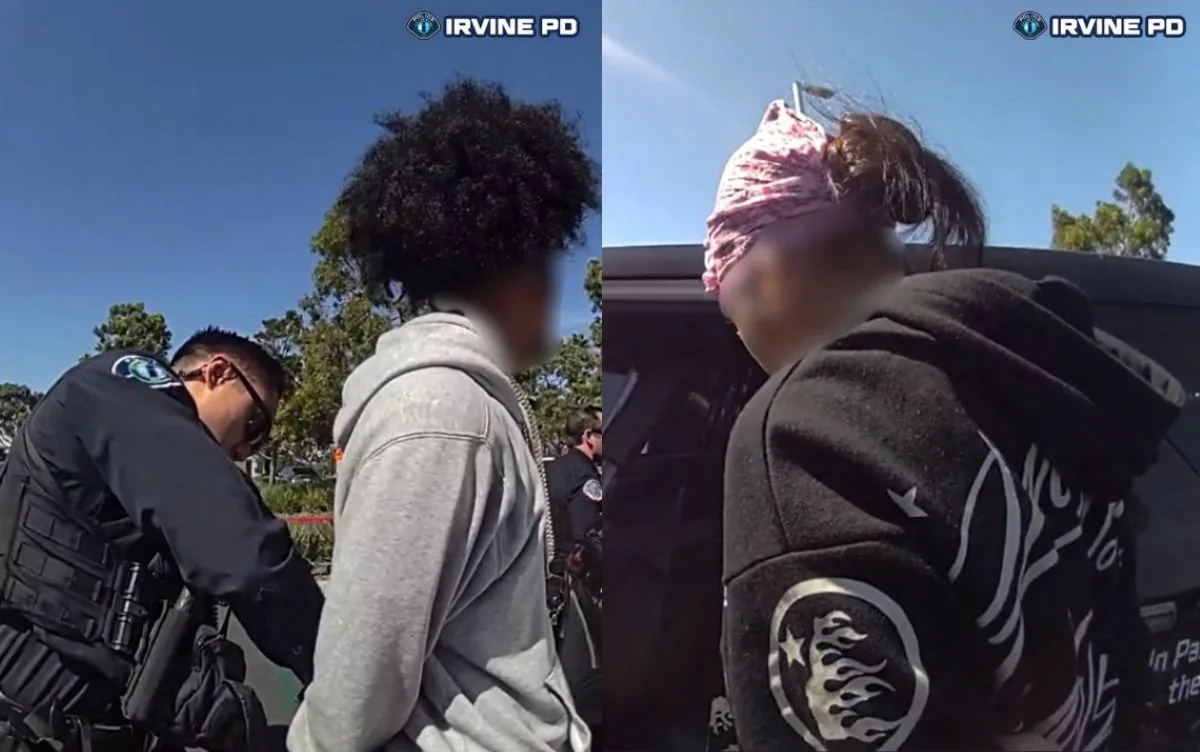
The Irvine Police Department successfully dismantled an organized retail theft operation targeting high-end activewear, showing once again that bringing crime into Orange County is a fast track to jail.

Following up on an active investigation regarding a multi-suspect flash-and-grab heist where thieves fled in a Tesla, Irvine PD’s Crime Impact Unit initially arrested two individuals in Carson and recovered a portion of the stolen property.

However, the enforcement didn’t stop there. Officers tracking the remaining stolen merchandise discovered the high-end apparel listed for sale on the marketplace app OfferUp.
Spectrum officers set up a sting operation in Irvine, intercepting and detaining two additional suspects attempting to flip the stolen loot.
The individuals, identified as 18-year-old Alina Liarone Delacruz and 19-year-old Kanoa Kaholi, both residents of Long Beach, were arrested and booked for grand theft. Investigators estimate this specific ring may be responsible for plundering more than $10,000 in premium merchandise across multiple Lululemon retail storefronts spanning Los Angeles and Orange County.
The Heavy Legal Toll: Criminal Charges and Severe Penalties
The suspects face aggressive prosecution under California Penal Code 487(a), which classifies any theft of property exceeding a value of $950 as grand theft. In California, grand theft functions as a “wobbler” offense, giving prosecutors the discretion to charge it as either a misdemeanor or a felony based on the suspect’s prior record and the severity of the operation. Because this case features an organized group orchestrating multi-jurisdictional retail theft exceeding $10,000, it is heavily positioned for felony prosecution.
A felony grand theft conviction carries severe statutory consequences, including a sentencing range of 16 months, two years, or up to three consecutive years in California State prison. Beyond incarceration, convicted individuals face mandatory formal or supervised probation, community labor, and steep financial restitution orders to repay retailers for the exact value of the stolen assets. State law also allows for maximum court-ordered fines reaching up to $10,000 per violation. Furthermore, because these actions align with coordinated “flash mob” style retail hits, prosecutors can file specialized organized retail theft charges, which strictly elevate orchestrated shoplifting sprees into severe felony brackets with enhanced containment penalties.
Crossing the County Line: Why LA Criminals Flop in Orange County
A persistent trend shows crews originating from Los Angeles County traveling south across the county line to target affluent commercial hubs like South Coast Plaza and the Irvine Spectrum. Many retail theft rings operate under the flawed assumption that suburban shopping centers feature less dense law enforcement coverage or present easier escape routes back to major LA highway corridors. This logistical calculation has repeatedly proven to be a critical misjudgment.
Orange County maintains a distinct law enforcement ecosystem heavily supported by proactive, specialized units like the Irvine Police Department Crime Impact Team. Unlike neighboring jurisdictions that have struggled with backlogged caseloads, Orange County District Attorney Todd Spitzer enforces an explicit, zero-tolerance policy against organized retail rings. The District Attorney’s office aggressively pursues maximum felony sentencing, rejects lenient plea agreements for serial retail thieves, and routinely utilizes multi-agency data networks to track regional theft crews. The swift deployment from digital tracking on OfferUp to physical arrest demonstrates that Orange County agencies possess both the tactical resources and the political will to systematically hunt down out-of-town offenders.
Why Lululemon and Luxury Athleisure Stores are Prime Targets
Lululemon locations have increasingly become primary focal points for organized shoplifting crews nationwide. Retail loss prevention experts highlight that premium athleisure garments perfectly fit the specific parameters thieves look for: high market value, minimal bulk, and immediate liquidity. Individual leggings, jackets, and hoodies routinely retail for well over $100 apiece, meaning a single thief can effortlessly grab an armful of apparel worth thousands of dollars in a matter of seconds. [1, 2, 3, 4, 5, 6]
Furthermore, high-end athletic apparel lacks the complex digital tracking serial numbers found on consumer electronics, making it incredibly easy to conceal, transport, and distribute. Brand popularity guarantees steady, high-volume demand on secondary peer-to-peer markets. Fenced inventory is rapidly funneled through digital resale networks, online marketplaces like OfferUp, or underground flea markets, where items are flipped for fast cash to unsuspecting buyers looking for a discount.
Coordinated Defenses: Retail Theft Data and Security Steps for Merchants
Organized retail crime remains an expansive economic challenge across the state. Recent FBI and state data shows that California recorded over 132,000 shoplifting incidents in a single tracking year, establishing it as a primary focus area for statewide task forces. While aggressive crackdowns by the California Highway Patrol’s Organized Retail Crime Task Force have resulted in thousands of regional arrests and recovered hundreds of millions in stolen property, local merchants must actively implement strict preventative measures to shield their storefronts. Businesses can significantly reduce their vulnerability by deploying focused asset-protection tactics:
- Tether Premium Inventory: Use high-strength security cables and electronic article surveillance tags on premium outerwear, high-demand racks, and apparel lines valued over $100.
- Transition Store Layouts: Reposition high-value displays away from front entrance thresholds and move them deep into the store interior to eliminate rapid “grab-and-dash” exit paths.
- Employ Dedicated Loss Prevention: Retain visible, dedicated floor security personnel or coordinate with local police departments to maintain an active, deterrent presence during peak operating hours.
- Monitor Resale Platforms: Actively audit local regional listings on platforms like OfferUp, Facebook Marketplace, and eBay for sudden influxes of bulk, new-with-tags brand merchandise to alert local law enforcement.
- Partner with Regional Task Forces: Ensure in-store security teams instantly feed surveillance video, license plates, and suspect descriptions directly to local police databases to compile cross-county patterns