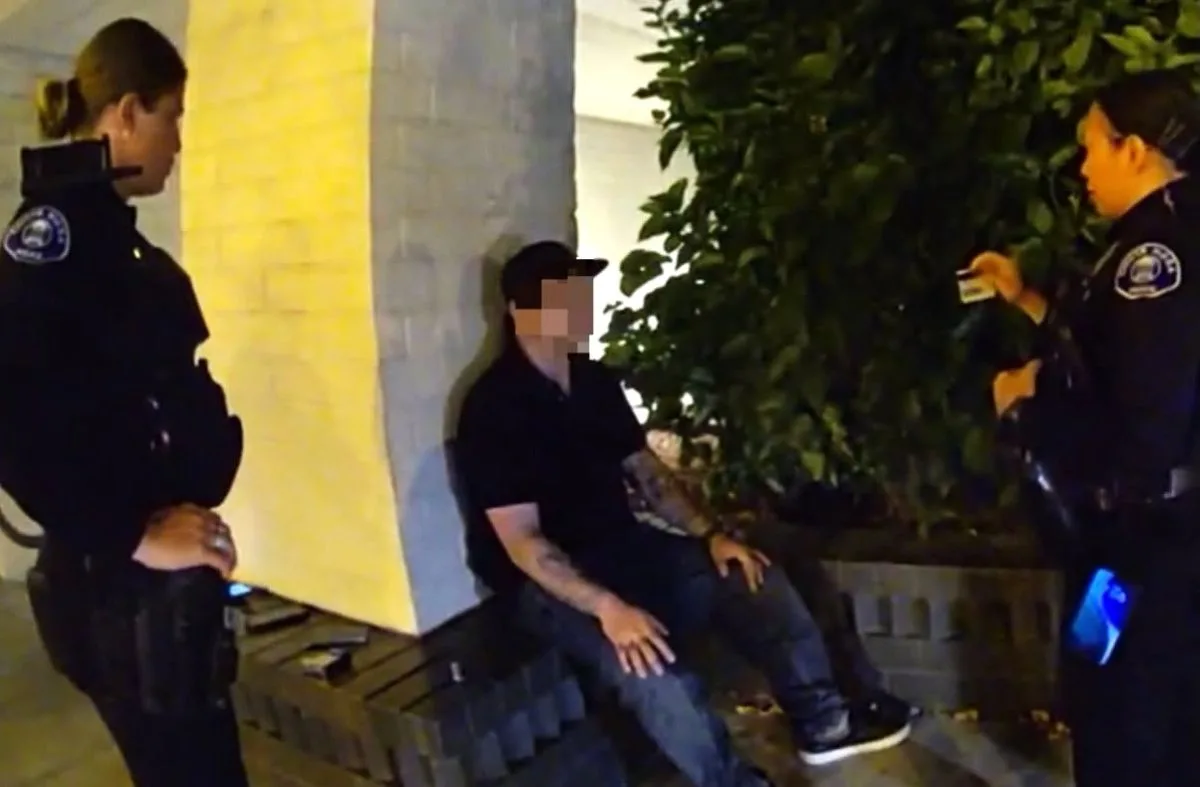
A suspected member of a group linked to repeated gift card fraud incidents at South Coast Plaza was arrested after allegedly attempting to use a fake California identification card to access a customer store account and purchase high-end luxury shoes, according to the Costa Mesa Police Department.

Police said the suspect entered one of the luxury retailers at the shopping center and attempted to gain access to an existing store account. When officers contacted the individual and requested identification, the suspect allegedly presented the same fake California ID to officers as proof of identity. The suspect was then arrested.
Costa Mesa police noted that fake identification documents are frequently encountered in organized retail theft investigations and credited the arrest to cooperation between store security personnel and responding officers.
How This Alleged Scheme Works
While police have not released the suspect’s identity or specific charges, the incident appears consistent with a growing form of organized retail fraud that combines identity theft, account takeover, gift card fraud, and forged identification documents.
In many cases, criminals obtain personal information through data breaches, stolen mail, phishing scams, hacked online accounts, or purchases on illicit marketplaces. The criminals then create counterfeit driver’s licenses featuring their photograph but the victim’s personal information.
The fake identification is allegedly used to:
- Access store credit accounts
- Take control of loyalty program accounts
- Redeem stolen gift card balances
- Make fraudulent purchases
- Obtain merchandise that can be resold online
Luxury footwear, handbags, electronics, cosmetics, and designer clothing are particularly attractive targets because they can be quickly sold for cash.
Federal and retail industry experts have warned that gift card fraud has become a favorite tool of organized retail crime groups because gift cards are easily converted into merchandise and are difficult to trace once redeemed. The National Retail Federation recently reported rising levels of gift card fraud and other external fraud schemes tied to organized retail crime
What Charges Could the Suspect Face?
Authorities have not announced formal charges, but based on the allegations described by police, prosecutors could potentially consider offenses such as:
Possession or Use of a Counterfeit Identification Card
California Penal Code §470b makes it a crime to possess or display a fake driver’s license or identification card with intent to facilitate fraud or forgery. The offense can be prosecuted as either a misdemeanor or felony depending on the circumstances.
Attempted Identity Theft
If investigators determine the suspect was attempting to access an account belonging to another person, identity theft-related charges could be considered.
Attempted Grand Theft or Fraud
If the suspect sought to obtain expensive luxury merchandise through deception, theft or fraud-related charges could also be alleged.
Presenting False Identification to Police
Additional charges may be considered when an individual knowingly provides false identification information to law enforcement during an investigation.
Actual charges will depend on the evidence uncovered by investigators and the Orange County District Attorney’s Office.
How Much Time Could a Conviction Bring?
If convicted of felony fake ID offenses alone, California law allows potential sentences of up to three years in custody, along with substantial fines.
However, if prosecutors also pursue identity theft, conspiracy, organized retail theft, or grand theft-related charges, potential penalties could increase significantly.
As with all criminal cases, the suspect is presumed innocent unless proven guilty in court.
A Growing National Problem
Retail theft has evolved beyond traditional shoplifting.
The National Retail Federation reported that retailers experienced a 90% increase in dollar losses from shoplifting between 2019 and 2023, while organized criminal groups increasingly rely on fraud, account takeovers, gift card scams, and counterfeit identities.
According to the Federal Trade Commission, consumers filed more than 41,000 reports involving gift card-related fraud in 2024, with losses exceeding $200 million.
The Congressional Research Service has also noted that organized retail crime frequently involves coordinated theft and fraud operations designed to convert stolen identities, gift cards, and merchandise into cash through online marketplaces and other fencing operations.
The Hidden Cost
Determining the precise cost of gift card and identity-based retail fraud is difficult because many incidents go unreported.
However, retail industry surveys estimate total U.S. retail shrink losses exceeded $112 billion annually in recent years. While not all of those losses involve organized retail crime, fraud schemes such as account takeovers, counterfeit IDs, gift card fraud, and organized theft rings represent a significant portion of those losses.
Ultimately, the costs are borne by:
- Retail businesses through lost inventory and investigations
- Consumers through higher prices
- Insurance carriers through increased claims
- Law enforcement agencies through investigation and prosecution expenses
Tips for Retailers
Loss prevention professionals recommend several steps to reduce the risk of identity-based retail fraud:
- Verify government-issued identification using scanners or authentication tools.
- Require secondary verification before granting access to store credit accounts.
- Flag large purchases involving recently updated customer information.
- Train employees to recognize counterfeit IDs.
- Monitor unusual gift card redemption patterns.
- Use two-factor authentication for customer accounts.
- Share intelligence with neighboring retailers and mall security.
- Report suspicious behavior immediately to law enforcement.
A Reminder for Shoppers
Consumers should regularly monitor store credit accounts, loyalty programs, and gift card balances for unusual activity. Promptly reporting suspicious transactions can help prevent larger losses and aid criminal investigations.
In this case, police say a combination of alert store security personnel and proactive officer response prevented what may have become another costly organized retail fraud incident at one of Orange County’s premier shopping destinations.