A suspected drunk driver is facing criminal charges after Irvine police found him unconscious behind the wheel of a vehicle that sat motionless through multiple traffic signal cycles at one of the city’s busiest intersections.

According to the Irvine Police Department, a police sergeant near Jamboree Road and Barranca Parkway, irvine clast weekend noticed a vehicle that had failed to move despite several green lights.
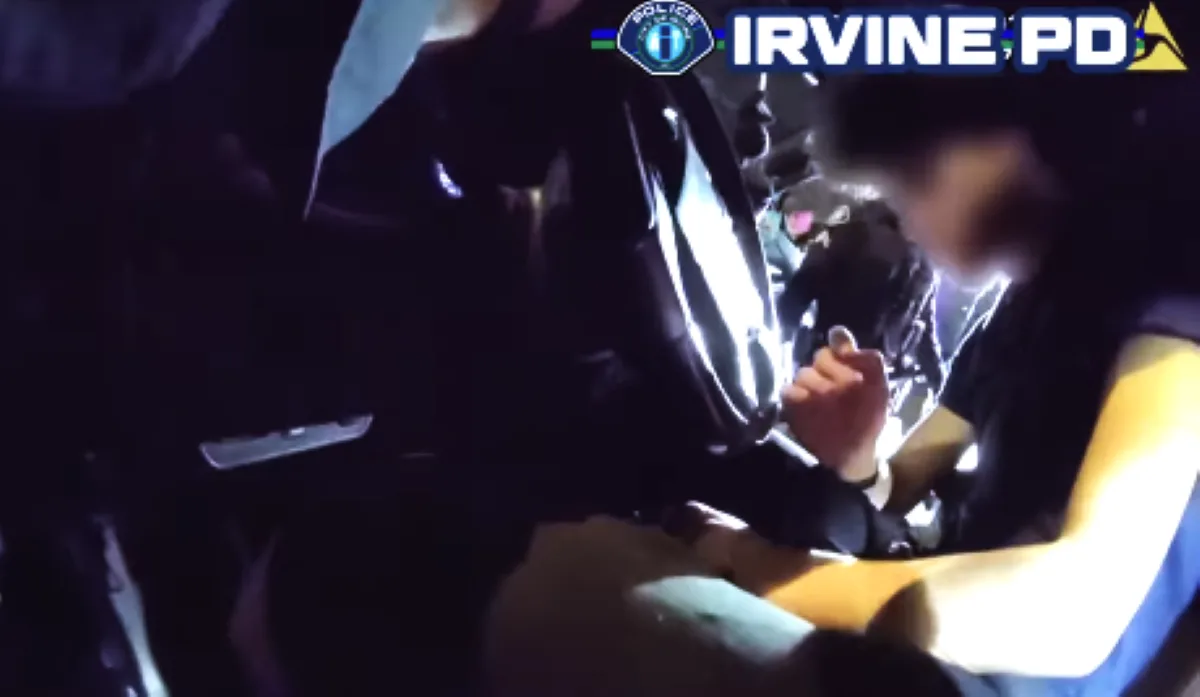
Officers contacted the driver and discovered he was passed out behind the wheel with the vehicle still in drive. After repeated attempts to wake him failed, officers boxed in the car to prevent it from moving and broke a passenger-side window to safely reach him.
The driver, identified only as a 21-year-old man from Tustin, was arrested on suspicion of driving under the influence.
The incident highlights a dangerous and surprisingly common problem on American roadways: impaired or incapacitated drivers found asleep, unconscious, or passed out behind the wheel.
Passed-Out Drivers Are a Serious Traffic Safety Threat
Drivers who are unconscious at traffic lights are frequently found to be under the influence of alcohol, drugs, or a combination of substances. In other cases, extreme fatigue may be the primary factor.
Federal traffic safety officials estimate that drowsy driving alone contributed to approximately 91,000 police-reported crashes, nearly 800 deaths, and about 50,000 injuries annually, although experts believe the actual number is significantly higher.
Research cited by the National Sleep Foundation and the AAA Foundation for Traffic Safety suggests sleepiness may play a role in more than 300,000 crashes, over 100,000 injuries, and as many as 6,400 deaths nationwide each year. The organization warns that driving while severely fatigued can impair judgment and reaction times similarly to alcohol impairment.
What makes incidents like the Irvine case particularly alarming is that a vehicle left in drive can suddenly accelerate if the driver’s foot slips from the brake pedal. Even while stopped at an intersection, an unconscious driver can create an immediate risk to pedestrians, bicyclists, and surrounding motorists.
Potential Criminal Consequences
California prosecutors take DUI cases involving unconscious or incapacitated drivers seriously because the circumstances often suggest a high level of impairment.
For a first-time California DUI arrest involving alcohol and no injuries, potential consequences can include:
- Criminal fines and penalty assessments that can total well over $1,500.
- Three to five years of probation.
- Mandatory DUI education classes.
- Installation of an ignition interlock device in many cases.
- Driver’s license suspension or restriction.
- Possible jail time depending on the circumstances and the driver’s record.
In addition to criminal penalties, the California DMV may impose an administrative license suspension independent of the court case. Drivers arrested with a blood-alcohol concentration of 0.08% or higher can face a four-month DMV suspension for a first offense.
Had the vehicle rolled forward and caused a collision, the charges and penalties could have escalated dramatically, potentially including felony DUI allegations if serious injuries resulted.
The High Cost of Impound and Recovery
Drivers arrested for DUI often face substantial financial consequences beyond court fines.
Typical costs may include:
- Towing fees.
- Daily vehicle storage charges.
- Administrative release fees.
- Court costs.
- DUI program enrollment fees.
- Ignition interlock device installation and monitoring costs.
- Higher insurance premiums.
Depending on how long a vehicle remains in storage, impound-related expenses can easily climb into hundreds or even thousands of dollars before the vehicle is released.
Insurance Consequences Can Last Years
The financial impact often continues long after a DUI case is resolved.
Most insurance carriers view DUI offenders as high-risk drivers. Following a conviction, motorists commonly face:
- Significant premium increases.
- Loss of preferred-driver discounts.
- SR-22 insurance filing requirements.
- Possible nonrenewal or cancellation by their current insurer.
For many California drivers, the increase in insurance costs over several years can exceed the amount paid in court fines and fees.
A DUI Conviction Can Also Affect Employment
Beyond the criminal penalties, a DUI arrest can have significant career consequences. Many employers conduct background checks, and a DUI conviction may raise concerns for positions that involve driving, operating equipment, public safety responsibilities, security clearances, or professional licensing.
Potential employment impacts include:
- Difficulty obtaining jobs that require driving company vehicles.
- Loss of commercial driving opportunities.
- Disciplinary action from employers with drug- and alcohol-free workplace policies.
- Challenges obtaining certain professional licenses or certifications.
- Reduced competitiveness when applying for new jobs.
For younger drivers early in their careers, the financial consequences of a DUI often extend far beyond court fines and insurance increases. Lost employment opportunities, missed promotions, and restrictions on driving privileges can affect earning potential for years after a conviction.
A Close Call in Irvine
Fortunately, the Irvine incident ended without a crash, injuries, or deaths. Officers were able to secure the vehicle before it moved and safely remove the unconscious driver from behind the wheel.
The case serves as a reminder that impaired drivers often come to police attention not only after a collision, but sometimes because alert officers notice unusual behavior such as sitting through multiple green lights, driving erratically, or stopping in traffic lanes.
As Irvine police noted, planning ahead with a designated driver, rideshare service, taxi, or sober friend remains far less expensive and far safer than risking a DUI arrest or a potentially deadly crash. A green light means go, but for one Tustin motorist, it became an unmistakable sign that it was time to pull him off the road before tragedy struck.