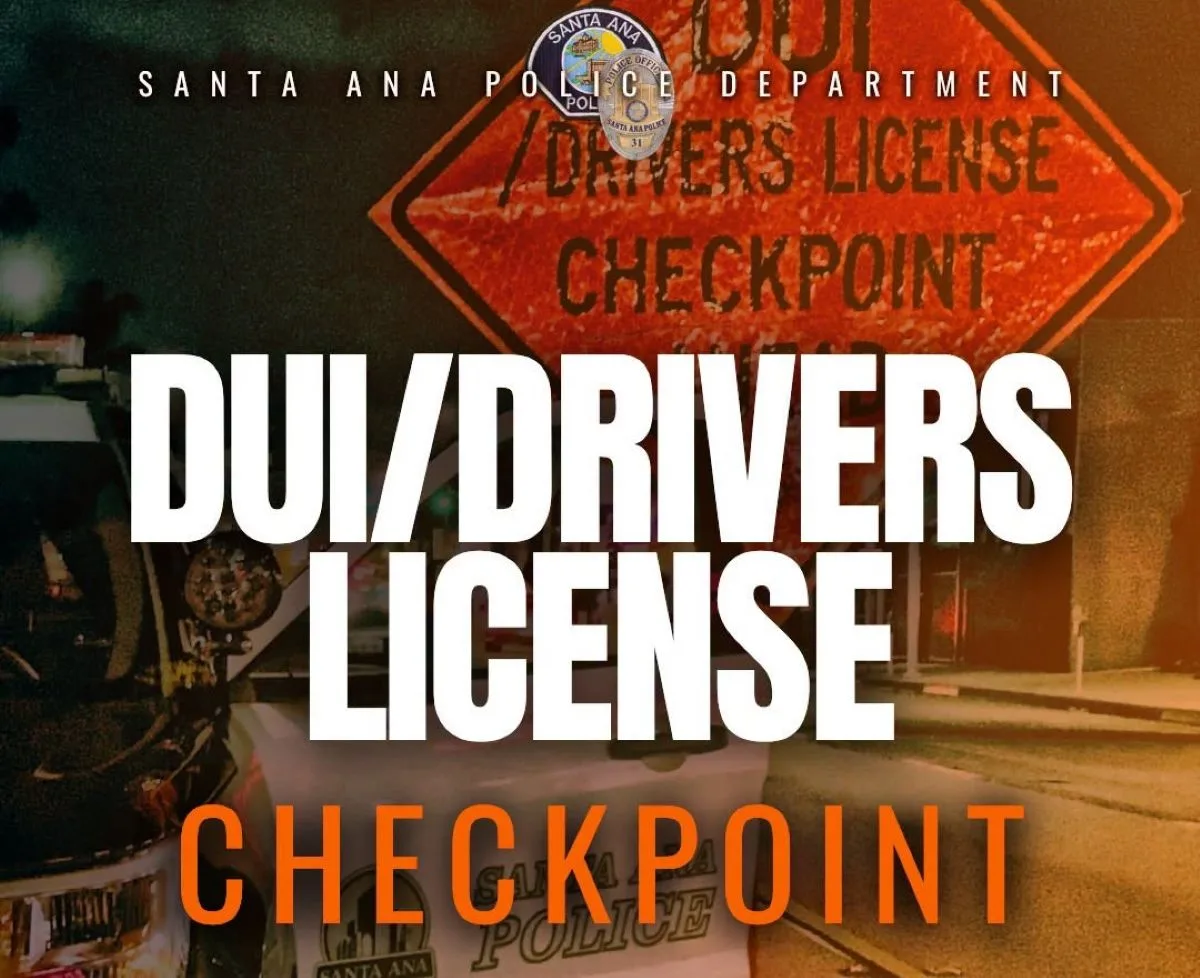
The Santa Ana Police Department will conduct a driving under the influence (DUI) and driver’s license checkpoint on Friday, August 7, 2026. According to traffic officials, the enforcement operation will begin at 6:00 p.m. and conclude at 1:00 a.m. the following morning. While law enforcement is withholding the precise operational location, these sites are meticulously selected based on collision metrics and historical data regarding impaired driving accidents.

Data indicates that driving under the influence remains an urgent public health crisis in the region. According to local statistical reviews, alcohol-impaired drivers are responsible for roughly 30% to 32% of all fatal traffic accidents in Orange County, California. This alarming rate closely tracks statewide and national averages, proving that getting behind the wheel while intoxicated carries devastating, life-altering risks. The upcoming operation is designed as a direct deterrent, funded by a public safety grant from the California Office of Traffic Safety via the National Highway Traffic Safety Administration.
Frequently Targeted Santa Ana Checkpoint Locations
Although the exact spot for the Friday deployment has not been officially revealed, historical data from outlets tracking regional enforcement, including New Santa Ana, points to a distinct pattern of high-traffic locations frequently utilized by the department. Checkpoints are typically set up near major local thoroughfares, popular nightlife zones, and high-collision intersections. Frequently utilized areas include:
- West Warner Avenue and South Raitt Street
- 500 block of West Warner Avenue
- North Broadway and West First Street
- MacArthur Boulevard and Birch Street corridor
- The 3700-block of West Chapman Avenue
Understanding DUI and CDL Charges at the Checkpoint
Drivers rolling through a Santa Ana checkpoint are screened for a variety of offenses. The Santa Ana Police Department emphasizes that impairment is not strictly defined by alcohol consumption. Driving under the influence of legally acquired prescription medications, over-the-counter drugs, or recreational cannabis remains completely illegal if it compromises operational faculties. Motorists can face several serious misdemeanor or felony charges under the California Vehicle Code (CVC):
- CVC 23152(a): Driving under the influence of alcohol.
- CVC 23152(b): Driving with a Blood Alcohol Concentration (BAC) of 0.08% or higher.
- CVC 23152(f): Driving under the influence of drugs (DUID), including marijuana or prescription pills.
- CVC 12500(a): Driving an automobile without a valid driver’s license.
- CVC 14601.1(a): Operating a vehicle with a suspended or revoked driver’s license.
Commercial Driver’s License (CDL) holders are held to a much stricter legal threshold. Under California law, a commercial operator faces specialized, career-ending charges at a checkpoint if any impairment is detected:
- CVC 23152(d): Driving a commercial vehicle with a strict BAC limit of 0.04% or higher.
- Immediate Out-of-Service Order: A commercial driver caught with a BAC of 0.01% or higher can be sidelined immediately for 24 hours.
- First-Time CDL Disqualification: A first-offense DUI conviction results in a mandatory one-year suspension of all commercial driving privileges, regardless of whether the violation occurred in a personal car or a commercial rig.
- Lifetime CDL Disqualification: A second DUI conviction triggers a permanent, lifetime ban from commercial operating privileges.
Getting Popped for Drugs: The Reality of Cannabis and Prescription DUIs
Many motorists mistakenly believe checkpoints only screen for alcohol, but California law enforces strict regulations against Driving Under the Influence of Drugs (DUID). At a checkpoint, specially trained Drug Recognition Experts (DRE) evaluate drivers exhibiting physical signs of cognitive or motor impairment. You can easily face arrest if prescription medications, over-the-counter sleep aids, allergy drugs, or illicit narcotics impact your driving mechanics.
When it comes to marijuana, there is no specific legal limit or baseline amount that automatically triggers a DUI in California. Unlike alcohol’s rigid 0.08% BAC threshold, cannabis affects everyone differently, meaning a driver can be arrested for any amount of marijuana if it actively compromises their ability to operate a vehicle safely. Even if you only consumed a small dose, or if you hold a valid medicinal marijuana recommendation, you can still be convicted under CVC 23152(f) based purely on officer observations, failed field sobriety tests, or subsequent blood tests proving active THC impairment. Furthermore, drivers should note CVC 23222(b), which makes it illegal to possess an open, unsealed container of cannabis while driving.
The Financial Reality: Out-of-Pocket Costs and Insurance Hikes
Navigating a first-time DUI charge is a financial nightmare that averages roughly $13,500 in fines, legal fees, court assessments, and penalties, alongside an immediate administrative license suspension. However, the hidden long-term economic blow arrives through your auto insurance premiums.
A DUI conviction instantly brands a driver as high-risk, triggering an extreme surge in auto insurance rates. In California, a DUI conviction causes insurance premiums to spike by an average of 100% to 150% annually. Furthermore, state regulations mandate that insurance providers completely strip away your “Good Driver” discount for a full 10 years following the date of the conviction. To legally regain your driving privileges, you will be required to file an SR-22 financial responsibility certificate through your insurer, which acts as a permanent red flag to future carriers and blocks access to affordable premium tiers. [1]
How to Avoid Trouble: Relying on Rideshares and Safe Practices
The only absolute way to avoid the legal and financial fallout of a DUI checkpoint is to ensure you never drive while impaired. Public safety experts recommend taking simple, proactive steps before you ever take your first sip of alcohol or consume an impairing medication:
- Order an Uber or Lyft: If your plans involve drinking or using medicinal products, budget for a rideshare app. Rallies, dinners, or nights out in Downtown Santa Ana are heavily covered by local rideshare networks. A $30 Uber fare is a microscopic fraction of a $13,500 legal battle.
- Utilize Designated Sober Drivers: Pair up with a trusted companion who pledges to stay completely sober for the evening.
- Understand Checkpoint Rights: It is completely legal to safely turn around and avoid a DUI checkpoint as long as you do so without breaking any active traffic laws, such as making an illegal U-turn or crossing a solid double line. However, choosing to bypass a checkpoint safely does not prevent officers from stopping you if they notice equipment violations or separate erratic driving behaviors.