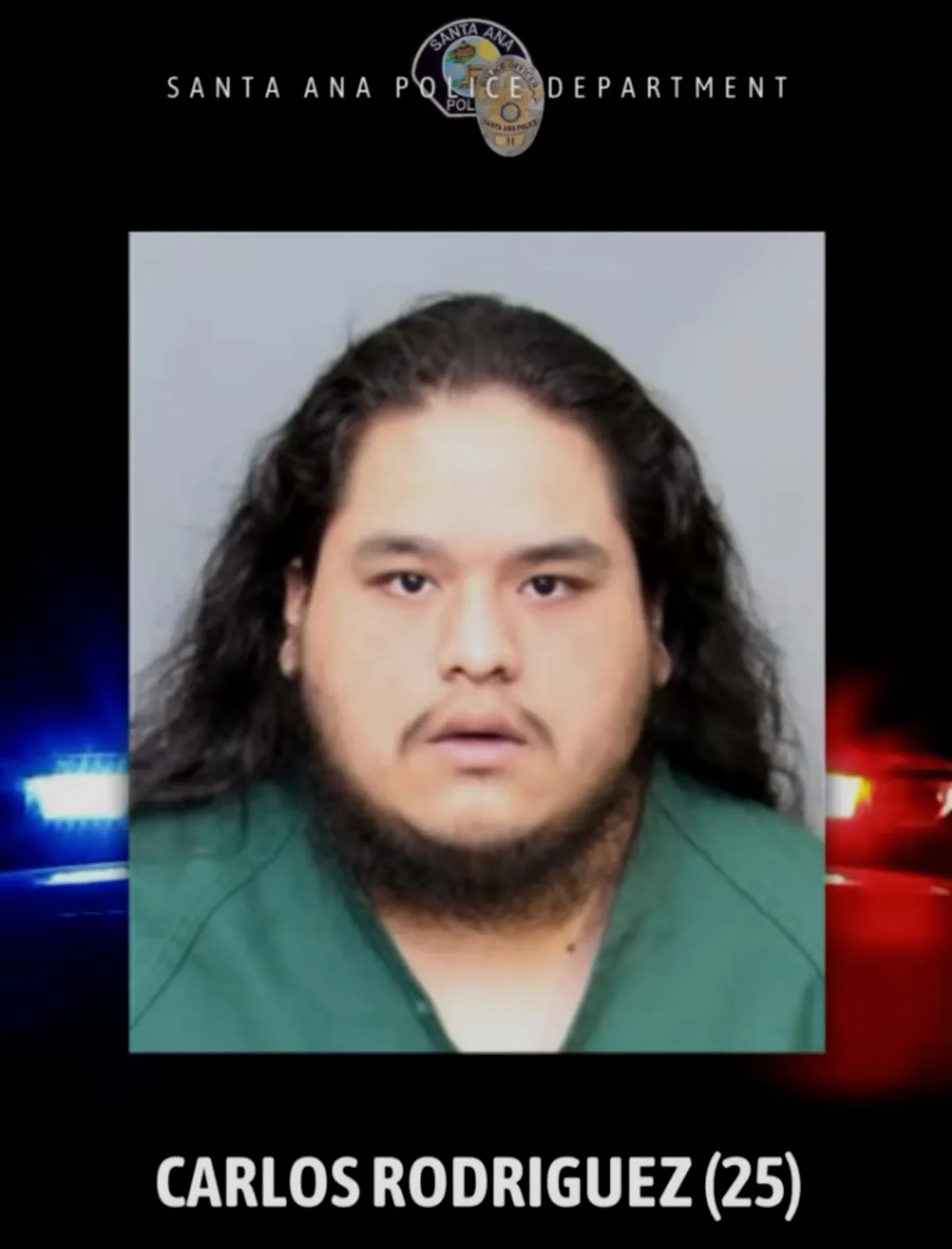
SANTA ANA, Calif. (April 22, 2026) — A 25-year-old man was arrested at his home for offering a child for lewd services, according to the SAPD.

An investigator from the Santa Ana Police Department’s Internet Crimes Against Children (ICAC) Task Force learned that Carlos Rodriguez (25) of Santa Ana was soliciting adult males to engage in lewd acts with his juvenile niece.
No sexual acts occurred, and his online activity was immediately reported to SAPD.
This morning, Special Crimes Detectives served a search warrant at Rodriguez’ residence in the 1300 block of S. Standard Avenue.
During the search, multiple electronic devices were located and seized.
Rodriguez was arrested and booked at the Santa Ana Jail for Penal Code §266j — Offering a Child for Purposes of Lewd and Lascivious Acts.
The Santa Ana Police Department is a proud member of the Los Angeles Regional ICAC Task Force, which is dedicated to the investigation and prosecution of individuals involved in the abuse and exploitation of children via the internet. To learn more, please visit www.icactaskforce.org.
Anyone with information regarding this case is asked to contact the Santa Ana Police Department ICAC Task Force at sapdicac@santa-ana.org.
Potential Criminal Penalties Faced by the Suspect
Under California Penal Code § 266j, this offense is classified as a serious felony. If convicted, Rodriguez faces the following primary penalties:
- State Prison Sentence: A term of three, six, or eight years in California state prison.
- Monetary Fines: A fine of up to $15,000.
- Mandatory Sex Offender Registration: Lifelong registration as a sex offender under California Penal Code § 290.
- No Probation Eligibility: Convictions under PC § 266j typically preclude a probation sentence, meaning any ordered incarceration must be served in state prison rather than a local county jail.
Additional Legal Consequences
Beyond direct sentencing, a conviction for this type of offense carries severe secondary impacts:
- Loss of Civil Rights: This includes a lifelong ban on owning or possessing firearms.
- Professional Impacts: Potential loss of professional licenses and extreme difficulty finding employment due to public registry status.
- Victim Restitution: The court may order payment for the victim’s medical or psychological treatment.
- Immigration Status: If the individual is not a U.S. citizen, such offenses are often classified as “aggravated felonies,” which can lead to automatic deportation.
What a lo life sicko, offering your own underage niece to strange men… Ugh, how disgusting of him