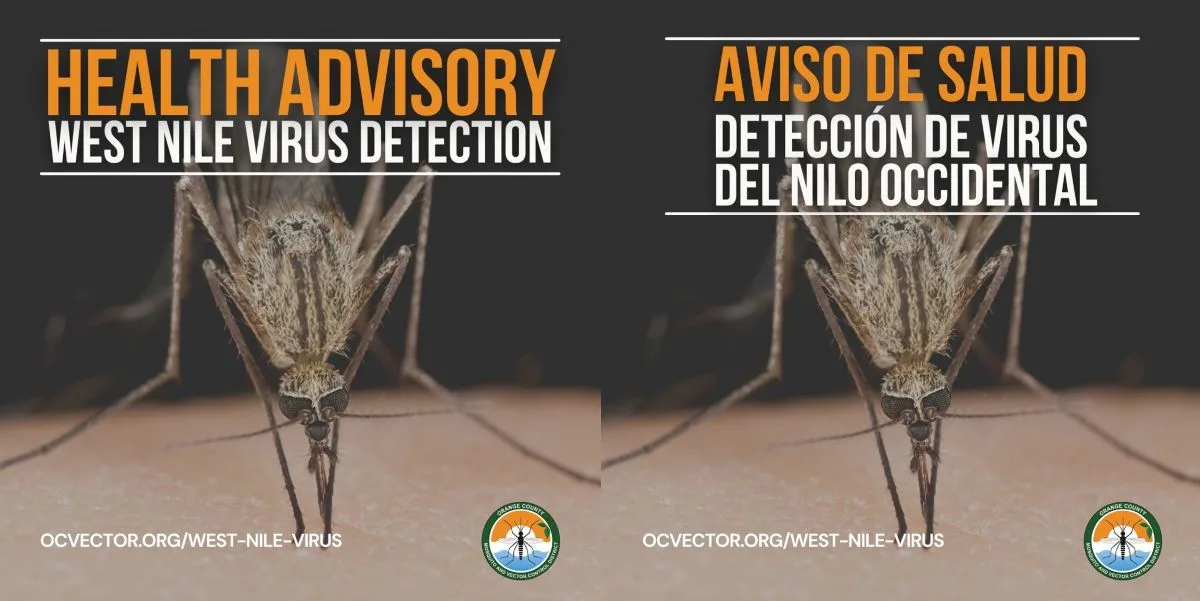
The Orange County Mosquito and Vector Control District (OCMVCD) has confirmed that mosquito samples collected in Newport Beach have tested positive for West Nile virus (WNV). This marks the first local detection of the virus this season, signaling that WNV is officially active in local mosquito populations and the conditions for transmission to humans are present. The positive samples were found in an area bounded by Campus Drive, Jamboree Road, State Route 73, and John Wayne Airport. While there are zero human cases reported in Orange County so far this season, health officials warn that this early summer detection matches regional activity and demands immediate community action.

What Does “Dawn and Dusk” Activity Actually Mean?
When vector control districts warn that mosquitoes are most active during dawn and dusk, they are referring to the specific feeding behaviors of Culex mosquitoes, the primary carriers of WNV. Unlike aggressive daytime biters, Culex mosquitoes prefer the low-light, high-humidity hours of early morning and early evening. If you are out running, walking your dog, or gardening as the sun rises or sets, you are entering peak feeding time. This is when you are at the highest risk for a virus-carrying bite.
West Nile Virus: Symptoms and Health Consequences
Most people bitten by an infected mosquito will not realize it, but the virus can still pose severe health risks. Approximately 8 out of 10 people infected will show no symptoms at all. About 1 in 5 infected individuals will develop a febrile illness known as West Nile fever. Symptoms include fever, headache, body aches, nausea, vomiting, joint pain, or a skin rash. While most recover completely, profound fatigue and weakness can plague patients for weeks or months. In rare, severe instances affecting less than 1% of cases, the virus attacks the central nervous system, causing conditions like encephalitis or meningitis. Symptoms include a high fever, neck stiffness, stupor, disorientation, tremors, convulsions, muscle weakness, and permanent paralysis.
California Fatality Rates
West Nile virus is the most common and serious vector-borne disease in California. According to data tracked by the California Department of Public Health, there have been over 8,000 human cases and more than 400 deaths reported in the state since it first arrived in 2003. While the overall risk of death across all infections is low, the stakes change dramatically if the virus becomes neuroinvasive. About 1 in 10 people (10%) who develop severe WNV disease affecting the brain and nervous system die from the complications. Adults over the age of 50 and individuals with weakened immune systems face the highest risk of severe illness and death. There are currently no human vaccines or specific treatments available for WNV.
How to Prevent Mosquito Bites and Avoid WNV
Because there is no cure, prevention remains your best line of defense. You can drastically reduce your risk by following a strict “Dump and Defend” protocol. First, look for and dump standing water by inspecting your property weekly. Mosquitoes can breed in as little water as a bottle cap, so empty, drain, or scrub out flowerpot saucers, buckets, tires, birdbaths, pet bowls, and clogged rain gutters at least once a week. Ensure backyard swimming pools and spas are fully chlorinated and operational, as stagnant “green” pools are major breeding hazards that should be reported to the OCMVCD. Second, defend yourself by applying an EPA-registered insect repellent containing active ingredients like DEET, picaridin, IR3535, or oil of lemon eucalyptus when spending time outdoors. If you are outdoors during peak dawn or dusk hours, wear loose-fitting, light-colored, long-sleeved shirts and pants to add a physical barrier against bites. Finally, secure your home by checking all window and door screens, and repair any tears or holes to prevent mosquitoes from sneaking inside your living spaces.