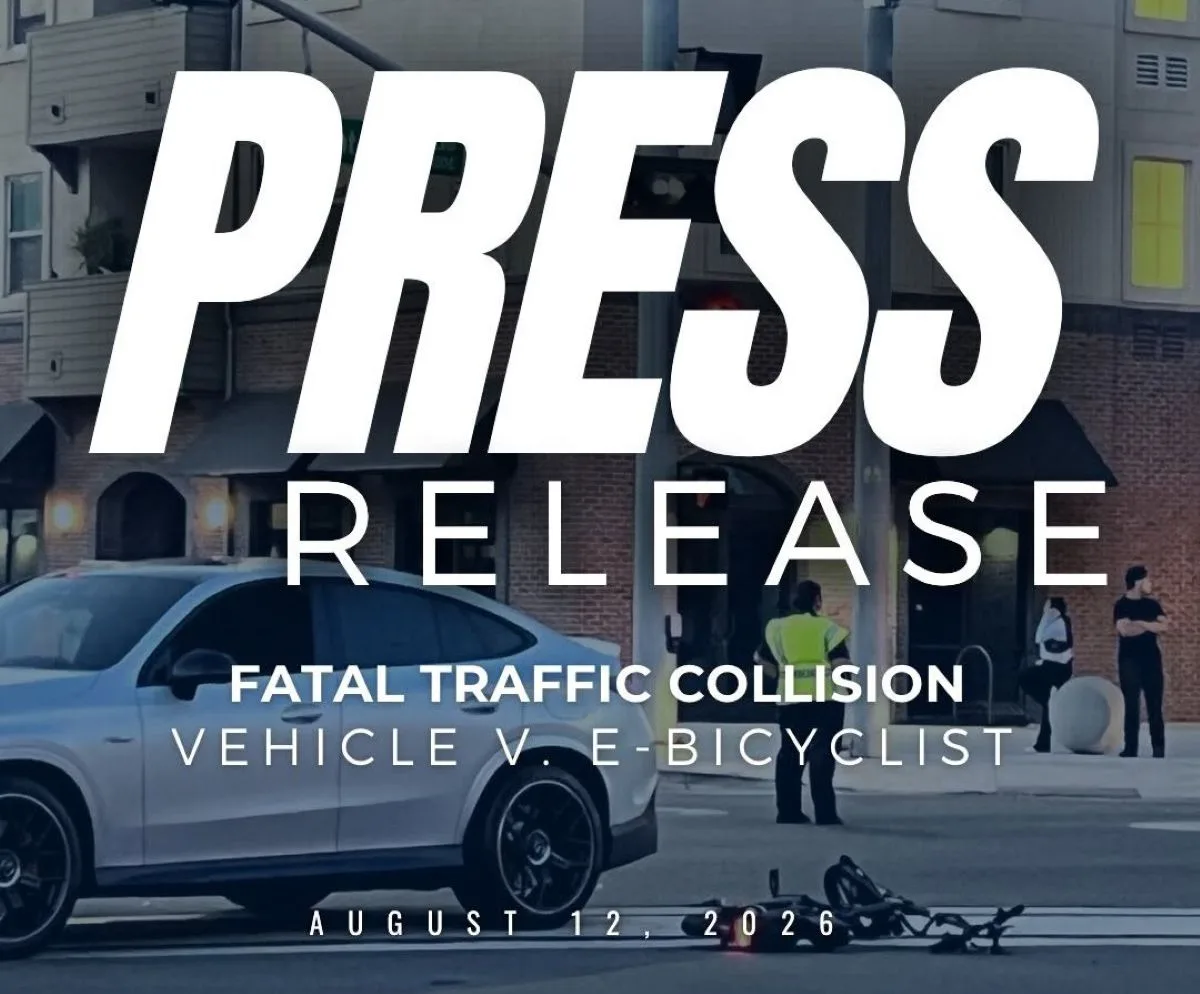
A devastating collision in Santa Ana has claimed the life of an e-bicyclist, putting a stark spotlight on the rapidly growing epidemic of electric bicycle accidents in Southern California.

The fatal incident occurred on August 11, 2026, at approximately 6:00 p.m. at the intersection of Santa Ana Boulevard and North Santiago Street.
According to a press release issued by the Santa Ana Police Department, 44-year-old local resident Robert Pilgrim was riding southbound on Santiago Street when he allegedly ran a red light. He was struck by a silver Mercedes-Benz SUV traveling westbound on Santa Ana Boulevard.
Officers and responders from the Orange County Fire Authority rushed Pilgrim to a local hospital, where he later succumbed to severe injuries.
No Criminal Charges but the Driver Faces Steep Insurance Cost Increase
The driver involved in the crash remained at the scene, fully cooperated with the Santa Ana Police Department’s Collision Investigation Unit, and showed no signs of impairment. Because preliminary evidence indicates the e-bike rider ran a red light, authorities have stated that the driver is not facing criminal charges.
However, escaping criminal liability does not mean the driver escapes financial consequences. In California, vehicle-versus-bicycle accidents carry significant car insurance implications, even when the motorist is not at fault. Insurance companies evaluate fault under comparative negligence rules. Because insurance claims involving fatalities are incredibly costly, the motorist will likely see a substantial increase in their auto insurance premiums. Furthermore, if a civil wrongful death lawsuit is filed by the cyclist’s estate, the driver’s insurance policy limits could be completely exhausted, leaving personal assets exposed if legal defense costs or settlements exceed their coverage.
The Rising Epidemic of E-Bike Crashes in Orange County
This fatal tragedy is not an isolated event; it occurred less than 24 hours after another violent e-bike collision at West Warner Avenue and South Raitt Street in Santa Ana, which left a rider critically injured after a hit-and-run. Local authorities describe the surge in electric bicycle incidents as reaching “epidemic levels” across Orange County.
Data highlights how severe the problem has become:
- ER Visits: E-bike and e-motorcycle injuries have recently become the number one reason children and young adults end up in Orange County emergency rooms.
- Explosive Injury Growth: Emergency centers like the Children’s Hospital of Orange County (CHOC) reported that pediatric e-bike injuries alone skyrocketed over 1,500% in recent years, shifting from rare coastal occurrences to daily crises in inland cities like Huntington Beach, Irvine, and Santa Ana.
- High-Speed Fatalities: Many recent severe crashes involve high-speed electric models traveling up to 35 mph, such as a recent tragic incident in nearby Garden Grove where a young teenager was thrown from an e-bike and killed after losing control on a median.
Critical Safety Tips to Prevent E-Bike Collisions
As standard bicycles are replaced by heavy, motorized e-bikes capable of high speeds, both motorists and riders must shift their habits to avoid devastating accidents.
Safety Tips for E-Bike Riders:
- Obey All Traffic Laws: Treat an e-bike like a vehicle. Stop fully at red lights, obey stop signs, and never ride against the flow of traffic.
- Wear a Helmet: Head trauma and skull fractures are the leading causes of e-bike fatalities; high-quality helmets save lives.
- Limit Speed in Intersections: Slow down when approaching intersections and crosswalks, even if you have the right of way, to ensure cross-traffic sees you.
- Stay Visible: Use front and rear lights, wear reflective clothing, and avoid riding in a driver’s blind spot.
Safety Tips for Motorists:
- Scan for Fast-Moving Bikes: E-bikes approach intersections much faster than traditional bicycles. Always double-check crosswalks and bike lanes before turning.
- Give Extra Clearance: Pass cyclists with a minimum of three feet of space, as e-bikes can sway unexpectedly due to heavy frame weights and wind.
- Expect the Unexpected: Be prepared for riders—especially teenagers or inexperienced commuters—who may abruptly change lanes or fail to stop at intersections.
Santa Ana Ponders New Automated Traffic Speed Cameras
In response to a rising tide of reckless driving and speed-related fatalities, local government leaders are taking defensive action. The Santa Ana City Council recently voted to petition state leaders to include Santa Ana in California’s automated speed camera pilot program. Established under Assembly Bill 645, this program allows selected cities to place automated speed systems along high-injury corridors and school zones.
If approved by state lawmakers, these automated cameras would use radar and laser technology to capture photographs of license plates belonging to vehicles traveling 11 miles per hour or more over the legal limit, automatically mailing citations to the registered owners. Local officials believe expanding traffic safety technology will directly improve road safety in Santa Ana by creating a powerful financial deterrent against speeding. Speed camera programs rolling out in neighboring Southern California cities like Long Beach have shown that automated enforcement forces drivers to slow down, visually hyper-focus on intersections, and remain alert—ultimately lowering crash rates and keeping vulnerable road users like pedestrians and e-bicyclists alive.