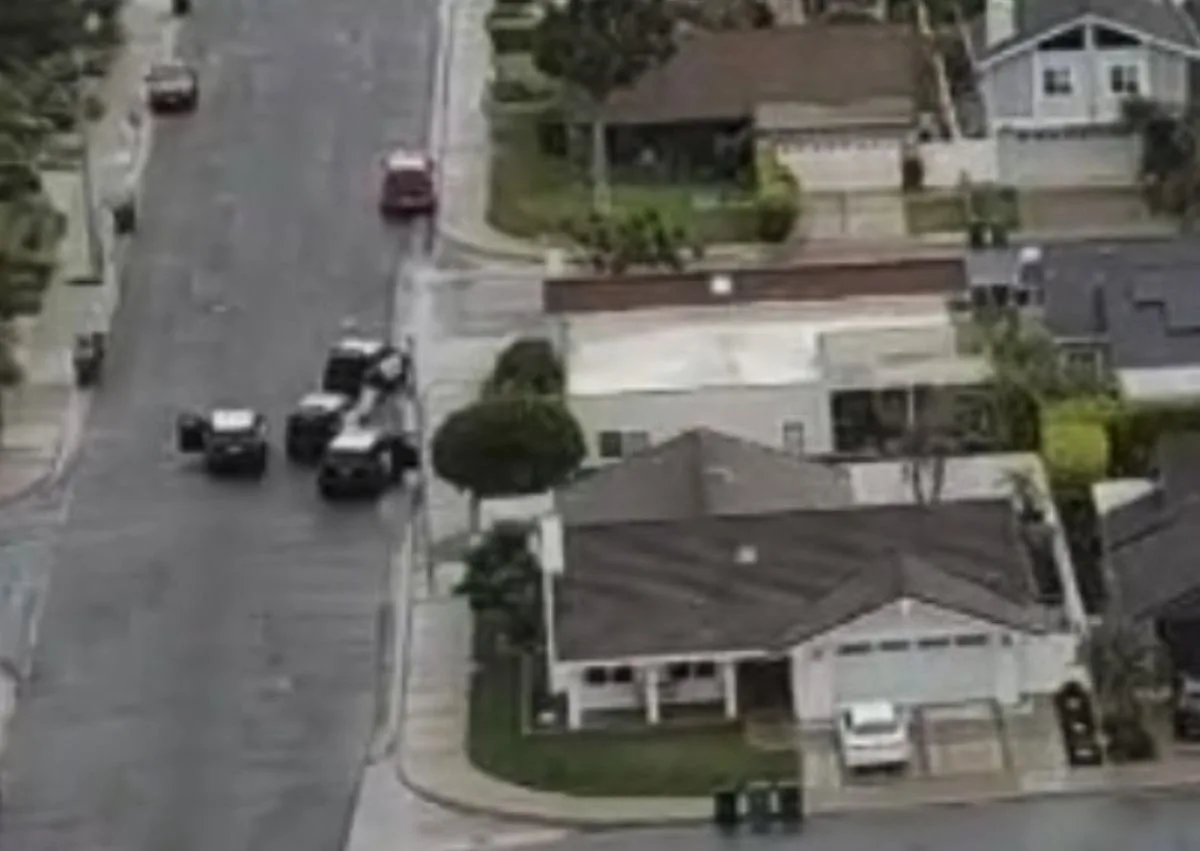
This morning at about 10 am, patrol officers responded to a residence on Red Jacket Circle following a report of shots fired, according to the Huntington Beach Police Department.
An unknown male stated he shot his mother and young sister. He said he was armed with a rifle and he was also suicidal.
Officers responded, formulated a tactical plan, and made contact at the residence. It was determined that no crime occurred; it was a “SWATTING” incident.
The residents were unaware and did not know why their residence was chosen. Detectives are following up.
Swatting is a dangerous and criminal hoax that prompts a large emergency response under false pretenses. These calls divert critical resources away from real emergencies, place innocent people and first responders at risk, and can lead to serious injury or worse.
Making a false emergency report is a crime and may result in felony charges. Please remember, if you see something, say something, but never make a hoax call.
Criminal Penalties
In California, making a false emergency report is primarily governed by Penal Code 148.3.
- Misdemeanor: For a standard false report that results in an emergency response, the perpetrator can face up to one year in county jail and a fine of up to $1,000.
- Felony: If the swatter knew or should have known that the response was likely to cause great bodily injury or death, and such injury or death actually occurs, the charge is elevated to a felony. This is punishable by 16 months to three years in state prison and fines up to $10,000.
- Enhanced Protections: Under SB 19, which took effect on January 1, 2026, California law has strengthened the ability to prosecute swatting by closing loopholes related to threatening specific individuals versus general groups or locations.
Financial Restitution
The swatter is legally liable for the entire cost of the emergency response.
- City Reimbursement: Perpetrators are often ordered to pay the city or county for the personnel, equipment, and resources used.
- Civil Liability: In addition to criminal restitution, victims (the residents of the home) or responding agencies can sue the swatter in civil court for emotional distress or property damage.
Potential Federal Charges
If the call crossed state lines or involved the internet, federal authorities may intervene with even harsher penalties:
- Interstate Threats: Up to 5 years in federal prison under 18 U.S.C. § 875(c).
- Hoax Statute: Under 18 U.S.C. § 1038, a hoax involving serious injury or death can carry a sentence of 20 years to life in prison.
The lo life hoax-ter should be labeled as “DEVIOUS ALERT” along with a prison sentence