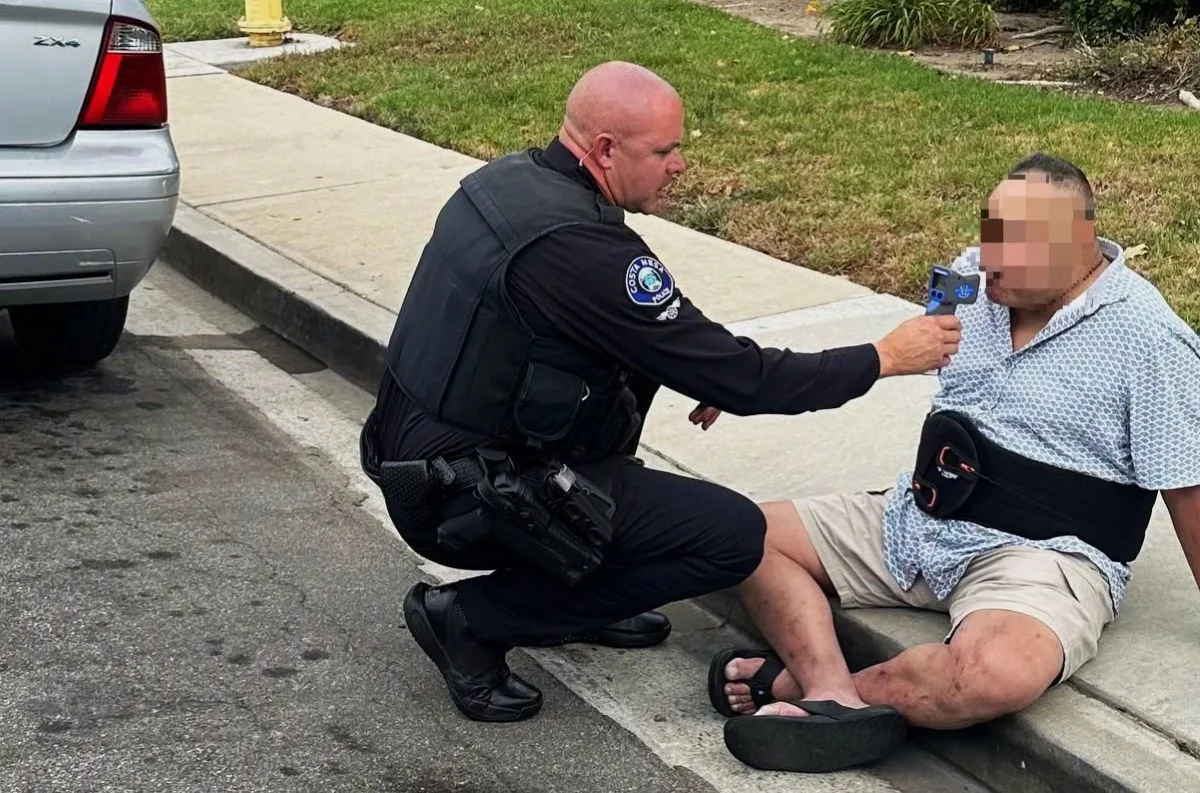
A Costa Mesa Police motor officer responding to a report of a man drinking in his vehicle ended up stopping a silver sedan and arresting the driver after he blew over the legal limit.

With Labor Day weekend ongoing right now, this kind of early‑morning DUI is exactly what local agencies warn about—impaired driving can happen at any hour, not just late at night, and it puts everyone on the road at risk.
Likely charges the driver may face
Based on California law and the facts described, this driver would likely face several charges, including:
- Driving Under the Influence (DUI): for driving while impaired by alcohol, and for driving with a blood alcohol concentration (BAC) of or higher.
- Possible open container violation: If officers found an open alcoholic beverage in the vehicle, he could face an additional charge under or related open‑container statutes.
- Probation or prior‑DUI complications: If he has prior DUI convictions or is on probation, penalties can escalate sharply—longer license suspension, mandatory ignition interlock, and potential jail time.
For a first‑time misdemeanor DUI in California, penalties can include fines, DUI classes, license suspension, and possible jail time, with harsher consequences if there are prior offenses or aggravating factors.
Vehicle impound and possible costs
In many DUI stops, especially when the driver is arrested at the scene, the vehicle is towed and impounded. That means this driver may have to pay:
- Towing fee: Often in the range of about $150–$250 depending on distance and local rates.
- Daily storage fee: Commonly around $40–$80 per day in Southern California impound lots.
Altogether, a short impound can easily cost $300–$600 or more before the vehicle is released, on top of court fines, DUI program fees, and increased insurance premiums.
The back belt: back belt or weightlifting belt?
In the photo, the driver appears to be wearing a supportive belt around his torso along with casual shorts and sandals. The belt looks more like a medical or back‑support belt than a typical weightlifting belt: it’s higher on the torso, broader, and worn over regular clothing in a way consistent with back‑support or posture‑support devices rather than gym gear. A weightlifting belt is usually thicker leather, worn tighter around the lower waist, and typically seen in gym or work settings—not with sandals on a residential street next to a car.
While we can’t know his medical history from a photo, a back‑support belt suggests he may have chronic pain or a physical condition that affects his spine or posture. That raises a real concern: some people with chronic pain self‑medicate with alcohol, especially if they feel their pain isn’t adequately managed.
Could the suspect have been drinking to soothe back pain?
It’s possible—but dangerous. People dealing with back pain or other chronic conditions sometimes turn to alcohol to dull discomfort or help them sleep. Reasons might include:
- Inadequate pain management: Feeling that prescribed treatments or over‑the‑counter medications aren’t enough.
- Stress and frustration: Chronic pain can lead to anxiety, depression, and a sense of hopelessness, which can push someone toward alcohol as a coping mechanism.
- Misconceptions about alcohol as “medicine”: Some believe a few drinks will relax muscles or “take the edge off,” underestimating how quickly impairment sets in.
The problem is that alcohol doesn’t treat the underlying condition and can actually worsen pain over time, interfere with medications, and create a cycle of dependence. When that drinking crosses into driving—especially in the morning—it becomes a public‑safety issue as well as a health issue.
Why someone might have a DUI so early in the morning
A morning DUI often surprises people, but it’s more common than many realize. Some likely scenarios include:
- Residual intoxication from the night before: Someone drinks heavily late at night, sleeps a few hours, and assumes they’re “fine” in the morning. In reality, their BAC can still be above the legal limit, especially if they drank a lot or have a slower metabolism.
- Morning “eye‑opener” drinking: Individuals with alcohol dependence may drink first thing in the morning to steady their nerves, avoid withdrawal symptoms, or feel “normal” before work or errands.
- Shift work or non‑traditional schedules: For people who work nights or irregular hours, “morning” might be their version of after‑work drinks, even though it’s daylight and traffic is heavier.
- Stress and holidays: With Labor Day weekend approaching, some people start celebrating early or feel added stress about finances, family, or work, leading to impulsive drinking and poor decisions about driving.
Whatever the reason, a morning DUI is a red flag that someone’s relationship with alcohol may be risky or out of control.
How a DUI can affect someone’s job
A DUI arrest can have serious employment consequences, especially in Orange County and the broader Southern California job market:
- Loss of driving privileges: License suspension can make it difficult or impossible to commute, especially for jobs that require driving (delivery, sales, construction, ride‑share, home services).
- Employer policies and background checks: Many employers run background checks; a DUI conviction can limit opportunities in fields like education, healthcare, government, and security. Some companies have strict policies about criminal records or driving offenses.
- Professional licenses: Certain professions—nurses, teachers, real‑estate agents, contractors, and others—may have to report a DUI to licensing boards, which can trigger investigations or disciplinary action.
- Insurance and company vehicles: If the job involves driving a company car, the employer’s insurance may refuse coverage for a driver with a DUI, forcing the employer to reassign or terminate that employee.
Even if someone keeps their job, the combination of court dates, classes, fines, and transportation challenges can strain their performance and relationships at work.
Tips for drivers to stay out of DUI trouble
To keep yourself—and everyone else—safe on Costa Mesa and Orange County roads, especially around holidays like Labor Day, consider these practical steps:
- Plan your ride before you drink: Decide on a designated driver, rideshare, taxi, or public transit before the first drink. Once you’re impaired, your judgment about driving is already compromised.
- Use personal breathalyzers responsibly: A personal breathalyzer can give you a rough idea of your BAC, but it’s not perfect. If you’ve been drinking at all, the safest choice is not to drive, even if the device shows a low number.
- Respect “morning after” risk: Heavy drinking the night before can leave you over the limit in the morning. If you wake up groggy, hungover, or unsure, assume you’re not safe to drive and find another way to get where you need to go.
- Set firm personal rules: For example: “If I have more than one drink, I don’t drive,” or “If I drink at all, I use rideshare.” Clear rules reduce the chance of rationalizing bad decisions.
- Watch for warning signs of problem drinking: Drinking alone in your car, needing alcohol to start the day, or using alcohol to manage pain or stress are all signs you may need help.
Help for people who may have a drinking problem
If you see yourself in this situation—or worry about someone you care about—there are reputable organizations and resources that can help:
- Alcoholics Anonymous (AA): Offers free, peer‑support meetings worldwide, including in Orange County. https://www.aa.org
- SMART Recovery: A science‑based, non‑12‑step program focusing on self‑management and cognitive‑behavioral tools. https://www.smartrecovery.org
- SAMHSA National Helpline: A confidential, free, 24/7 helpline for individuals and families facing substance use issues.
https://www.samhsa.gov/find-help/national-helpline(samhsa.gov in Bing) - National Institute on Alcohol Abuse and Alcoholism (NIAAA): Provides information on alcohol use disorder, treatment options, and tools to assess drinking patterns. https://www.niaaa.nih.gov
- Mothers Against Drunk Driving (MADD): Offers victim support, prevention programs, and resources for people trying to change their relationship with alcohol and driving. https://madd.org
Local Orange County health departments and community clinics also often have low‑cost or sliding‑scale counseling and treatment programs for alcohol use disorder.
Can someone buy a device that prevents driving when inebriated?
Yes. There are two main categories of devices related to alcohol and driving:
- Ignition Interlock Devices (IIDs): These are breathalyzer units wired directly into a vehicle’s ignition system. The driver must blow into the device; if the BAC reading is above a preset limit, the car will not start. In California, courts can order IIDs after DUI convictions, and some drivers voluntarily install them to stay accountable.
- Personal breathalyzer kits and smartphone‑linked systems: Some consumer products combine a breathalyzer with an app or aftermarket hardware that can lock or disable a vehicle, or at least alert the driver or a trusted contact if the reading is too high. While not as regulated or tamper‑resistant as court‑ordered IIDs, they can be part of a personal safety plan.
Even with these tools, the safest rule is simple: if you’ve been drinking—especially enough to feel it—do not drive. Devices can fail, readings can be off, and your judgment is already impaired.
Community Impact
A morning DUI arrest in Costa Mesa, especially right before Labor Day weekend, is a stark reminder that drunk driving isn’t just a late‑night problem. It can start with someone drinking in their car to cope with pain or stress, wearing a back‑support belt and sandals, and end with a motor officer, a breath test over the legal limit, and a likely DUI charge under California Vehicle Code 23152. Between impound fees, court fines, possible job loss, and the risk of injuring others, the cost of driving under the influence is far higher than the price of a rideshare or a call for help. If you’re struggling with alcohol, reach out to AA, SMART Recovery, SAMHSA, NIAAA, or MADD, and consider tools like ignition interlock devices or personal breathalyzers as part of a broader plan to stay off the road when you’re impaired.
The perception of back pain is heavily influenced by anxiety and “pain catastrophizing”—the psychological tendency to assume the worst. When an individual avoids physical activity because “it might hurt,” they enter a feedback loop: Pain → Fear of movement → Avoidance → Muscle wasting → Worse pain upon next movement.
This might be loosely true for minor aches and pains, but it is total nonsense for anyone who has to deal with severe chronic pain from an injury.