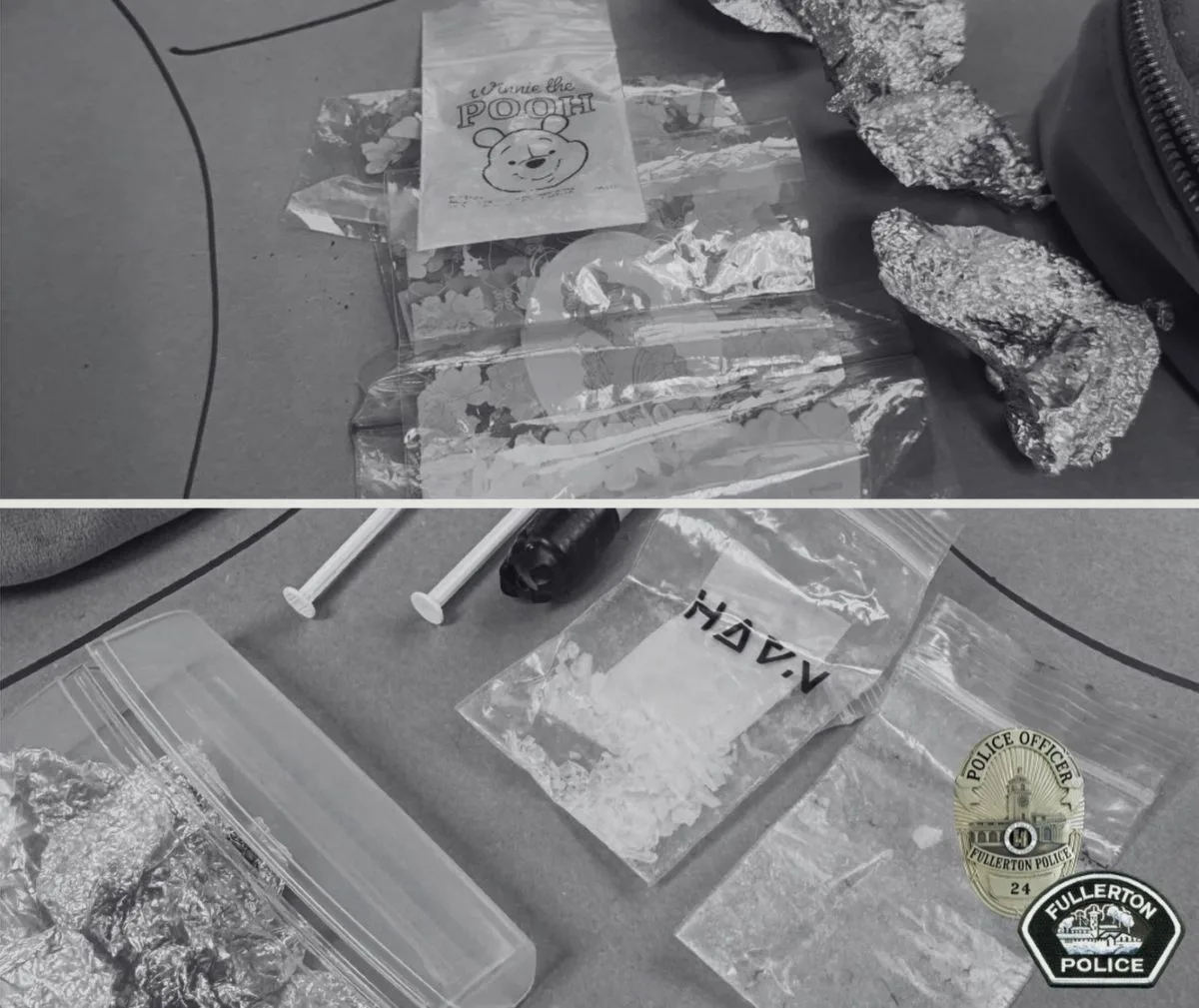
Over the weekend, a resident reported a suspicious RV parked in their neighborhood—and that call made a difference, according to the Fullerton Police Department.
Poplice officers contacted the occupants and ultimately arrested two adults, who were booked on multiple felony and misdemeanor drug charges.
The FPD thanks the resident who trusted their instincts and spoke up. This is exactly why “See Something, Say Something” matters.
If something doesn’t feel right, don’t ignore it—give the police a call.
Potential Felony Penalties Faced by the Suspect
Felony drug charges in California typically involve the intent to sell, transport, or manufacture controlled substances.

- Possession for Sale (HSC § 11351): This is a common felony charge. Convictions can lead to 2, 3, or 4 years in county jail.
- Transportation or Sale (HSC § 11352): If suspects were moving drugs for distribution, they could face 3, 4, or 5 years in state prison. If transported across more than two counties, this can increase to 9 years.
- Aggravating Factors: Under Proposition 36 (effective as of late 2024/2025), penalties for trafficking large quantities—especially those involving fentanyl—have been increased, often requiring mandatory state prison time rather than local jail.
Potential Misdemeanor Penalties Faced by the Suspect
Misdemeanor charges usually apply to simple possession for personal use or possession of drug paraphernalia.
- Simple Possession (HSC § 11377/11350): Convictions for possessing substances like methamphetamine or cocaine for personal use generally carry a maximum of one year in county jail and fines up to $1,000.
- Drug Paraphernalia: Possession of items like pipes or scales is a misdemeanor punishable by up to six months in jail.
Collateral Consequences
Beyond jail time, a felony drug conviction in California carries long-term impacts:
- Permanent Record: Felony convictions remain for life unless specifically expunged.
- Loss of Rights: Suspects may lose the right to own firearms and may face professional license revocations (e.g., for nursing or teaching).
- Treatment Mandates: Under newer “Treatment-Mandated Felony” rules, some offenders with prior convictions may be required to complete drug treatment to avoid a 3-year jail sentence.
Typical RV Restrictions Across OC Cities
Most local laws are designed to prevent long-term habitation on public roads. Common regulations include:
- Prohibition of Habitation: Cities like Costa Mesa, Irvine, and Huntington Beach have municipal codes that make it unlawful to camp, lodge, or sleep in a vehicle on any city street.
- Overnight Parking Bans: Many cities, including Fullerton, Anaheim, and Santa Ana, prohibit RVs from parking on city streets overnight (typically between 2 a.m. and 5 a.m.) without a specific permit.
- 72-Hour Rule: California state law and many local ordinances (e.g., Huntington Beach) allow vehicles to be towed if they are left standing on a public street for more than 72 consecutive hours.