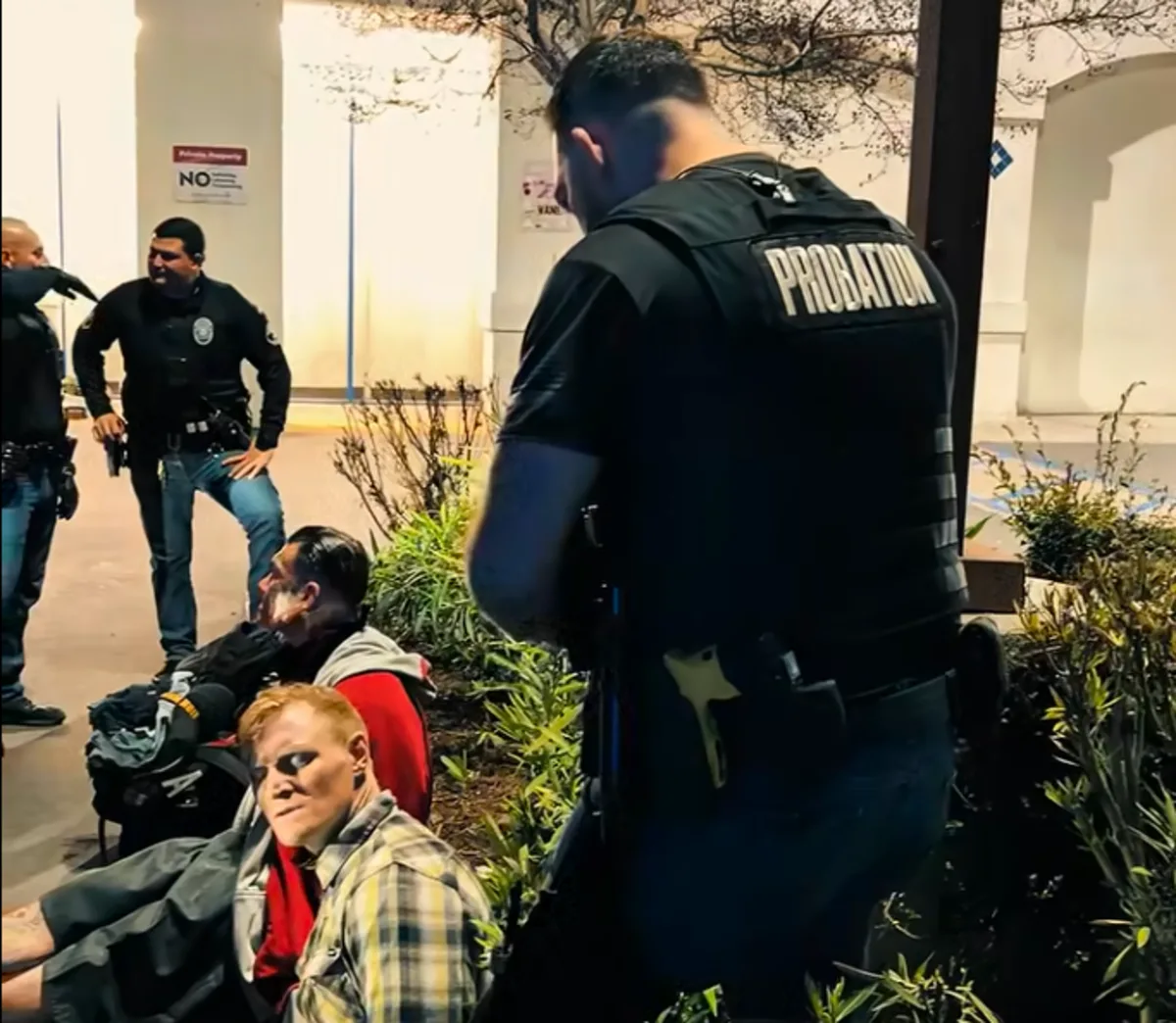
Community safety is a top-of-mind issue for residents across Orange County, and the Santa Ana Police Department (SAPD) is taking a proactive stance. In a recent operation, the Santa Ana Police Department’s AB-109 Task Force, in collaboration with the Orange County Probation Department, conducted 16 compliance checks across the city in a single night.
This targeted effort focused on individuals under Post-Release Community Supervision (PRCS)—a system created by California’s AB-109 Realignment Act to manage non-violent, non-serious offenders at the local level rather than in state prisons.
The Results: 7 Arrests for a Safer Community
The overnight operation led to several key arrests that address both recurring violations and active criminal threats:
- 2 Probation Violations: Individuals failed to meet the strict terms of their release.
- 2 Felony Warrants: Removal of wanted suspects with active legal cases.
- 2 Felony Narcotics Arrests (with Probation Violations): Suspects were caught with illegal substances while already on supervision.
- 1 Arrest for Possession for Sale and Transporting Narcotics: Interdicting the flow of dangerous drugs into our neighborhoods.
What Are the Legal Penalties?

Suspects arrested during these operations face significant legal hurdles. Under AB-109, the consequences are immediate and often severe:
- Probation Violations: A judge can revoke probation entirely, potentially imposing the original suspended prison sentence. For PRCS violations, “flash incarceration” can lead to up to 10 days in county jail without a formal hearing, while formal revocations can result in up to 180 days per occurrence.
- Narcotics Possession for Sale: In California, possession for sale is typically a felony. Depending on the substance and prior history, this can lead to 2, 3, or 4 years in county jail under Penal Code 1170(h).
- Felony Warrants: These individuals will be remanded to the court that issued the warrant, where they may face the maximum statutory penalties for their underlying charges.
The Broader Picture: Addressing Homelessness in Orange County
While the AB-109 Task Force focuses on criminal compliance, Orange County cities are simultaneously grappling with the complex issue of homelessness. Recent strategies across the region vary:
- Newport Beach: Has seen a significant 80% reduction in its unhoused population, leading the city to transition from a full-time shelter deal with Costa Mesa to a more flexible “as-needed” model in 2026.
- Irvine: Recently entered a partnership with Costa Mesa to pay for shelter beds at approximately $163 per day, ensuring its unhoused residents have access to regional support.
- County-Wide Initiatives: In January 2026, thousands of volunteers participated in the Point in Time (PIT) Count to collect data that dictates federal funding for housing and support services.
- Anti-Camping Laws: Following the 2024 Supreme Court Grants Pass ruling, cities like Anaheim, Fullerton, and Newport Beach have tightened anti-camping ordinances to prohibit sleeping on sidewalks and park benches.
The Santa Ana Police Department’s commitment to these compliance checks ensures that those given a second chance through probation remain accountable, while the city continues to work with regional partners to provide paths toward stability for those in need.
Instead of paying a sending vans around asking homeless if they want help, WE need to document all homeless, then categorize them. In my quest to help this ongoing problem, there are 3 categories. 1) Homeless Addicts – that under reasonable suspicion laws could be tested, logged, which is about 60% of our homeless. 2) Mentally ill – which needs to be confirmed and logged, then dealt with (hopefully we can offer institutions or compounds to further treat them), 3) Then actual Homeless people, down on there luck, that need real help getting back on there feet, with shelters, job opportunities, housing, and yes accountability. With all three of these categories, accountability is crucial for both people in need and the people within our govt that control where the money goes. Until WE accountability, (real accountability) WE are basically enabling most, and really helping few.
Jh of BP