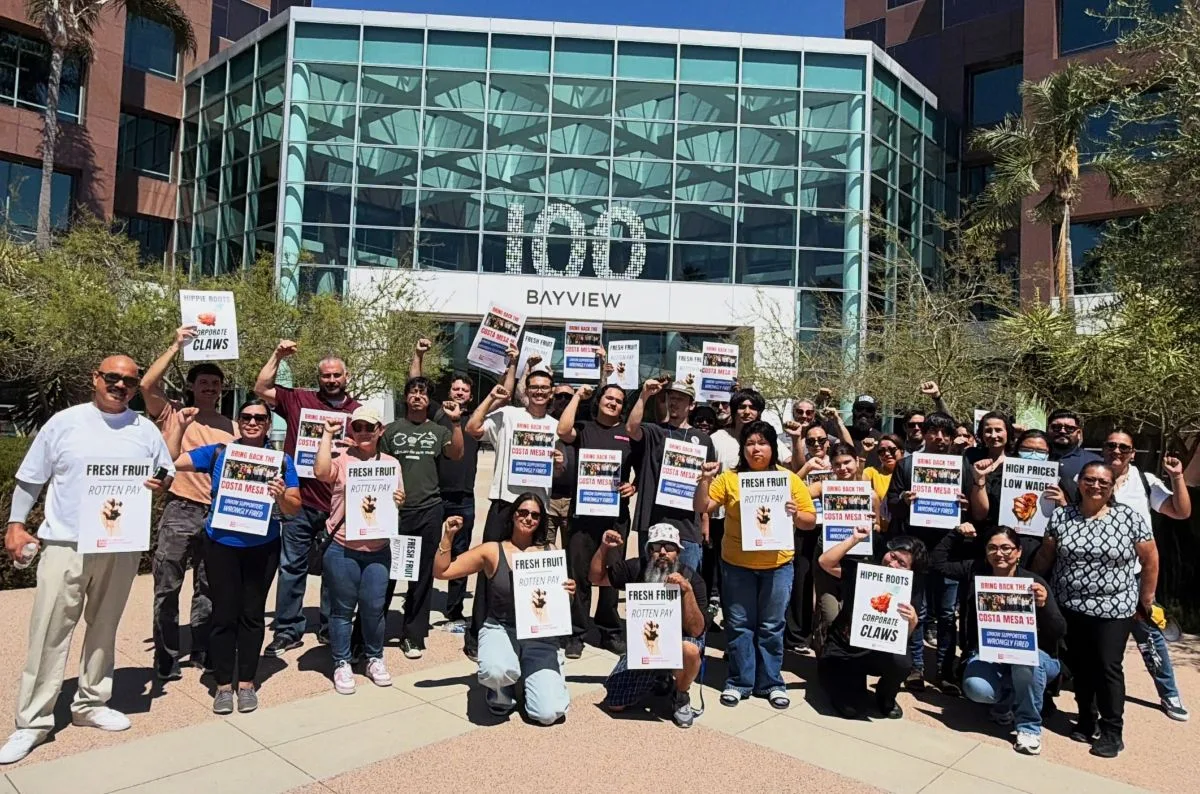
A worker group known as HEARTS UNITED has announced a boycott of Mother’s Market & Kitchen and plans to stage pickets at multiple Orange County and Southern California locations in the days leading up to Thanksgiving.
According to a press release issued by the group, workers and supporters are calling on shoppers to avoid Mother’s Market stores while employees continue their campaign to unionize. Organizers allege that low pay and inconsistent work schedules have made it increasingly difficult for workers to afford to live in Southern California. The group also claims that approximately 20 union supporters were terminated after speaking out in favor of union representation.
The boycott launch is scheduled to begin at the Mother’s Market location at 1890 Newport Blvd. in Costa Mesa. Additional picketing is planned at locations including Santa Ana, Brea, Irvine, Anaheim Hills, Huntington Beach, and Signal Hill.
Union Organizers Push for Representation
HEARTS UNITED describes itself as a worker committee seeking what it calls a fair process to organize a union at Mother’s Market. The campaign is urging customers to support workers by taking their business elsewhere until the labor dispute is resolved.
The effort comes at a time when organized labor has achieved several high-profile victories across California in industries ranging from retail and hospitality to logistics and health care.
Supporters of unionization argue that collective bargaining can help employees secure higher wages, more predictable schedules, improved benefits, and stronger workplace protections.
Questions About Consumer Costs
While labor organizers often focus on worker pay and benefits, critics of unionization efforts frequently raise concerns about higher operating costs and the impact on consumers.
Mother’s Market is already known as a premium grocery chain specializing in natural, organic, and specialty products. Many shoppers expect to pay significantly more for items at Mother’s than at traditional supermarkets such as Stater Bros., Food 4 Less, Walmart, Aldi, or WinCo Foods.
If labor costs were to increase substantially following unionization, some industry observers argue that additional expenses could ultimately be passed on to consumers through higher prices. Food retailers generally operate on relatively thin profit margins, and labor remains one of the largest expenses for grocery operators.
Others argue that wage increases do not necessarily translate directly into higher food prices and that businesses can offset labor costs through productivity improvements, operational efficiencies, reduced employee turnover, and increased sales.
At this stage, there is no public evidence showing what impact, if any, a union contract would have on prices at Mother’s Market because no agreement has been negotiated.
The Challenge of Affordability in Southern California
The dispute also highlights a larger issue affecting workers throughout Orange County and California.
Housing costs, transportation expenses, health insurance premiums, and everyday living expenses have increased dramatically over the last decade. As a result, many retail workers, even those employed full-time, report difficulty keeping up with the region’s cost of living.
The debate often centers on two competing approaches:
- Increasing wages and benefits through collective bargaining
- Improving long-term earning potential through education, training, and career advancement
Many economists and workforce-development experts note that additional education, technical certifications, apprenticeships, or specialized job training can significantly increase lifetime earnings. Programs in nursing, skilled trades, information technology, accounting, engineering, public safety, and health care frequently offer compensation well above that typically found in entry-level retail positions.
However, labor advocates argue that workers currently employed in retail still deserve wages that allow them to support themselves, regardless of education level.
Mother’s Market Occupies a Unique Place in the Grocery Industry
Founded in Orange County, Mother’s Market has built a loyal customer base by focusing on organic foods, vitamins, supplements, natural health products, and specialty grocery items.
The chain’s stores generally cater to consumers willing to pay a premium for products perceived as healthier, organic, locally sourced, or environmentally conscious.
That premium positioning may influence how customers react to the boycott. Some shoppers may sympathize with workers seeking higher wages, while others may worry that any future labor agreement could make already-expensive grocery items even more costly.
Whether consumers support the boycott or continue shopping at Mother’s Market, the unfolding dispute reflects broader questions facing California employers and workers alike: how to balance fair compensation, affordable prices, business sustainability, and the growing cost of living in one of the nation’s most expensive states.
For now, HEARTS UNITED organizers say they intend to continue public demonstrations through the Thanksgiving shopping period while seeking community support for their unionization effort at Mother’s Market.