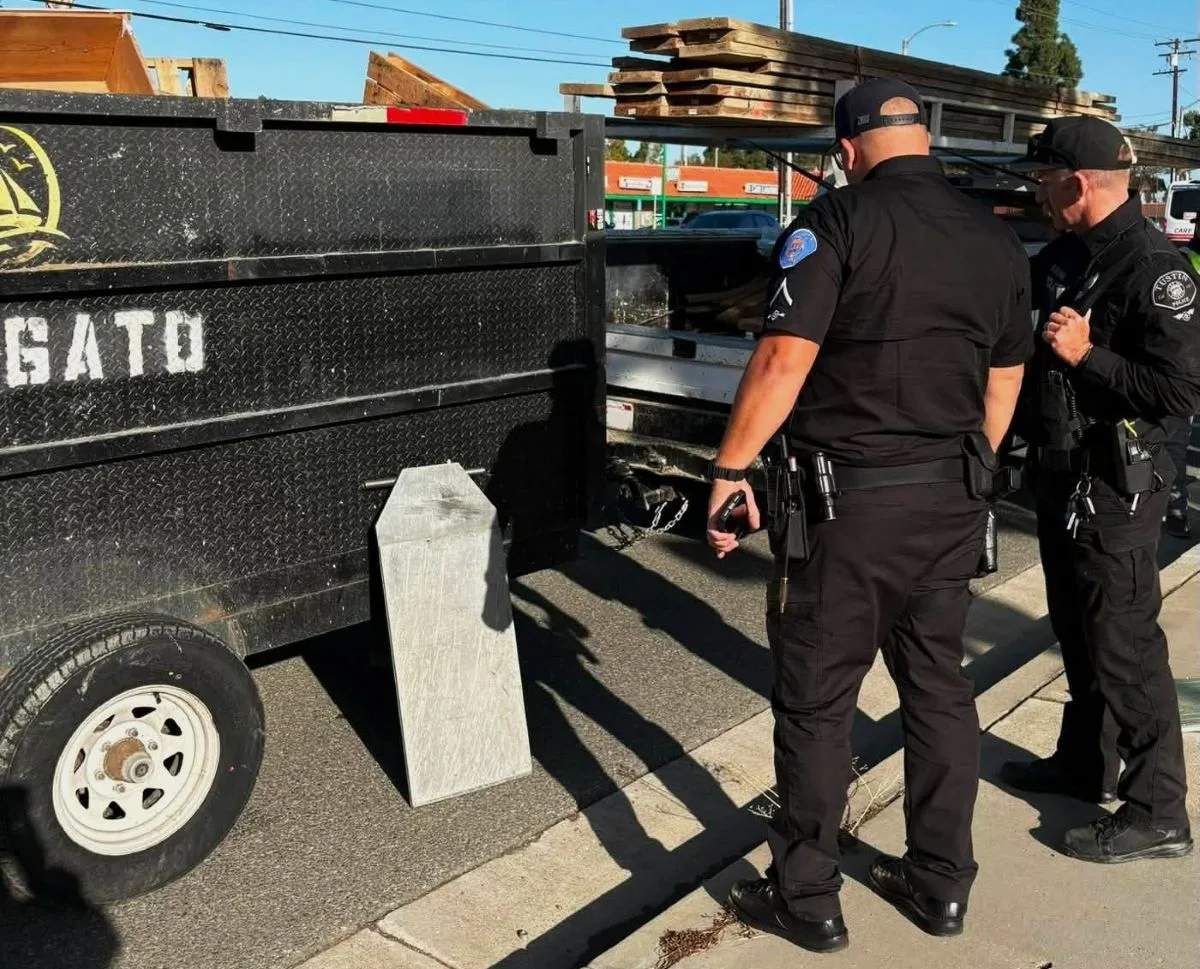
GARDEN GROVE, Calif. – The Garden Grove Police Department conducted a Commercial Vehicle Enforcement Checkpoint on Tuesday, resulting in 90 inspections, 90 violations identified, 55 citations issued, nine vehicles placed out of service, and eight vehicles towed, according to the department.

The operation focused on commercial vehicle safety and regulatory compliance, with officers inspecting work trucks, trailers, construction vehicles, utility vehicles, and other commercial equipment operating on city streets. Photographs released by the department show officers inspecting trailers and commercial trucks, including equipment commonly used by contractors and construction crews.
The enforcement effort highlights the significant number of safety and compliance issues routinely discovered during commercial vehicle inspections throughout California. Commercial vehicle checkpoints are designed to identify unsafe equipment, unlicensed drivers, overweight vehicles, improperly secured loads, and businesses that fail to comply with state and federal transportation regulations.
Common Violations Found During Commercial Vehicle Enforcement Operations
While Garden Grove police did not release a detailed breakdown of the 90 violations identified, the most frequently cited violations during commercial vehicle inspections typically include:
- Worn or defective tires
- Faulty brakes or brake components
- Inoperative lights and turn signals
- Registration violations
- Driver license violations
- Expired medical certificates
- Failure to carry required permits
- Improperly secured loads
- Overweight vehicles
- Defective trailer hitches or safety chains
- Lack of proof of insurance
- Unsafe vehicle maintenance conditions
Contractor trucks and trailers often draw particular attention because unsecured tools, construction materials, lumber, landscaping equipment, and debris can create serious road hazards if improperly transported.
Violation Costs Can Quickly Reach Thousands of Dollars
The financial impact of a commercial vehicle inspection can be substantial for both drivers and businesses.
Typical California commercial vehicle citations often range from approximately:
- $100 to $500 for equipment violations
- $250 to $1,000 or more for licensing and registration violations
- Several hundred to several thousand dollars for weight-related violations
- Additional penalties and court assessments that can significantly increase the final amount owed
For a company receiving multiple citations during a single inspection, total costs can easily reach several thousand dollars before repairs and administrative expenses are considered.
Given that officers identified 90 violations during the Garden Grove operation, the combined financial impact across all cited drivers and companies could potentially reach tens of thousands of dollars depending on the specific offenses cited.
What Happens When a Vehicle Is Placed Out of Service?
An out-of-service designation is one of the most serious outcomes during a commercial vehicle inspection.
A vehicle placed out of service cannot legally continue operating until the safety issue is corrected. Common reasons include:
- Critical brake defects
- Unsafe tires
- Steering system defects
- Suspension failures
- Lighting deficiencies affecting safe operation
- Serious load securement problems
- Driver qualification issues
For the nine vehicles placed out of service in Garden Grove, operators would generally be required to correct the violations before the vehicles could return to service.
For contractors and trucking companies, an out-of-service order can result in:
- Missed jobs and appointments
- Delayed deliveries
- Lost revenue
- Additional labor costs
- Emergency repair expenses
- Customer contract issues
Even a one-day interruption can prove costly for businesses that depend on commercial vehicles to generate revenue.
Eight Towed Vehicles Face Additional Impound Costs
The checkpoint also resulted in eight vehicle tows.
When a commercial vehicle is towed following an enforcement action, owners typically face:
- Tow charges often ranging from $250 to more than $1,000 depending on vehicle size
- Daily storage fees that may range from $50 to more than $150 per day
- Administrative release fees
- Repair expenses necessary to clear violations
For larger commercial trucks or equipment trailers, towing and storage costs can rise significantly. A vehicle that remains impounded for several days can generate a bill well into the thousands of dollars before it is released.
Long-Term Impact on Commercial Carriers and Insurance
The consequences of serious violations often extend beyond the initial citation.
Out-of-service inspections and violation histories can become part of a commercial carrier’s safety record. Repeated safety violations may lead to increased scrutiny from regulators and could negatively affect a company’s safety profile.
Commercial insurance carriers routinely evaluate factors such as:
- Driver citation history
- Vehicle maintenance records
- Safety inspection results
- Out-of-service rates
- Claims history
As a result, companies with recurring violations may face higher insurance premiums, policy restrictions, or increased underwriting scrutiny at renewal time.
Drivers can also experience individual consequences. Depending on the violation, commercial drivers may face points on their driving record, employer disciplinary action, loss of work opportunities, or additional training requirements.
Garden Grove Commercial Vehicle Safety Efforts Continue
Garden Grove police said the checkpoint was conducted as part of ongoing efforts to improve roadway safety and ensure compliance with commercial vehicle regulations.
The operation resulted in a violation rate of one violation per inspection, underscoring the importance of routine enforcement and vehicle safety checks. With nine vehicles removed from service and eight towed from the roadway, the checkpoint identified numerous issues that authorities determined required immediate corrective action before the vehicles could continue operating safely.
Law enforcement officials thanked participating partner agencies for assisting with the operation and said collaborative enforcement efforts remain an important tool for reducing risks associated with unsafe commercial vehicles traveling on Orange County roadways.