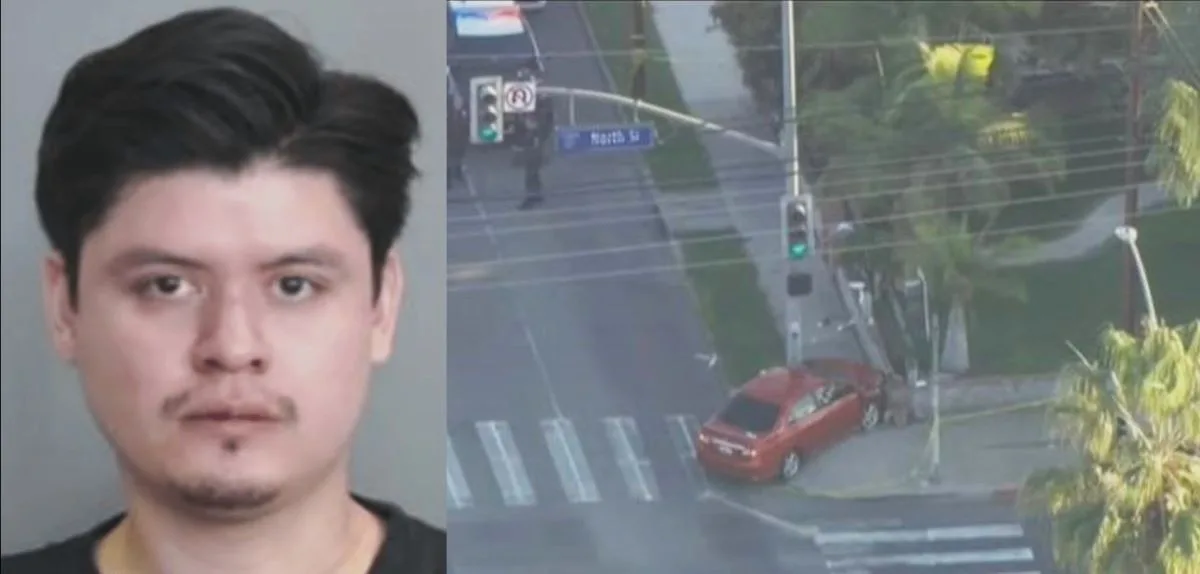
Anthony Alva-Palafox, a 27-year-old Anaheim man, has been identified as the suspect who crashed into several members of Anaheim High School’s track team as they were standing on the sidewalk of an intersection, on Wednesday, just before 3 p.m.
Alva-Palafox was allegedly drunk when the incident happened.
The athletes injured by the collision were on a training run. They were standing at the southwest corner of Harbor Boulevard and North Street waiting for the signal to turn when Alva-Palafox, who was driving southbound on Harbor in an orange Toyota Corolla, inexplicably drove up the sidewalk, hitting eight teenager athletes before the car came to rest against a retaining wall outside a home about 2:55 p.m., according to the Anaheim Police Department.
Seven of the students, who were all 16-17 years old, had to be hospitalized, with a variety of injuries, according to the Anaheim Police. Their track coach was with the students at the time of the crash.

Fortunately none of the athletes had life-threatening injuries.
Alva-Palafox also had to be hospitalazied for treatment of accident-related injuries.
Alva-Palafox was later arrested on suspicion of driving under the influence of both alcohol and drugs and his car was impounded. A search warrant is pending, so the police investigators can see if any evidence is available inside the vehicle.
Speed and other factors are also under investigation as possible factors in the crash, according to the Anaheim Police.
Here are the potential penalties Anthony Alva‑Palafox could face under California law for a DUI collision that injured multiple minors:
- Vehicle Code 23153 (“DUI Causing Injury”)
- This is a “wobbler” offense, which means it can be charged either as a misdemeanor or a felony, depending on circumstances.
- Misdemeanor DUI Causing Injury
- Up to 1 year in county jail, fines ranging from $390 to $5,000, mandatory completion of a DUI program, and driver’s license suspension.
- Felony DUI Causing Injury
- Prison sentence of 16 months, 2 years, or 4 years, fines up to $10,000 (in some sources up to $5,000 base with additional assessments), probation, ignition interlock device (IID) installation, and license suspension.
- Enhancements for Multiple Victims (Vehicle Code 23558)
- +1 year in prison for each additional injured victim (up to a maximum of 3 years added).
- Great Bodily Injury Enhancements (Penal Code 12022.7)
- If the injuries qualify as “great bodily injury” (e.g., broken bones, disfigurement), additional consecutive prison terms can apply.Here are the potential penalties Anthony Alva‑Palafox could face under California law for a DUI collision that injured multiple minors:
Vehicle Code 23153 (“DUI Causing Injury”)
This is a “wobbler” offense, which means it can be charged either as a misdemeanor or a felony, depending on circumstances.
Misdemeanor DUI Causing Injury
Up to 1 year in county jail, fines ranging from $390 to $5,000, mandatory completion of a DUI program, and driver’s license suspension.
Felony DUI Causing Injury
Prison sentence of 16 months, 2 years, or 4 years, fines up to $10,000 (in some sources up to $5,000 base with additional assessments), probation, ignition interlock device (IID) installation, and license suspension.Enhancements for Multiple Victims (Vehicle Code 23558)
+1 year in prison for each additional injured victim (up to a maximum of 3 years added).
Great Bodily Injury Enhancements (Penal Code 12022.7)
If the injuries qualify as “great bodily injury” (e.g., broken bones, disfigurement), additional consecutive prison terms can apply.
Additional Penalties & Consequences
Restitution to victims for medical expenses and losses
Court-ordered DUI intervention or treatment program
Mandatory IID installation for at least 1 year after license reinstatement
Driver’s license suspension (varies based on misdemeanor vs felony)
Vehicle impoundment and administrative actions by DMV (e.g., license suspension due to DUI arrest)
Given that eight minors were injured and multiple victims are involved, prosecutors will very likely pursue a felony DUI causing injury charge with multiple-victim enhancements—and possibly great bodily injury enhancements depending on the nature of the students’ injuries and medical evidence.
- If the injuries qualify as “great bodily injury” (e.g., broken bones, disfigurement), additional consecutive prison terms can apply.Here are the potential penalties Anthony Alva‑Palafox could face under California law for a DUI collision that injured multiple minors:
- Additional Penalties & Consequences
- Restitution to victims for medical expenses and losses
- Court-ordered DUI intervention or treatment program
- Mandatory IID installation for at least 1 year after license reinstatement
- Driver’s license suspension (varies based on misdemeanor vs felony)
- Vehicle impoundment and administrative actions by DMV (e.g., license suspension due to DUI arrest)
Given that eight minors were injured and multiple victims are involved, prosecutors will very likely pursue a felony DUI causing injury charge with multiple-victim enhancements—and possibly great bodily injury enhancements depending on the nature of the students’ injuries and medical evidence.
He also face civil liability as well. Here’s how that plays out under California law:
- Negligence per se
- The victim athletes (and their families, given their age) can bring a civil lawsuit for personal injury. Driving under the influence with minors involved is considered negligent per se (automatic negligence based on violation of DUI laws).
- Compensatory Damages
- Recoverable damages include:
- Medical expenses (past and future)
- Lost wages or earning capacity
- Pain and suffering
- Property damage (if applicable).
- Recoverable damages include:
- Punitive Damages
- Because DUI is considered reckless and malicious conduct, the court may award punitive damages to punish him and deter similar future behavior.
- Attorney’s Fees
- Victims may be entitled to recover attorneys’ fees in a civil action if the DUI is charged as a felony.
- Minors as Plaintiffs
- Since the injured parties are all minors, their parents or guardians would typically file on their behalf. The value of the claims could be higher due to their age, with future care needs and long-term impacts considered.
OMG, my heart goes out to the 8 Teens involved in this collision. As for the bonehead driver, that drunk head needs to be LOCKED UP 4 Life.
A stiff sentence for sure– but life in prison is probably a bit harsh.