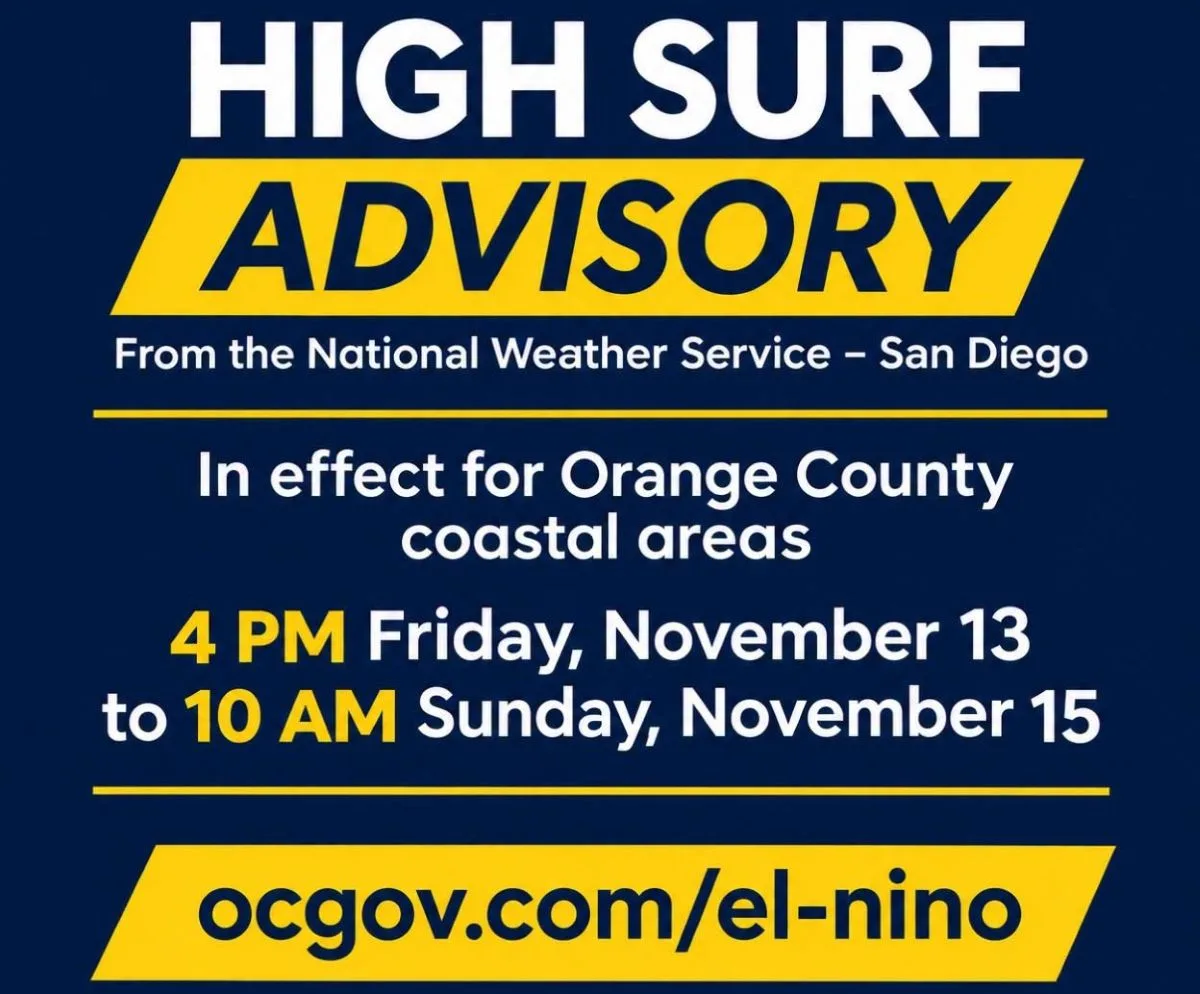
Orange County residents and visitors are being urged to exercise caution after the National Weather Service issued a High Surf Advisory for coastal areas from 4:00 p.m. Friday through 10:00 a.m. Sunday.
The advisory comes as forecasters warn of elevated surf, powerful rip currents, beach erosion, and the potential for coastal flooding in low-lying areas. County officials are encouraging residents to monitor weather conditions closely and review storm preparedness resources available through Orange County’s emergency management website.
While Southern California residents are accustomed to periodic winter surf events, recent tidal surges have demonstrated how quickly coastal conditions can become hazardous and expensive.
Last Major Tidal Surge Caused Significant Damage Across Orange County
Orange County’s most recent major tidal surge and high-surf events caused extensive damage to public infrastructure, private property, beaches, and coastal businesses.
Among the impacts reported along the Orange County coastline were:
- Flooded streets and parking lots near the coast
- Damage to seawalls and shoreline protective structures
- Beach erosion along multiple coastal communities
- Damage to residential properties located near the shoreline
- Flooding of garages, lower-level living spaces, and commercial properties
- Debris deposits requiring costly cleanup operations
- Temporary beach and roadway closures
Communities including Newport Beach, Huntington Beach, Seal Beach, Laguna Beach, and San Clemente have all experienced varying degrees of coastal flooding and storm-related damage in recent years. During some high tide and king tide events, seawater overtopped protective barriers and flowed onto streets, damaging vehicles and structures situated in vulnerable areas.
Local governments have spent millions of dollars over the years attempting to protect shoreline infrastructure from increasingly severe coastal flooding and erosion events.
Property Owners Face Significant Financial Exposure
For many property owners, the greatest risk from an approaching surf event may not be immediate physical danger but potential financial losses.
Many homeowners mistakenly believe standard homeowners insurance policies cover all storm-related water damage. In reality, coverage often depends on the source of the water.
Property owners should be aware of several important insurance considerations:
- Flood damage is generally not covered by standard homeowners insurance policies.
- Separate flood insurance may be required through the National Flood Insurance Program (NFIP) or private flood insurers.
- Damage caused by wave action, storm surge, or coastal flooding may be excluded under many policies.
- Commercial property owners often face similar exclusions.
- Failure to take reasonable steps to mitigate known damage risks can create coverage disputes with insurers.
Businesses located along Pacific Coast Highway and near beachfront commercial districts should also review their business interruption coverage and flood endorsements before a major storm event occurs.
Insurance experts note that coastal property insurance premiums throughout California have continued to rise as insurers evaluate increasing exposure to weather-related losses and natural disasters.
Some California Cities Have Begun Enforcing Sandbag Requirements
The financial stakes can become even higher when local governments issue emergency preparedness orders.
In several coastal and flood-prone California communities, officials have increasingly warned residents that they must take reasonable protective measures when storm threats are forecast. In certain jurisdictions, code enforcement actions have been used when property owners fail to comply with emergency orders intended to reduce public hazards.
Examples of communities that have aggressively promoted or enforced protective flood mitigation efforts during major storm events include:
- Newport Beach
- Seal Beach
- San Clemente
- Huntington Beach
- Various Los Angeles County coastal communities
These efforts generally involve mandatory evacuation orders, protective barriers, storm preparation directives, debris removal requirements, and public safety measures designed to reduce risks to neighboring properties and public infrastructure.
Property owners should carefully review any local emergency declarations, municipal notices, or public works directives issued by their city during major weather events. Failure to comply with a lawful emergency order can potentially result in citations, administrative penalties, or increased civil liability if preventable damage occurs.
Officials Urge Residents Not to Underestimate Surf Conditions
The absence of heavy rain does not necessarily mean the coast is safe. High surf events can produce powerful waves, dangerous currents, coastline erosion, and localized flooding even under otherwise sunny conditions.
Officials are advising beachgoers to stay well back from jetties, rocks, cliffs, and shoreline areas prone to sudden wave impacts. Coastal property owners are encouraged to inspect drainage systems, secure outdoor property, review insurance coverage, and monitor weather updates throughout the advisory period.
Residents seeking storm-preparedness information, sandbag availability, emergency alerts, and preparedness resources can visit Orange County’s emergency preparedness portal at ocgov.com/el-nino.
With memories of recent tidal surge damage still fresh for many Orange County residents, local officials are hoping that advance warning and preparation will help avoid another costly weekend along the coast.