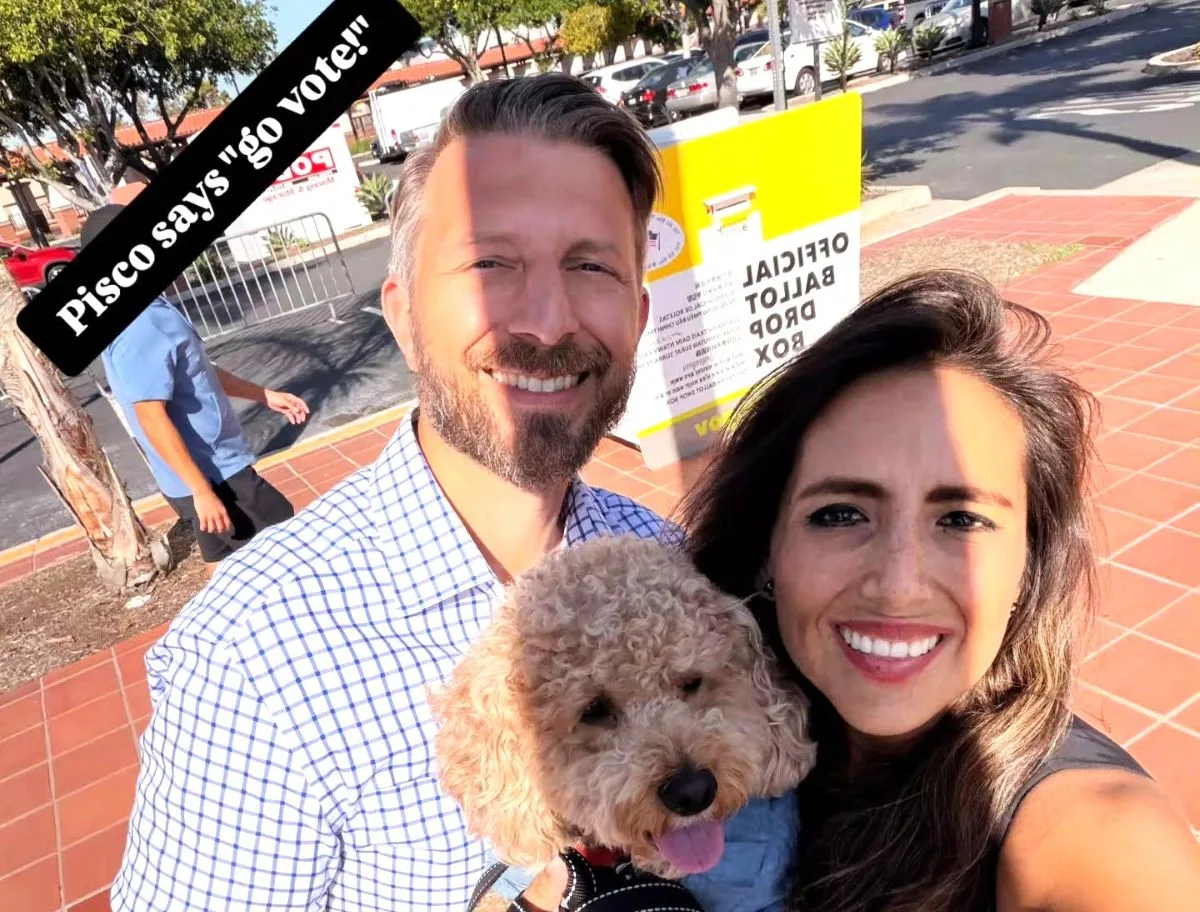
Santa Ana voters delivered one of Orange County’s biggest political surprises this election cycle, choosing first-time candidate and attorney Dan Shimell as the city’s next mayor and ending the four-year tenure of incumbent Valerie Amezcua.
What makes the result especially notable is that Shimell was not a longtime City Hall insider, a sitting councilmember, or a well-funded establishment candidate. Instead, he built a grassroots campaign focused on immigration, government accountability, housing affordability, and community trust.
Shimell’s victory also represents a significant defeat for the political coalition that backed Amezcua, including the influential Santa Ana Police Officers Association, which poured substantial independent spending into supporting the incumbent. Despite that financial advantage, voters ultimately moved in a different direction.
Who Is Dan Shimell?
At 40 years old, Dan Shimell brings a different resume than many recent Santa Ana elected officials. Born in San Diego and raised in El Cajon, he earned a political science degree from UC San Diego, served as a Peace Corps volunteer in Guyana between 2009 and 2011, and later graduated from UC Davis School of Law. He was admitted to the California Bar in 2014 and currently maintains an active law license.
Professionally, Shimell has worked as an attorney with Arnold & Porter, one of the nation’s largest law firms. According to his California State Bar profile, his practice areas include litigation, commercial law, intellectual property, and aviation and aerospace matters. He also reports speaking Spanish.
A Relative Newcomer to Santa Ana
One issue likely to remain part of the public discussion around Mayor-elect Shimell is how recently he arrived in Santa Ana.
According to Shimell, he and his wife, attorney Melissa Shimell, moved to Orange County in 2016, initially settling in Costa Mesa. They later relocated to Tustin before moving to Santa Ana in 2020 during the COVID-19 pandemic. That means he has lived in Santa Ana for roughly six years before winning the mayor’s office.
Shimell has acknowledged that relatively short residency but argues that he intentionally chose Santa Ana because of its culture, diversity, sense of community, and local identity. He told Voice of OC that after living in nearby cities, he continually found himself drawn back to Santa Ana and ultimately decided it was the place where his family wanted to build its future.

Public records and campaign materials indicate that Shimell resides in Santa Ana. Multiple community sources have identified him with the Floral Park neighborhood, which is considered one of Santa Ana’s most exclusive neighborhoods. One of Floral Park’s former residents, Mike Ness, the lead singer of the band Social Distortion, recently celebrated Dan’s victory in the mayoral race, in an online post. Ness sold his Floral Park home a while ago but before that some of his neighbors got pretty frosty when he had proposed to build a new fence in his front yard. Floral Park residents are known for being very careful about what sort of construction they allow in their pricey neighborhood.
What Drove His Campaign?
Unlike many local campaigns that focus heavily on public safety messaging, Shimell built his campaign around three core themes:
- Housing affordability
- Support for immigrant communities
- More responsive city services
His campaign platform calls for:
- Expanding affordable housing production
- Protecting existing renters and homeowners
- Strengthening rent stabilization and habitability enforcement
- Developing housing near transit corridors and job centers
- Improving roads, sidewalks, lighting, and crosswalks
- Investing in city employees and municipal services
- Supporting local hire and union labor requirements on city-funded projects
The most distinctive element of his campaign, however, was immigration policy. Shimell repeatedly centered concerns about federal immigration enforcement and argued that Santa Ana should take stronger action to protect residents from immigration raids and detention activities. His platform specifically calls for using all lawful means to deter future immigration raids and adopting policies that protect residents from unreasonable detention, arrest, or searches.
The ICE Raids Changed the Race
Many political observers point to the 2025 and 2026 immigration enforcement actions and the city’s response as the defining issue of the election.
Following ICE activity and related protests in Santa Ana, Amezcua faced criticism from many immigrant-rights advocates and local liberal influencers as well as progressive activists who believed her response was overly focused on condemning protest activity rather than defending immigrant residents. Shimell became politically active during that period and has said those events motivated him to run for office.
During the campaign, he drew a sharp contrast with the incumbent, arguing that Santa Ana leadership should be more vocal and proactive in protecting immigrant communities. That message appeared to resonate with many younger voters and residents from immigrant families.
Who Backed Shimell?
Shimell’s coalition looked very different from the traditional Orange County political establishment.
Among his most visible elected supporters were:
- Benjamin Vazquez
- Jessie Lopez
- Johnathan Hernandez
- Hector Bustos
- Valerie Magdaleno
He also received support from progressive organizations including Chispa and OC Action. The Santa Ana Educators Association backed his candidacy, and he benefited from support among progressive activists who had become increasingly involved in city politics following debates around policing and immigration enforcement.
Notably, Shimell’s campaign did not receive major independent expenditure support comparable to the spending that benefited Amezcua. Instead, much of his campaign was self-funded through personal loans and driven by volunteers, family members, and grassroots supporters.
Where Does He Stand on Law Enforcement?
This may become the most closely watched aspect of the Shimell administration.
One of the more interesting features of his mayoral campaign was that law enforcement reform was not presented as a standalone campaign pillar. His campaign website focused heavily on housing, immigration, and city services while largely avoiding traditional “law and order” campaign language.
However, his comments during the election and after his apparent victory provide important clues about how he may govern.
Shimell repeatedly emphasized “police accountability” as a campaign issue and contrasted himself with candidates supported by police unions. He has criticized aspects of the relationship between local law enforcement and federal immigration authorities and has argued that Santa Ana police must take a firmer approach toward maintaining separation from federal immigration enforcement activities.
After the election, he specifically called for:
- Removing the city’s Flock camera program
- Accelerating the investigation into the widely publicized arrest of Florentino Lopez
- Making investigative findings public
- Strengthening barriers between local policing and ICE operations
Based on those positions, it is reasonable to expect that Mayor Shimell will generally align with the council’s progressive bloc on police oversight, surveillance technology, transparency, and immigration-related law enforcement issues. At the same time, because his campaign did not spend significant time discussing traditional policing topics such as staffing levels, response times, gang enforcement, or officer recruitment, voters still have relatively little information about how he will approach those operational public safety questions.
What His Election Means
Shimell’s victory appears to be about more than a single mayoral race.
His win coincided with strong performances by several progressive candidates for city council and suggests that Santa Ana voters are pushing city politics toward a more activist, community-centered model focused on immigration advocacy, government accountability, affordable housing, and police oversight.
Whether supporters view him as a reformer or critics view him as an untested newcomer, one thing is clear: Santa Ana voters were willing to take a chance on a candidate who had lived in the city for only six years, had never held elected office, and was running against a sitting mayor backed by significant political and financial support. The challenge for Mayor-elect Dan Shimell now shifts from campaigning on change to delivering it.